Russia fines Apple $12 million for alleged abuse of dominance in app market

(Corrects company identifier to AAPL.O)

By Alexander Marrow

MOSCOW (Reuters) – Russia said it had fined Apple $12 million for alleged abuse of its dominance in the mobile applications market, in the latest dispute between Moscow and a Western technology firm.

The Federal Antimonopoly Service (FAS) said on Tuesday that U.S. tech giant Apple’s distribution of apps through its iOS operating system gave its own products a competitive advantage.

Apple said it “respectfully disagreed” with the FAS ruling and that it would appeal it.

Western tech companies have come under increasing pressure in Russia in recent months, with social network Twitter punitively slowed down over a failure to delete content which Moscow says is illegal.

Facebook, TikTok and Alphabet’s Google have also come under fire.

The FAS said in a statement it had imposed a turnover fine on Apple of 906.3 million roubles ($12.1 million) for the alleged violation of Russian anti-monopoly legislation.

It determined in August 2020 that Apple had abused its dominant position and then issued a directive requiring the U.S. company to remove provisions giving it the right to reject third-party apps from its App Store.

That move followed a complaint from cybersecurity company Kaspersky Lab, which had said that a new version of its Safe Kids application had been declined by Apple’s operating system.

Read Complete Article

Apple’s next-gen Mac chip ‘M2’ enters mass production, says report

Apple’s custom next-generation Mac processor has entered the mass production stage this month, media reports said.

Tentatively dubbed the “M2” after Apple’s M1 chip, the processors take at least three months to produce, according to sources.

The next generation of Mac processors designed by Apple entered mass production this month, sources familiar with the matter told Nikkei Asia, bringing the US tech giant one step closer to its goal of replacing Intel-designed central processing units with its own, MacRumors, Nikkei Asia reported.

Shipments of the new chipset could begin as early as July for use in MacBooks that are scheduled to go on sale in the second half of this year, sources said.

Produced by Apple supplier TSMC, Apple’s custom aCEM1aCE silicon made its debut late last year with the introduction of the Mac mini, MacBook Air and 13-inch MacBook Pro, bringing considerable performance improvements and battery efficiency over the Intel chips it replaced.

Just last week, Apple unveiled redesigned 24-inch iMacs and a new iPad Pro lineup and to underscore the hardware capabilities of the devices, Apple kitted them out with the same 5nm-based aCEM1aCE processor found in its other Apple silicon Macs.

Read Complete Article

Apple ships record over 1 million iPhones in India in first quarter 2021

Continuing its dream run in India, Apple shipped over a million iPhones in the country in the otherwise dull first quarter of 2021, growing close to an impressive 90 per cent (on-year) during the three-month period.

As per early estimates from market intelligence firm CyberMedia Research (CMR), iPhone 11 and XR accounted for 67 per cent of Apple’s shipments during the January-March period.

On the back of increased domestic assembly, Apple iPhone 11 shipments increased 176 per cent (on-year) in the first quarter.

Apple has had yet another exceptional quarter in India, shipping over a million iPhones for the first time in, what is traditionally, a lull quarter,” Prabhu Ram, Head-Industry Intelligence Group, CMR, told IANS.

Apple iPhone shipments gained in strength on the back of the enduring brand equity that Apple enjoys in the country and also, in part, “driven by evolving consumer understanding about tech not being a luxury, but a necessity”, Ram added.

In the festive quarter (Q4) of 2020, Apple for the first time doubled its smartphone market share in India to nearly 4 per cent.

Despite arriving in October, the iPhone 12 contributed significantly towards the rise of Apple in Q4 (October-December) in the country.

The tech giant had registered over 60 per cent growth (yea-on-year) in its India business in the full year 2020 while for the festive quarter, the growth was an impressive 100 per cent (YoY).

Read Complete Article

Indian smartphone market grew 23% in Jan-Mar 2021: Counterpoint report

Buoyed by pent-up demand, the local smartphone market grew by a whopping 23 per cent over a year earlier in the January-March quarter. As a result, shipment of smartphones touched 38 million units – unprecedented for the quarter – a report by analyst firm Counterpoint Research showed.

“Continuing with its stellar run, India’s smartphone market registered a third consecutive quarter of record shipments in the first quarter of 2021, riding on pent-up demand. consumer confidence also increased due to the beginning of a vaccination drive in the country”, said Prachis Singh, analyst at Counterpoint.

With a 14 per cent rise in shipment of feature phones during the period, the overall handset market registered 19 per cent year-on-year (y-o-y) growth. Strong shipment numbers of Reliance’s JioPhone drove the feature phones market, while Chinese vendor Itel led the market with a 21 per cent share.

In the smartphone space, market leader Xiaomi witnessed a strong demand for its handsets and had to expand local sourcing capacity by partnering with two Chinese manufacturers — BYD and DBG. Rival Samsung, which held the second spot, registered 52 per cent growth in shipment over the corresponding quarter last year. Its sales were driven by new launches in the budget segment.

Analysts, however, are now weary of the resurgence of the coronavirus pandemic in its second wave, and its impact on the market in the April-June quarter. According to Singh, the superior growth in the March quarter might not sustain in the coming days. “These (March quarter) numbers should be taken with a caution as a second and more virulent wave of Covid-19 is currently on in the country. That is likely to impact the coming quarters. The consumer demand will take a hit due to the ongoing Covid-19 wave and subsequent lockdowns,” said Singh.

Read Complete Article

Facebook begins testing advertisements on short video offering Reels

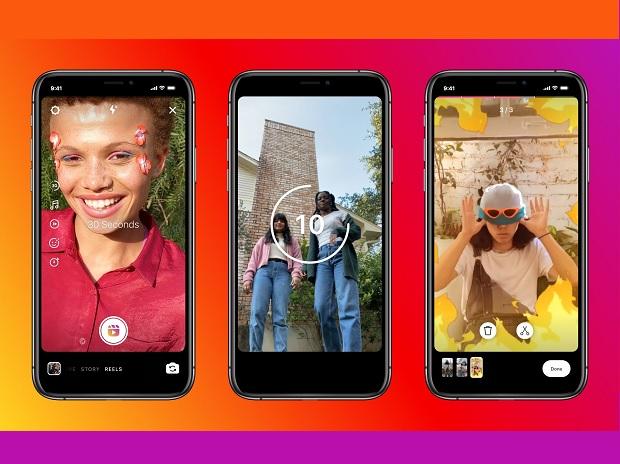
Facebook has said it will start testing ads on Instagram Reels, a short video offering, in India and other markets as it looks to help brands better engage with relevant audiences.

In July last year, Instagram had unveiled its new format ‘Reels’ in India that allows users to create and share short videos.

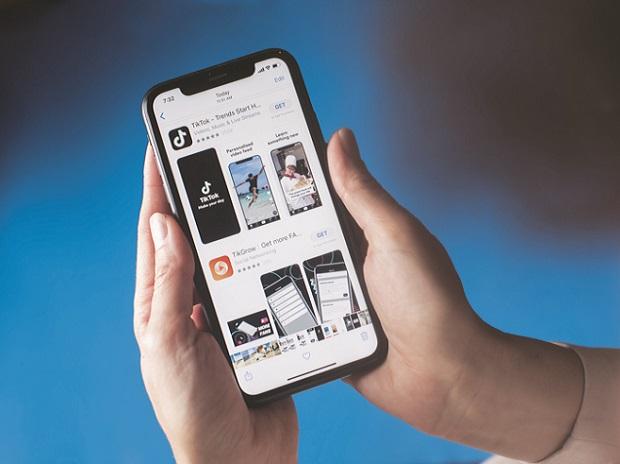
Reels and other short video platforms have seen strong growth userbase and time spent after the Indian government banned a number of apps with Chinese linkages, including popular short video TikTok. The monetisation efforts by Facebook would help the company tap into that opportunity.

In a blogpost on Thursday, Facebook said people are discovering and watching video in diverse formats across its family of apps, each offering distinct viewer and ad experiences.

“Today, we’re announcing new topic targeting options within Facebook In-Stream video, testing of Instagram Reels Ads and other ad experiences in Facebook Stories to help increase opportunities for brands to better engage with relevant audiences,” it added.

The social media giant said Instagram will begin testing Reels ads in India, Brazil, Germany and Australia with tests expanding to more countries in the coming months.

India is among the biggest markets for Facebook. According to government data, there are 53 crore WhatsApp users, 41 crore Facebook users and 21 crore use Instagram.

A recent report by RedSeer had said Indian short-video platforms like ShareChat’s Moj, Dailyhunt’s Josh, MX TakaTak and others have managed to bring back 97 per cent of TikTok’s user base on the back of aggressive marketing and user acquisition by these platforms.

Also, new users onboarded largely come from tier-II cities and beyond.

Facebook said the ads on Reels will be full-screen and immersive, similar to ads in Stories.

The ads can be up to 30 seconds and people can comment, like, view, save, share and skip them.

“Ninety per cent of people follow a business on Instagram, and people are already embracing Reels to discover new creators and businesses.

Read Complete Article

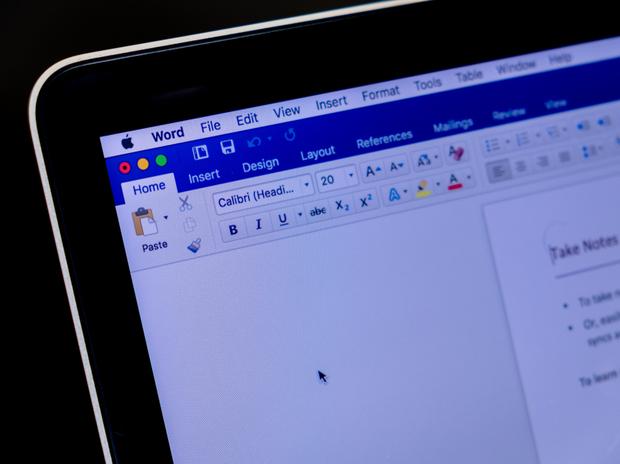
Microsoft to release preview version of Office 2021 for Mac, Office LTSC

American multinational technology conglomerate Microsoft will be releasing a preview version of its upcoming Office 2021 for the Mac and Office LTSC this week.

According to The Verge, while Office LTSC (Long-Term Servicing Channel) will be designed for commercial customers, both versions will be perpetual versions of Office that won’t rely on subscriptions or the cloud.

Microsoft had announced its plans for Office 2021 back in February, and a Windows version as well, which won’t be available in preview, but will be released later this year.

Office 2021 for Mac will support both Apple Silicon and Intel-based Macs and will require at least 4GB of RAM and 10GB of storage space. It’s designed to be a static release of Office, but during the preview, there will be monthly updates that could include new features. Once Office 2021 for Mac is final and released, no new features will be added.

Its current improvements include:

– Line Focus, this feature removes distractions to let Word users move through a document line by line.

– XLOOKUP, an Excel feature that lets you find things in a table or range by row.

– Dynamic array support in Excel, which has new functions for dynamic arrays in spreadsheets.

– Record a slide show with narration in PowerPoint.

As per The Verge’, Microsoft’s Office LTSC variant will also include things like dark mode support, accessibility improvements, and the same Dynamic Arrays and XLOOKUP features found in Excel 2021 for Mac. Office 2021 for Windows will include similar features.

Read Complete Article

Audio streaming service Spotify to launch podcast subscription service soon

Audio streaming application Spotify is soon going to launch its podcast subscription service. The platform would be competing with Apple’s newly announced podcast subscription service but it will not charge a fee or take a membership cut like its rival.

As per Variety, the company will be letting content creators keep 100 per cent of the subscription fees. As per sources, Spotify will not take a cut of podcast subscription revenue.

By contrast, Apple will keep up to 30 per cent of podcast subscription fees under its program, which is launching next month. Most creator platforms, including YouTube, Twitch, Facebook and Patreon, also take a cut of subscription fees and/or fan payments.

Currently, Spotify doesn’t allow customers to pay for subscriptions through Apple in-app purchases — and Spotify has been a very vocal critic of Apple’s App Store policies, which has included lodging a formal complaint with the European Union alleging anticompetitive behavior. Similarly, you won’t be able to purchase Spotify podcast subscriptions through Apple.

Spotify has said it was going to test paid subscriptions for podcasters to allow them to offer exclusive content to subscribers, officially announcing that during its February ‘Stream On’ event. But it has not yet provided details on how that will work.

It is worth noting that Spotify has been expanding its podcast platform by signing major deals with personalities like the Obamas, Prince Harry and Meghan Markle, and most recently, Bruce Springsteen.

It has also signed podcast deals with Warner Bros, Hollywood producer Chernin, and Archie Comics.

Meanwhile, in conjunction with Spotify’s podcast subscription rollout, Facebook plans to launch an integrated version of Spotify’s audio player, a service called ‘Project Boombox’.

Read Complete Article

How TikTok, the new “hit machine”, chooses which songs go most viral

When Megan Thee Stallion took off her bright orange mask and walked onstage to accept her Grammy on March 14, she fought back tears and thanked God, her mother, and her managers for helping her become the first female rapper to win the award for best new artist in two decades. But the rapper, whose real name is Megan Pete, made no mention of another entity that helped turn her song Savage into a No. 1 hit: the mobile app TikTok.

TikTok, a social network where people post short videos, often set to music, has become this generation’s hit machine. Like many TikTok sensations, Savage appeared to bubble up spontaneously from the enthusiasm of its users, who choreographed their own dances for the song, introducing it to other fans who watched those videos tens of millions of times. That mysterious formula for success on TikTok has turned the app into the most important new social media platform in years-which in turn thrust it into the center of a major geopolitical dispute.

But the success of Savage didn’t come out of nowhere. It resulted from a savvy marketing campaign, where TikTok’s management analyzed user data and advised Pete’s label on how to promote her, eventually landing on the infectious hit as the best vehicle to do so. Social media has always been less spontaneous than it appears, but from its inception, TikTok has been even more controlled than competing apps. Company executives help determine which videos go viral, which clips appear on the pages of personalized recommendations, and which trends spill out from the app to flood the rest of the world.

TikTok’s hold on American culture began with Alex Zhu, who started Musical.ly, the lip-syncing app that turned into what we now know as TikTok. Zhu grew up in China and studied civil engineering at Zhejiang University. He went to San Francisco to work at global software company SAP SE. On a train ride through Silicon Valley in 2014, Zhu was fascinated by the American teenagers listening to music and shooting video on their phones and decided to create an app that joined the two.

Although tech companies have often clashed with record labels, Zhu’s plan was always to work with the music industry rather than disrupt it. Zhu, 36 at the time, obsessively tracked user behavior, even registering fake accounts to interact with elementary and middle school kids. He personally courted rising stars by calling them and their parents at home and taking their families out to dinner. Zhu, through a company spokesperson, declined to comment.

Read Complete Article

Centre’s disinvestment plan: A stress test for zombie steel plants

With the government looking to divest loss-making steel assets, significant interest from secondary players is most likely this time apart from the anticipated list of large integrated primary steel producers, said industry experts.

Rashtriya Ispat Nigam Limited (RINL), Neelachal Ispat Nigam Ltd (NINL), NMDC Integrated Steel Plant (NISP)-Nagarnar, Ferro Scrap Nigam Ltd and three units of Steel Authority of India (SAIL) — Alloy Steels Plant, Durgapur; Visvesvaraya Iron and Steel Plant, Bhadravati; and Salem Steel Plant, Salem — constitute the divestment list. All the three units of SAIL have been loss-making for more than five years.

“Some promoter-driven secondary players could have much bigger interest towards the smaller, really stressed assets put out for divestment, making it a fresh list of buying interest this time,” said Saurabh Bhatnagar, Partner and National Leader, metals and mining at EY India.

Kalyani Steels, Godawari Power & Ispat Ltd and Prakash Industries are some of the secondary steel companies in the domestic market.

ALSO READ: Surge in steel price opens up room for companies to increase rates


“We are keen on expansion and have expressed interest in NINL. If we get it at the right price, our capacity would more than double from the current 0.5 million tonne,” said R K Goyal, managing director of Kalyani Steels.

Kalyani Steels has an integrated facility at Hospet and a secondary unit in Pune. It is currently running three mini blast furnaces at its Hospet plant. Its FY20 annual report shows that the company has cash and cash equivalent of Rs 14.8 crore with negligible debt on books. Its net profit margin in FY20 stood at 11.40 per cent from 9.40 per cent in the preceding fiscal. The company’s net worth has also grown over 8 per cent on a year-on-year basis.

Read Complete Article

Women and jobs: Will ‘work from home’ push more women into the workforce?

“Consider it a preview” most researchers opine as they highlight how the lockdown has impacted women employment and reversed gains made in recent years. A working paper from Azim Premji University titled “Down and Out? The Gendered Impact of the Covid-19 Pandemic on India’s Labour Market” highlights that women in India are 7 times more likely to lose work during the national lockdown and 11 times more likely to not return to work after a job loss.

CMIE data, which perhaps is the best indicator to determine job losses, shows a persistent decline in the employment rate for urban women. Before the start of the pandemic, 7.5 per cent of women in urban areas were employed. The number fell to 5 per cent in April and has barely recovered since. Data from February 2021 shows an employment rate of 5.4 per cent.

However, there is a catch. Even before the Coronavirus (Covid-19) pandemic hit, employment rates for urban women were falling in the country. From a high of 11.2 per cent in August 2016, the employment rate for urban women had dropped to 6.9 per cent in December 2019. The pandemic, in that case, just accelerated the trend.

Not just India, in January, the US’s National Women’s Law Centre reported that nearly all the jobs lost in the country in December belonged to women. While women lost 156,000 jobs, men gained 16,000 jobs during this period. The study further states that since February 2020 — when the pandemic started spreading across the country — women have accounted for 55 per cent of the total job losses. In 2019, women in the US workforce outnumbered men for the first time since the start of the decade.

Read Complete Article