Intel PC chip sales rise, but profit forecast falls short: Details here

By Stephen Nellis and Chavi Mehta

(Reuters) – Intel Corp on Thursday raised its annual sales outlook on booming demand for personal computers, but its second-quarter profit forecast fell short of analyst expectations as the company spends heavily to get its manufacturing operations back on track and catch up to rivals with faster chips.

Intel shares were down 3.1% to $60.60 in after-hours trading after the results. The company also missed first-quarter expectations in its closely watched data center chip unit.

Intel fumbled new manufacturing technology in recent years, causing it to fall behind rivals such as Advanced Micro Devices Inc and Nvidia Corp in the race to make faster, smaller chips. Patrick Gelsinger, who returned to Intel as its chief executive earlier this year, said the chipmaker has begun to resolve its manufacturing problems, and in March announced a major expansion plan to build new factories in the United States and Europe.

Intel, which is one of the few remaining companies in the processor chip industry that both designs and manufactures its own chips, has said it has been able to beat out rivals during a global chip shortage by operating its own factories. But the company said shortfalls of other third-party components needed to build complete computers could hold back its sales this year.

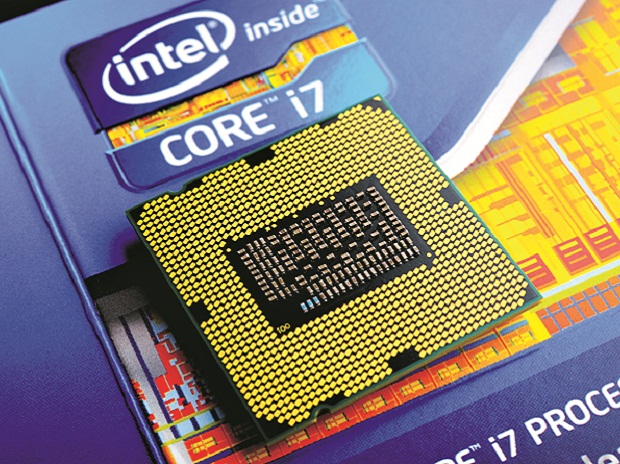
Intel said its PC chip business had sales of $10.6 billion in the first quarter, ahead of analyst expectations of $10.17 billion, according to data from FactSet.

Gelsinger told Reuters following the release of Intel’s earnings that the company exceeded PC chip expectations in part because it was able to finish in its own factories so-called organic substrates, which are materials used to package delicate silicon chips into tougher housings so they can tolerate being put onto circuit boards.

Gelsinger said the changes helped Intel mitigate a global shortage of the substrate materials and “generate millions of units of more supply.”
Read Complete Article

Engineers trick Tesla Model Y to drive on Autopilot sans driver on the seat

As Tesla faces several fatal crashes in the recent past that has put its Autopilot mode in scrutiny, engineers at Consumer Reports engineers have easily tricked a Tesla Model Y to drive on the electric carmakers driver assistance feature, without actually anyone in the drivers seat.

During the drive, Tesla Model Y automatically steered along painted lane lines, but the system did not send out a warning that the driver’s seat was empty.

The engineers tricked Tesla vehicle by placing a small, weighted chain on the steering wheel, to simulate the weight of a driver’s hand, and slid over into the front passenger seat without opening any of the vehicle’s doors, because that would disengage Autopilot, the report said on Thursday.

Using the same steering wheel dial, the engineers reached over and was able to accelerate the vehicle from a full stop.

“In our evaluation, the system not only failed to make sure the driver was paying attention, but it also couldn’t tell if there was a driver there at all,” says Jake Fisher, CR’s senior director of auto testing, who conducted the experiment.

“Tesla is falling behind other automakers like GM and Ford that, on models with advanced driver assist systems, use technology to make sure the driver is looking at the road.”

Last week, two people were killed in a fiery Tesla crash in Texas with no one in the driver’s seat. The fatal crash is under investigation.

Harris County Precinct 4 Constable Mark Herman told Houston television station KPRC 2 that the investigation showed “no one was driving” the fully electric 2019 Tesla when the accident happened.

Read Complete Article

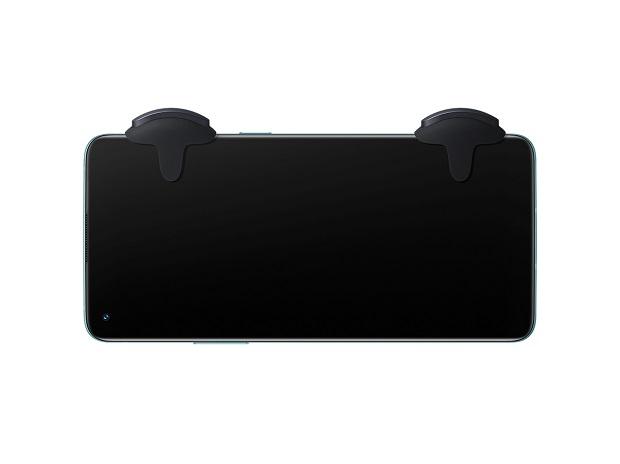
OnePlus Gaming Triggers for Android, iOS smartphone now available in India

Chinese smartphone maker OnePlus’ gaming triggers for Android and iOS smartphones are now available in India for Rs 1,099.

The company hasn’t confirmed that these gaming triggers will be releasing globally, reports The Verge.

These triggers can be clipped around the edge of most smartphones — any Android or iOS device, so long as they’re less than 11.5mm thick with a case on.

If you want to do some mobile gaming but hate touch controls, these could provide a more intuitive, controller-like alternative to tapping on your screen, the report said.

Each trigger appears to have just one shoulder button with an Omron switch that OnePlus CEO Pete Lau says is “pleasingly clicky” to tap.

According to the product page, these triggers are interchangeable and can be fastened to your phone in whatever way is most comfortable to you.

To use them, though, your game of choice needs to allow for deep customisation of its touch controls, to the level of allowing you to move touch-activated zones to where these triggers’ conductive silicon pads clip onto your phone.

According to the report, some publications noticed the gaming triggers being teased during the unveiling of the OnePlus 9 back in late March. However, they are currently available in India on the OnePlus site.

Read Complete Article

Indian short video apps have filled the TikTok void: RedSeer report

Indian short form or short video apps have successfully retained 67 per cent of the TikTok-era users, with daily unique active users at 97 per cent of the total number in June 2020, when TikTok was banned in India, a new report by research firm RedSeer Consulting has found.

Indian short video apps have on-boarded 30-35 per cent new users in the past year as a result of increased supplier push and aggressive marketing by platforms, the report, titled ‘Short-form video – The Rise of Made in India digital content’ has found. The study focused on major Indian short video apps, including Josh, Moj, MX Takatak and Roposo, which had a comparatively high level of awareness among the user sets.

“In less than one year since the Tik Tok ban, Indian platforms have shown a strong V-shaped recovery, bouncing back to 100 per cent of pre-ban daily user base. This shows how platforms were able to design the product, execute their plans and market it aggressively in a very short period of time. This is a strong indicator of how the Indian digital ecosystem has matured in the past few years. But the job is far from done. The players still have to reach the global scale and cross-sector benchmarks on engagement and retention which will further grow the monetisation potential for the entire ecosystem,” said Ujjwal Chaudhry, associate partner at RedSeer Consulting.

The report further found that the time spent on the short video apps gradually increased, reaching 55 per cent of that in June 2020, but these apps had more scope to improve their content quality and product experience.

However, RedSeer also found that 75 per cent of the current short-form video users would likely stick to these domestic apps and were unlikely to switch back to Chinese apps even if the ban was lifted.

Read Complete Article

US senators question Apple and Google on app store dominance: Details here

By Diane Bartz, Stephen Nellis and Paresh Dave

WASHINGTON (Reuters) – A panel of U.S. senators questioned officials from Apple Inc and Alphabet Inc’s Google on Wednesday about the dominance of their mobile app stores and whether the companies abuse their power at the expense of smaller competitors.

Amy Klobuchar, the top Senate Democrat on antitrust issues, said Apple and Google can use their power to “exclude or suppress apps that compete with their own products” and “charge excessive fees that affect competition.”

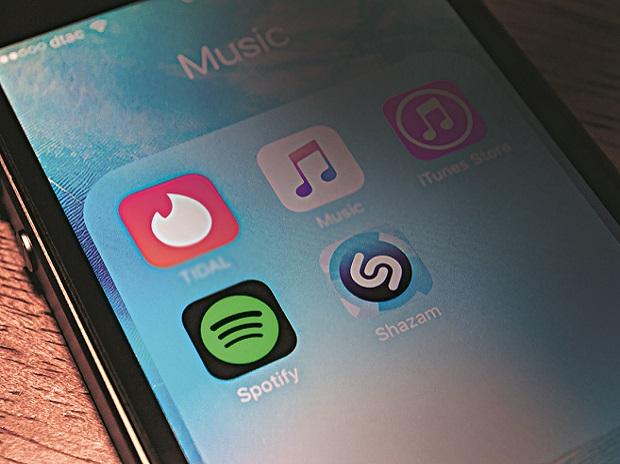
App makers like music streaming service Spotify Technology SA and dating services giant Match Group, which owns the Tinder app, have long complained that mandatory revenue sharing for sales of digital goods and strict inclusion rules set by Apple’s App Store for iPhones and iPads, along with Google’s Play store for Android devices, amount to anticompetitive behavior.

Representatives for Apple and Google told senators the companies’ tight control over their stores and the associated revenue-sharing requirements are needed to enforce and pay for security measures to protect consumers from harmful apps and practices.

But when asked by Senator Josh Hawley, Apple’s Chief Compliance Officer Kyle Andeer would not commit to spending all of the mandatory fees on security.

Explanations from Andeer and Google’s Wilson White, senior director for government affairs, about why the companies’ fees do not apply to Uber Technologies Inc and apps that sell physical goods also failed to satisfy senators.

“I feel like unfrozen caveman lawyer,” Senator Mike Lee said. “I’m not grasping it.”

Senator Richard Blumenthal expressed concern about a call Match said it received late on Tuesday from its business counterpart at Google.

Match’s Chief Legal Officer Jared Sine said Google wanted to know why Sine’s planned testimony, which had just been released, deviated from previous comments the dating company had made.

Read Complete Article

Apple Inc adds thrust to its India momentum with a brand new line-up

In the last few years, if strong headwinds kept Apple’s India business primarily confined to its smartphone portfolio, it has surely weathered the storm now. And for 2021, the Cupertino-headquartered firm has placed its India bet upfront.

With sales of its second largest selling product —Macs – on fire, the consumer tech giant has unveiled a new set of offerings to encash on consumers’ growing appetite for premium computers, tablets and over-the-top content.

In its first major announcement for the year, Apple Chief Executive Officer (CEO) Tim Cook unveiled a range of products like iMac, iPad Pro, Apple TV 4K, AirTag and iPhone 12 in a new colour.

Unlike earlier, when Indian consumers would have to wait longer for Apple’s new flagships, this time, the firm is bringing the entire range to the local market simultaneously with 29 other lead­ing markets of the company.

The new iMac, two iPads and iPhone 12 and 12 Mini will be open for ordering starting April 30, just like in the US, the UK, China and Japan.Further, unlike the iPhone 12 range, this time Apple has kept its pricing tight. The 24-inch M1 iMac has been launched with a starting price of Rs 119,900 — close to its 512GB MacBook Air, while the prices of M1 iPads (11 and 12.9 inch) are the same as earlier — starting Rs 71,900 and Rs 99,900, respectively.

The early availability of these pro­ducts in India comes at a crucial juncture. With these new iMac and iPads, Apple has introduced its mu­ch­-appreciated M1 chipset into the two product ranges. Since it did aw­ay with Intel chips (in its 13-inch Ma­c­Book Air and Pro) last year, de­m­and for Macs has grown in the market that otherwise falte­red.

Read Complete Article

Samsung tops global smartphone market with 23% share in Q1 2021: Report

Samsung defended its leading position in the global smartphone market in the first quarter of the year, shipping 77 million smartphones and capturing 23 per cent market share (a growth of over 32 per cent on-year), according to a new report.

Apple shipped 57 million units iPhones worldwide, capturing second place with a 17 per cent volume market share.

Xiaomi held third place in terms of volume of smartphones shipped for the second quarter in a row. It shipped 49 million smartphones globally and took a 15 per cent market share in Q1 2021, up from 10 per cent one year ago, according to latest research from Strategy Analytics.

The global smartphone shipments were 340 million units in Q1 2021, up over 24 per cent (on-year) representing the highest growth since 2015.

The smartphone market rebound was driven by the healthy demand of consumers with ageing devices and a phenomenal 5G push from Chinese vendors.

“Globally, the top five vendors combined took a 76 per cent market share in Q1 2021, up from 71 per cent one year ago. Chip shortages and supply side constraints did not have a significant impact in Q1 among the top 5 brands,” said Linda Sui, Senior Director, at Strategy Analytics.

Samsung’s newly launched more affordable A series 4G and 5G phones, and the earlier launched Galaxy S21 series combined drove solid performance in the quarter.

“The strong momentum behind the 5G iPhone 12 series continued across multiple markets,” said Neil Mawston, Executive Director at Strategy Analytics.

Xiaomi maintained strong momentum in both India and China, and the expansion in Europe, Latin America and Africa region also started to bear fruit.

Read Complete Article

Mobile Premier League acquires GamingMonk to widen esports portfolio

Esports and skill gaming platform Mobile Premier League (MPL) said that it has acquired New Delhi-based Esports gaming platform GamingMonk. GamingMonk hosts Esports tournaments across multiple platforms including PC, Console and Mobile. It serves as a launchpad for publishers and a community for gamers creating an integrated ecosystem across Esports, live streaming, and content discovery.

“GamingMonk’s vision was to change the Esports scenario in India,” said Ashwin Haryani, Co-Founder, GamingMonk. “I strongly believe that our collaboration with MPL will not only help us accomplish our goal, but also transform the way every individual in our country views esports.”

The firms did not reveal the financial details of the transaction. As part of the transaction, MPL has absorbed the complete GamingMonk team. This acquisition will allow MPL to accelerate bringing to market key national, regional, and global tournament IPs. It would allow MPL to develop a full suite of Esports and broadcasting capabilities. This would be anchored by the GamingMonk team’s strong track record of leading online and offline eSports tournaments.

As of April 2021, GamingMonk had a registered user base of over 1.3 million users.

“In our mission to serve gamers in India, GamingMonk will augment our efforts in reaching our target audience and engage with our users effectively,” said Sai Srinivas, co-founder and CEO, MPL. “With the increased consumption of Esports in the last couple of years and it becoming as competitive as any other sport, it gives us immense pleasure to present our users with the best of games to play.”

Read Complete Article

MediaTek launches chipset for flagship 5G smartphones in India

MediaTek on Tuesday launched a new chipset for flagship 5G smartphones, Dimensity 1200, in the India market.

The chipmaker also announced that Chinese smartphone brand realme is the first smartphone brand to feature the MediaTek Dimensity 1200 System-on-Chip (SoC) in India.

“The SoC will mark a new beginning for the smartphone segment in India with its flagship features that blend the best of all worlds — be its processor technology, camera, AI features, gaming or connectivity enhancements,” Anku Jain, Managing Director, MediaTek India, said in a statement.

“With flagship 5G chipset technology, MediaTek Dimensity 1200 SoC will take user experience to the next level be in terms of AI, camera, processor speed, gaming capabilities and much more,” Jain added.

The 6nm MediaTek Dimensity 1200 SoC features one of the fastest smartphone octa-core CPUs ever — with a clock speed of 3GHz with up to 22 per cent faster CPU performance while also being 25 per cent more power-efficient versus the previous generation.

Equipped with Arm Mali-G77 MC9 GPU and six-core MediaTek APU 3.0 with 12.5 per cent faster performance, the SoC delivers flagship-level premium performance with AI multimedia capabilities, incredible displays, faster refresh rates, gaming enhancements, and much more.

Powered by MediaTek HyperEngine 3.0 gaming technology, the MediaTek Dimensity 1200 SoC enhances the smartphone gaming experience with a new generation of wireless audio and Ray Traced graphics capabilities.

The chipset packs in powerful imaging and AI processors for incredible camera experiences with up to 200MP camera support and is equipped with MediaTek MiraVision HDR video playback and AV1 video decoding, bringing cinema-grade visual experiences to the small screen.

The SoC is built with an integrated 5G modem featuring MediaTek’s 5G UltraSave technology for greater energy savings.

“We expect more OEMs to launch MediaTek Dimensity 1200 powered smartphones in the near future,” Jain said.

Read Complete Article

Apple packs iPad Pros, iMacs with M1 chips and jumps into tracking tags

Apple Inc announced on Tuesday a range of new computers, a paid podcasting service and devices for finding lost items, signaling the continued expansion of its once-simple product line into more and more corners of customers’ lives.

The new $30 AirTags, tiny devices that can be attached to items such as keys and wallets to locate them when they are lost, were applauded by analysts as a likely hot-seller that would also keep the company’s more than 1 billion customers locked into its products.

A new iPad Pro tablet, featuring the same Apple-designed processor that powers the company’s more recent Mac computers, has keyboard and trackpad options that help make it a full-blown alternative to traditional laptops and desktops.

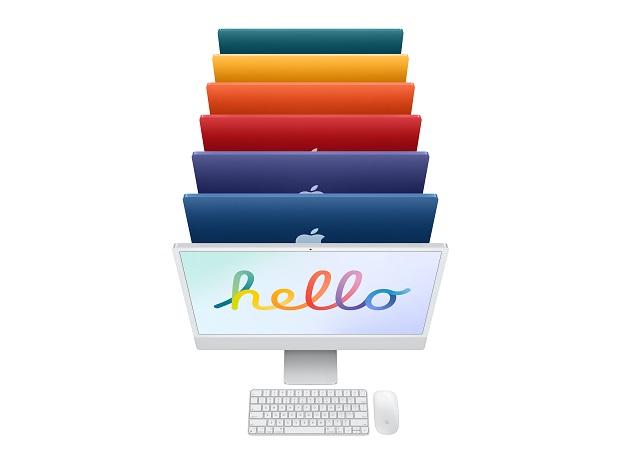
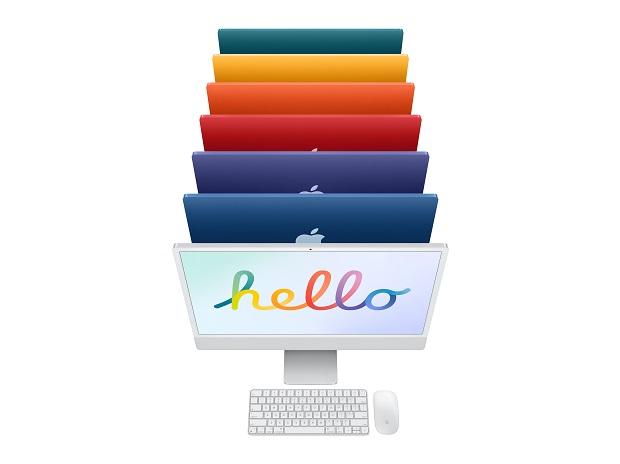
And a refresh of the Mac desktop line boasts seven color options, harkening back to the famous candy-colored Macs that helped Steve Jobs revive the company in the 1990s.
 

ALSO READ: Apple will let Parler back on App Store following improvements: Report

The announcements show how the iPhone maker is accelerating the expansion of its product portfolio and working to keep customers committed to its family of devices even as government scrutiny of the power and reach of major technology firms intensifies.

Read Complete Article