Global TWS market to see 33% growth in 2021, Apple set to lead: Report

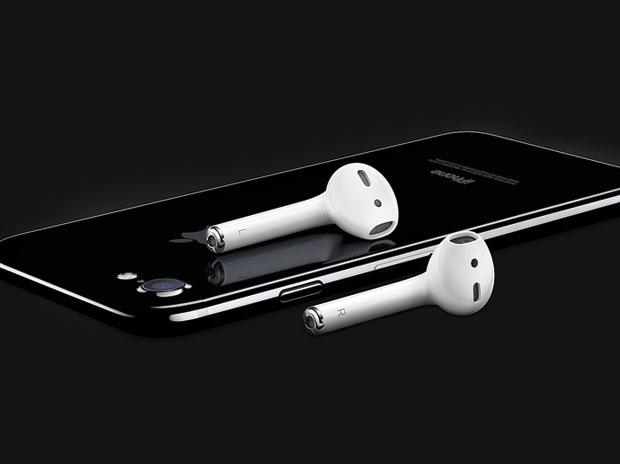
The global TWS (True Wireless Stereo Headset) market is expected to grow 33 per cent (year-over-year) in 2021, reaching 310 million units, according to a new report.

Apple will remain a leader selling around 84 million units but still lose share by 4 per cent.

Apple was expected to defend its top position despite its market share decline from 31 percent to 27 percent. China’s Xiaomi was projected to see its presence remain the same as last year at 9 percent.

At third spot, Samsung’s market share in 2021 was estimated to stay unchanged at 7 percent, according to market tracker Counterpoint Research.

Major top brands such as Apple are likely to launch next-generation products, which will boost the TWS market further.

“The most anticipated is a new release from Apple, its first in two years. We expect it to be one of the biggest drivers of TWS market growth from Q4 2021 to the next year. Apple will maintain strong market leadership based on its loyal customer base, although its share will inevitably fall with the intensifying competition,” said Senior Research Analyst Liz Lee in a statement on Wednesday.

As Covid-19 will unlikely ease in a short time despite the spread of vaccination, the pent-up demand for high-end TWS is not expected to explode until late Q3 2021.

“At that point, the market focus will gradually shift to the mid- to high-price segment as vaccinations help consumer sentiment improve. Then, most premium brands will add advanced features and various functions to their new models and create high value addition in the long term,” Lee noted.

Meanwhile, low- to mid-priced brands will further enhance price competitiveness to compete for market share.

In terms of brand performance, there was no big surprise in 2020. Apple continued to dominate but its share declined steadily through the year and fell below one-third of the TWS market.

The market slightly exceeded the initial annual estimate for 2020 to reach 233 million units, mainly driven by the strong performance of low- and mid-price segments, the report mentioned.

Read Complete Article

Covid-19: Google says 20% of workers will be remote, many more hybrid

Google says it expects about 20% of ifs workforce to still work remotely after its offices reopen this fall, while some 60% will work a hybrid schedule that includes about three days in the office and two days wherever they work best.

The remaining 20% can change their location to a different Google office.

The policy announced Wednesday relaxes the company’s stricter earlier stance.

The future of work is flexibility, CEO Sundar Pichai wrote in an email to employees that was also posted on Google’s website.

The changes above are a starting point to help us do our very best work and have fun doing it.

Most of Google’s 135,000 employees can continue to work from home through September of this year.

For up to 20 days per year, Google employees will also be able to work from any location other than their main office. That’s up from a previous allotment of 10 days.

The company based in Mountain View, California, will also continue offering extra reset days days off to help cope with the pandemic.

Google was among the first major technology companies last year to tell its employees to work from home at the onset of the pandemic. Other tech giants, such as Facebook and Twitter, have announced that people can work from home permanently after the pandemic if their jobs allow for it.

Read Complete Article

Shipping players benefit from new biz apart from 10-year high Baltic Dry

With Baltic Dry Index having hit 10-year high recently, Indian shipping companies are not just benefitting from high freight but also from increased trade with Bangladesh and Vietnam, industry experts said today.

“Construction activity has picked up significantly in Bangladesh as the country is focusing on infrastructure growth. Due to this, Indian shipping companies are witnessing increased cargo volumes with a lot of bulk raw material getting shipped. This is going to be a long term trend as infrastructure push is expected to continue,” Captain Rahul Bhargava, chief operating officer at Essar Shipping told Business Standard.

Shipping Corporation of India, Great Eastern Shipping, Tolani Shipping and Essar Shipping are into bulk carriers along with other segment fleet in the domestic market.

“All vessels on spot charter will earn more and most companies keep a combination of spot and contracted vessels, so the benefit would vary depending upon the portfolio,” informed Anil Devli, chief executive officer at Indian National Shipowner’s Association.

Another trade route, which has strengthened for India though a seasonal one is export of rice to both Bangladesh and Vietnam.

“Export of rice has emerged as a new business for domestic shipping companies in the last few weeks. We have already shipped close to 200,000 tonne rice to Vietnam and Bangladesh and another 150,000 tonne would be shipped soon. This trend, however, is expected to be short-lived and would last for another 2 months. But its new commodity for domestic shipping companies,” informed Bhargava.

Meanwhile, with China switching its trading partners due to geo-political issues, increased trade between the dragon country and South Africa for bauxite and with the US for coal is also auguring well with tonne miles going up.

Read Complete Article

DoT permits telcos to go ahead with 5G trials; Chinese companies kept out

The Department of Telecommunications (DoT) on Tuesday allowed mobile operators to conduct 5G trials in the country with equipment manufacturers they have tied up with, barring Chinese companies.

The Central government has allowed telecom companies including Bharti Airtel, Reliance Jio Infocomm, Vodafone Idea, and MTNL to conduct trials for uses and applications of 5G technology, an official statement said.

These service providers have tied up with original equipment manufacturers and technology providers such as Ericsson, Nokia, Samsung, and the C-DoT.

In addition, Reliance Jio Infocomm will be conducting trials using its own technology. The permissions are in accordance with the priorities and the names of technology partners identified by the companies themselves.

“Nokia India welcomes the government’s decision to conduct trials including in rural and semi-urban areas, aligned with the long-term vision of a Digital India. We are confident of our readiness to support our customers in implementing 5G strategy with the advantage of our technology leadership, our experience in serving customers globally, and our initiatives in India including 5G manufacturing in Chennai,” the Nokia India spokesperson said.

Experimental spectrum is being given in various bands, which include the mid-band (3.2 GHz to 3.67 GHz), millimetre wave band (24.25 GHz to 28.5 GHz) and sub-gigahertz band (700 GHz).

Read Complete Article

Boeing faces new hurdle in 737 MAX electrical grounding issue: Sources

By Eric M. Johnson, David Shepardson and Tracy Rucinski

SEATTLE/WASHINGTON/CHICAGO (Reuters) – U.S. air safety officials have asked Boeing Co to supply fresh analysis and documentation showing numerous 737 MAX subsystems would not be affected by electrical grounding issues first flagged in three areas of the jet in April, two people familiar with the matter told Reuters.

The extra analysis injects new uncertainty over the timing of when Boeing’s best-selling jetliner would be cleared to fly by the U.S. Federal Aviation Administration (FAA).

The electrical problems have suspended nearly a quarter of its 737 MAX fleet.

U.S. airlines have said they expected Boeing to release the service bulletins as soon as this week that would allow them to make fixes and soon return the planes to service, but this latest issue will likely push that timelime back.

“We continue to work closely with the FAA and our customers to address the ground path issue in affected 737s,” a Boeing spokeswoman said.

Asked about the status of the planes, a FAA spokesman said “we are continuing to work with Boeing.”

Read Complete Article

BCCI set to incur losses of over Rs 2,000 cr due to IPL 2021 postponement

The BCCI stands to lose over Rs 2000 crore of the broadcast and sponsorship money earmarked for this year’s Indian Premier League which was indefinitely postponed on Tuesday due to Covid-19 cases in its bio-bubble.

The BCCI was forced to postpone the IPL after multiple cases of Covid-19 among players and support staff emerged from Ahmedabad and New Delhi in the past couple of days.

“We would be losing anything between Rs 2000 to Rs 2500 crore for the midway postponement of this season. I would say something in the range of Rs 2200 crore will be closer to accurate estimation,” a senior BCCI official told PTI on conditions of anonymity.

The 52-day 60-match tournament would have concluded in Ahmedabad on May 30. However, only 24 days of cricket was possible with 29 completed games before the virus halted proceedings.

The biggest loss for BCCI is the money it gets from Star Sports for the broadcast rights of the tournament.

Star has a five-year contract worth Rs 16,347 crore which is Rs 3269.4 crore per year. If there are 60 games in a season, the per match valuation comes to approximately Rs 54.5 crore.

If Star pays per match, then the amount for 29 matches would be Rs 1580 crore approximately out of what would have been Rs 3270 crore for a full tournament. This means a loss of Rs 1690 crore for the Board.

Read Complete Article

Ola Electric announces appointment of Wayne Burgess as head, vehicle design

Ola Electric on Tuesday announced the appointment of Wayne Burgess, as head of vehicle design for its entire product range including scooters, bikes, cars and more.

Burgess brings a wealth of international automotive design experience, having worked on some of the most legendary and iconic cars in automotive history including the Bentley Arnage in 1998, Aston Martin’s DB9 in the mid 2000s and more recently, the Jaguar XF, F-Type, F-Pace SUV, XE and many others.

“Wayne is a fantastic addition to our leadership team and will bring global appeal, and design aesthetic to our industry changing electric vehicles. As the world moves to EVs, the vehicle form factors will be fundamentally reimagined. Wayne’s expertise in designing some of the most legendary vehicles will also be helpful in bringing these new form factors to consumers. I look forward to collaborating with him to build the most iconic range of EVs in the world,” said Bhavish Aggarwal, chairman and group CEO, Ola.

Burgess has spent almost three decades designing vehicles for the majority of British premium automotive manufacturers, from Rolls Royce and Bentley in his early career, to Aston Martin and Jaguar Landrover to, more recently, Lotus. Notably, he was the chief designer for the Jaguar F-Type sports car, and then studio director for the Jaguar F-Pace SUV.

Expressing a keen interest in taking charge of vehicle design at Ola Electric, Burgess said, “I am looking forward to my work at Ola Electric and to the opportunity to lead a team that will work on designing cutting-edge electric vehicles for the world. I am thrilled to be part of Ola as it accelerates on its path to become a leader in global EV solutions.”

Ola is gearing up to launch the first in its range of electric scooters in the coming months.

The Ola Scooter will roll out from the Ola Future factory which is being built at record-speed in Tamil Nadu. The Ola Future factory will be the world’s largest two-wheeler factory when fully operational with 10 million-a-year capacity next year. The factory will start manufacturing the Ola Scooter as soon as its first phase of 2 million annual capacity is ready this summer.

Read Complete Article

India notifies digital tax threshold of Rs 2 crore and 300,000 users

India on Monday notified a revenue threshold of Rs 2 crore and a limit of 300,000 users for non-resident technology firms such as Google, Facebook, Netflix, to pay tax in India under new or revised bilateral tax pacts.

This is part of the Significant Economic Presence (SEP) principle, which was introduced in the Finance Bill 2018-19, and which widened the scope of ‘business connection’ to include provision of download of data or software, if aggregate payments from such transactions exceed a prescribed amount, or if a multinational’s interaction is with a prescribed number of users.

“…the amount of aggregate of payments arising from transaction, or transactions of goods, services or property carried out by a non-resident, with any person in India…including download of data or software in India during the previous year, shall be Rs 2 crore…the number of users with whom systematic and continuous business activities are solicited or who are engaged in interaction shall be three lakh,” said the notification issued by the ministry of finance.

This will come into effect from April 1, 2022.

However, the existing double taxation avoidance agreements will not be covered under the proposed change, implying that in order to tax Facebook, Google and the like, India will require to renegotiate the tax treaty with the US.

The digital companies will come under India’s tax net only when the existing treaties get reviewed or when new ones are signed.

“Considering that the threshold has been kept quite low, many non-residents would come under the ambit of SEP. However, a non-resident can still take shelter under the tax treaties since India’s existing treaties contain the conventional concept of permanent establishment (PE) for taxing business profits of a non-resident and the inclusion of SEP in the Act will not be read into the tax treaties unless they are amended,” said Rakesh Nangia, managing partner, Nangia Anderson LLP. “Though the residents of treaty countries can claim the beneficial provisions of treaty, non-treaty jurisdictions and non-residents not eligible for treaty benefit, may have to review their position on taxability and compliances,” he added.

Read Complete Article

Asus Zenfone 8 likely to bring back 3.5mm audio jack, shed flip camera

Taiwanese tech giant ASUS is set to reportedly launch Zenfone 8 smartphone with a 3.5mm audio jack on May 12.

When the Zenfone 7 series was announced last year, the two phones were missing the audio jack that was present on the Zenfone 6, reports GizmoChina.

Apart from the audio jack, the Zenfone 8 is set to feature a punch hole at the top left corner of the screen for the front-facing camera, which means that the flip cameras will not make a comeback.

The phone will also have a high refresh rate and OLED displays with 1080p resolutions.

It has been reported that the Zenfone 8 Mini which is expected to be a compact model will have a 5.92-inch screen, a 4000mAh battery and support for 30W fast charging.

Ahead of the launch, a second ASUS model has appeared on GeekBench, this time around the Zenfone 8.

The model appears with the model number ASUS_I004D which corresponds to the model number of the Zenfone 8 spotted on a kernel source code breakdown done by the guys at XDA Developers.

The GeekBench listing shows the Zenfone 8 will also pack a Qualcomm Snapdragon 888 chipset just like the Zenfone 8 Mini.

Read Complete Article

Epic Games VS Apple: Trial set to begin on Mon, App Store profits in focus

Apple reportedly registered profits as high as 78 per cent from its App Store in 2018 and 2019, an expert witness for Epic Games has testified, as the Cupertino-based tech giant and Fortnite game developer prepare for a legal battle in the US beginning Monday.

According to The Verge, expert Ned Barnes testified that “information from Apple’s Corporate Financial Planning and Analysis group show the App Store had a 77.8 percent operating margin in 2019, and 74.9 percent in 2018”.

Apple has contested that interpretation of the data, saying “we don’t have a separate profit and loss statement for the App Store”.

“Epic’s experts calculations of the operating margins for the App Store are simply wrong and we look forward to refuting them in court,” an Apple spokesperson was quoted as saying in the report on Saturday.

Epic Games will defend its stance during a lawsuit hearing against from May 3. The companies got involved in a legal battle over the use of an in-game payment system.

While Epic Games argues about Apple’s monopoly over the app market and treats 30 per cent standard fee amount to anti-competitive behaviour that must be regulated by antitrust law, Apple contends that “the whole antitrust allegation and associated dust-kicking is little more than a PR stunt”.

Apple CEO Tim Cook as well as Epic Games Founder and CEO Sweeney may testify in the trial.

Read Complete Article