WhatsApp goes to court against India’s IT rules ‘undermining privacy’

WhatsApp on Tuesday filed a legal challenge against the Indian government, protesting before the Delhi High Court new IT rules that would require messaging services to trace the origin of particular messages.

“Requiring messaging apps to “trace” chats is the equivalent of asking us to keep a fingerprint of every single message sent on WhatsApp, which would break end-to-end encryption and fundamentally undermines people’s right to privacy,” said a WhatsApp spokesperson.

“We have consistently joined civil society and experts around the world in opposing requirements that would violate the privacy of our users. In the meantime, we will also continue to engage with the Government of India on practical solutions aimed at keeping people safe, including responding to valid legal requests for the information available to us,” said the spokesperson.

Under the recently notified Information Technology (Intermediary Guidelines and Digital Media Ethics Code) Rules 2021, social media intermediaries with more than 5 million users and providing messaging services will have to enable identification of the first originator of problematic content that may harm the country’s interests and several other provisions described in the Rules.

ALSO READ: Aim to comply with IT rules, says Facebook as deadline ends today

The social media intermediary will have to do this in response to a judicial order passed by a court or by a competent authority under section 69 of the IT Act.

“Provided also that where the first originator of any information on the computer resource of an intermediary is located outside the territory of India, the first originator of that information within the territory of India shall be deemed to be the first originator of the information for the purpose of this clause,” say the rule.

Read Complete Article

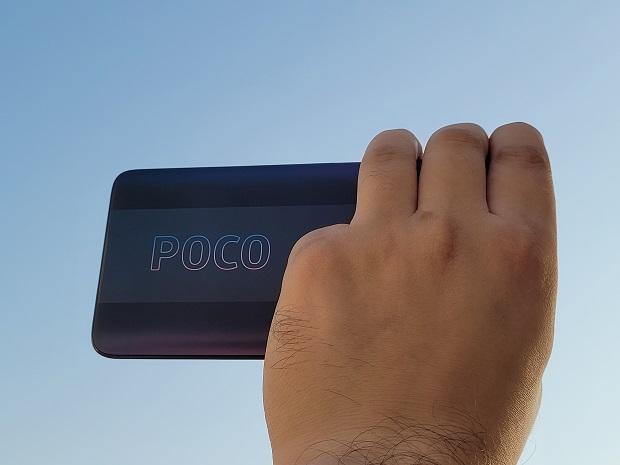
Poco X3 Pro review: Good performance, modest cameras but unwieldy and heavy

Poco X2 (review) is the last smartphone from Chinese smartphone brand Poco that I tested. Though among the good ones of its time, the smartphone left me in the lurch simply because I was expecting Poco to make a comeback after a silent gap of over two years after the Poco F1. The next Poco smartphone that I used after about a year, the Poco X3 Pro, seemed to be a performance-centric package. With Qualcomm Snapdragon 860 system-on-chip in tow, the Poco X3 Pro is touted to be the spiritual successor to the Poco F1. But is it really that? Let’s find out:

Poco X3 Pro: Design

Poco is one of the brands that do not shy away from experimenting with radical colour themes in their smartphones. That legacy continues with the Poco X3 Pro. Aimed at young buyers, the phone comes in three jazzy colour options – graphite black (review unit), steel blue and golden bronze. The colour theme is accentuated by an unconventionally shaped rear camera module and an intriguing patterned design on the back cover. Speaking of the back cover, it is made of good quality polycarbonate featuring a thick glossy stripe at the centre sandwiched between stripes in matte finish on the sides. The centre stripe features a Poco logo, which is big enough to come to notice but outlined for minimal distraction. Rounding up the package is the IP53 rating, which is good to handle minor water splashes and dust abuse. It is, however, strongly advised not to expose the phone to either water or dust as both can damage the phone severely. While the overall design is good, the build is uninspiring. The Poco X3 Pro is big, heavy and bulky. It weighs 213g and is 9.4mm thick on its thinnest side.

Poco X3 Pro: Display

Not much seems to have changed here since the Poco X2 and the display on the Poco X3 Pro is mediocre at best. The phone sports a 6.67-inch LCD screen of a fullHD+ (2400 x 1080 pixels) resolution, stretched in a tall 20:9 aspect ratio. Though the screen does well with contrast, it seems off with regard to colours, brightness and viewing angles. The screen supports HDR10, but the panel’s abysmal brightness hampers its utility to a large extent. The brightness might not be good enough for HDR10 content, but it does not temper the screen’s sunlight legibility. It is also a competent screen for fast-paced games like Call of Duty Mobile, thanks to the 240Hz touch sampling rate. As for the refresh rate, the screen goes up to 120Hz and variably adjusts it based on on-screen content requirements. That said, the user interface (UI) transitions appear lively and enhances user experience (UX) in regular operations (browsing, social media, etc). Being an LCD panel, the phone’s display does not include the on-screen fingerprint sensor, which is placed beneath the side-mounted power button. It is safe, fast and accurate and one of the best things this smartphone offers.

Read Complete Article

Dyson launches new vacuum cleaners with dust-detecting laser technology

British home appliance maker Dyson on Tuesday launched two new brands of vacuum cleaners equipped with dust-detecting laser technology as the company tries to expand sales here amid the pandemic-induced stay-at-home trend.

Dyson’s V15 Detect and V12 Detect Slim cordless vacuum cleaners will be sold in South Korea with price tags of 1.24 million won ($1,100) and 1.09 million won, respectively. The two vacuum cleaners were already launched in select markets earlier this year.

Dyson said the latest vacuum cleaners boast a laser technology on the cleaning head that reveals micro dust and dirt particles on the floor, reports Yonhap news agency.

They also have a piezo sensor that can measure and count dust particles, and show such data on an LCD screen. The sensor, which converts vibrations into electric signals, counts the particles 15,000 times a second, according to the company.

Dyson hopes the latest products can boost sales in South Korea, where it competes against home-grown tech giants, like Samsung Electronics Co. and LG Electronics Inc.

The company in January opened its first flagship store in South Korea to better target local consumers here.

Last year, Dyson’s vacuum cleaner with an omnidirectional head, the Omni-glide, was launched in South Korea first in the world.

Read Complete Article

Google now lets you password-protect page that shows your searches

In a bid to help protect browsing history and search activities of its users from others to see, Google will now let them password-protect the page that shows their searches.

Whenever people use a Google device or product (Android smartphone or Chrome browser), their activity history is stored and is available for them to review via ‘My Activity; feature.

Now, “if you turn on extra verification, Google will make sure it’s really you before you can see or delete your full history on My Activity,” the company said in an update.

“This can help keep your history safer on shared devices. This setting only applies to My Activity. Your history may still appear in other Google products,” the company added.

To strengthen your privacy on shared devices, you can choose to require an extra verification step to view your full history on My Activity.

To activate the verification, go to activity.google.com and click the Manage My Activity verification link.

According to Android Police, once turned on, “the feature will ask you to verify your identity before showing your history”.

“What this actually does is simply take you to the regular Google sign-in page, allowing you to either enter your password or connect using your Android device if you’ve set that up,” the report mentioned.

Read Complete Article

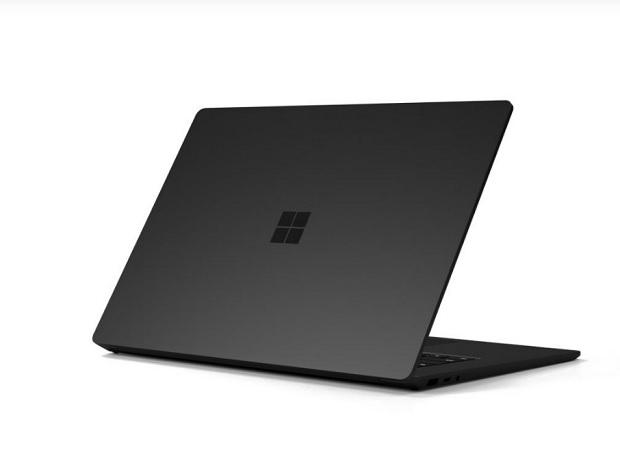
Microsoft brings Surface Laptop 4 to India starting at Rs 102,999

Aimed at the evolving needs of users in hybrid work environments, Microsoft India on Tuesday announced the general availability of Surface Laptop 4 for commercial and education customers.

Surface Laptop 4 for consumers will start from Rs 102,999 (AMD Ryzen 5 4680U, 8GB RAM, 256GB SSD, 13.5-inch size) and going up to Rs 151,999 (Intel Core i5-1135G7, 16GB RAM, 512GB SSD, 13.5-inch).

The device for commercial users will start from Rs 105,499 (AMD Ryzen 5 4680U, 8GB RAM, 256GB SSD, 13.5-inch size) and go up to Rs 177,499 (Intel Core i7-1185G7, 16GB RAM, 512GB SSD, 15-inch), the company said in a statement.

“Our latest line-up provides increased mobility, enhanced performance, and enterprise-grade security features to support the modern-day user throughout their transition into the hybrid era,” said Rajiv Sodhi, Chief Operating Officer, Microsoft India.

The devices are offered in either the 11th Gen Intel Core processors, or AMD Ryzen Mobile Processors with Radeon Graphics Microsoft Surface Edition (8 cores).

The laptop will be available in India for commercial and education customers via authorised retailers and for consumers via amazon.in. Consumer devices will be available with no-cost EMI up to nine months, starting at Rs 11,444 per month.

Surface Laptop 4 will feature the signature 3:2 ‘PixelSense’ high-contrast touchscreen display in both 13.5-inch and 15-inch models, and Dolby Atmos Omnisonic speakers.

Read Complete Article

Twitter, Facebook may not be able to operate in India from May 26

The deadline to comply with the new legal rules meant for big social media platforms, which were issued by the government three months ago, is ending on Tuesday, threatening the operations of the likes of Twitter in India.

According to top official sources, social media platforms such as Twitter, Facebook and others, which were required to abide by the rules notified in the gazette of India on February 25 under Intermediary Guidelines and Digital Media Ethics Code Rules, 2021, have failed to comply on many accounts till date.

The government’s rules will come into effect from May 26.

“If social media companies do not obey the rules, they may lose their status and protections as intermediaries and may become liable for criminal action as per the existing laws of India,” top official sources said.

Except one Indian social media company, Koo, sources said that none of the top social media intermediaries have appointed a resident grievance officer, a chief compliance officer and a nodal contact person yet.

Sources said the failure of social media companies to make these appointments in three months has not gone down well with the government.

With arbitrary suspensions of accounts and inaction over abuses and bigotry on social media platforms, users in India have been persistently complaining against tech giants like Twitter, Facebook and others.

Read Complete Article

Apple HomePod, Mini to support lossless audio via software update

Apple is bringing its lossless audio technology to HomePod and HomePod Mini in a future software update.

Apple has developed its own lossless audio compression technology called Apple Lossless Audio Codec (ALAC).

In a new support document, the tech giant also revealed that Apple TV 4K will only support standard lossless audio at its launch.

Apple Music will offer more than 20 million songs in lossless quality for free at the launch of ALAC technology in June that will reach over 75 million by the end of this year.

Most audio compression techniques lose some amount of data contained in the original source file.

Lossless compression is a form of compression that preserves all of the original data.

In addition to Lossless Audio Codec (ALAC), the entire Apple Music catalog is now also encoded using ALAC in resolutions ranging from “16-bit/44.1 kHz (CD Quality) up to 24-bit/192 kHz,” the company informed.

Apple will deliver music using lossless audio compression to iPhone, iPad, Mac, and Apple TV.

“Lossless will play back normally on Bluetooth speakers and headphones. However, Bluetooth connections don’t support lossless audio,” said the company.

Broadcast radio, live radio and on-demand content from Apple Music 1, Apple Music Hits, Apple Music Country and music videos will not be available in lossless audio.

“We’re offering Apple Music subscribers the additional option to access our entire catalog encoded using lossless audio compression at no extra cost,” said the company.

Read Complete Article

Clubhouse now available on Play Store, early users claim it’s broken

The audio social media platform Clubhouse, which was launched as an iOS-exclusive audio-chat platform back in September 2020, is now available for Android users in India and other parts of the world.

That being said, according to Mashable, those who want to sign up, still need an invite, either from an iOS user or a fellow user of the Android version. Once invited, the sign-up process thereon will be smooth sailing.

However, Android users who’ve tried to sign up have reported that the verification process hasn’t been working as advertised and people aren’t happy about it.

A lot of disappointed users have made their unhappiness known on the Play Store review section. A number of them reported in the reviews section claiming that they haven’t been receiving verification codes and when they try re-entering their phone numbers, they’re either told that the number entered is incorrect or not supported.

To be fair to Clubhouse, this is a public beta and not quite the stable release of the app on Android, but the company should get working to fixing these elements within the app quickly before they lose more users.

As a platform, Clubhouse has been a super popular social media space in 2021, as more people are gradually let into what has traditionally been a fairly exclusive marketplace of ideas.

Though, it seems Clubhouse’s popularity has diminished over the past few months. As per Mashable, Clubhouse had 2 million downloads in January, and while it went up to more than 9.5 million in February.

Read Complete Article

Music streaming giant Spotify adds offline downloads on Apple Watch

Swedish music streaming giant Spotify has announced that it isArolling out the ability to download favourite playlists, albums and podcasts on Apple Watch.

All users are already able to play tracks, albums, playlists and podcasts and now Premium users will also be able to download everything they’re listening to for a true offline and phone-free experience, the company said in a statement.

With the new feature, users can control playback — seamlessly playing, pausing and skipping tracks or podcast episodes — directly from their wrist.

They can also use your Apple Watch to control playback from everything, whether it’s wireless speakers, TVs or gaming consoles, using Spotify Connect.

With Siri support on Apple Watch, users can just say “Hey, Siria followed by your command to play favourite songs, artists, albums, playlists, and podcasts.

Users can also “like” music, ask what’s currently playing, and control your media settings, like volume, skip track, play, and pause.

The new overall experience for Spotify on Apple Watch is rolling out to all users globally over the coming weeks.

Users can either update their watches to the latest version or download the app on the App Store.

Read Complete Article

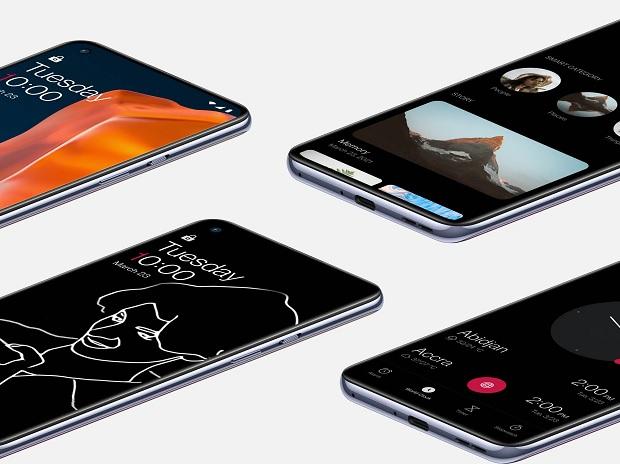
OnePlus 9 review: Competent but lacks fancy bells and whistles of Pro model

The OnePlus 9 Pro (review) is a solid smartphone packed with all sorts of fancy bells and whistles that you expect from a premium smartphone. Though competitively priced, some might find it expensive. For those who do, there is no harm in checking out the Pro model’s younger sibling, the OnePlus 9. Though it cuts some corners on premium features, it brings a motley mix of specifications and features for uncompromised everyday smartphone experience.

Starting with the design, the OnePlus 9 looks almost identical to the Pro model but is more compact. It has a glass cover on the front and back, but the metallic chassis of the Pro model is replaced here by a plastic one. However, the thin and lightweight design and compact form factor compensate for the slightly inferior build. Another apparent change is in the rear camera module, which looks less busy than the one present in the Pro model.

On the front, the OnePlus 9 has a familiar punch-hole display with thin bezels on sides. It is a slightly smaller 6.55-inch AMOLED panel but of a flagship grade with a refresh rate of 120Hz. While the display in the Pro model supports a dynamic refresh rate which variably adjusts the all the way down to 1Hz for extending the on-battery time, the display in the vanilla model operates at either the standard 60Hz or the enhanced 120Hz. Surprisingly, the lack of a dynamic refresh rate here does not compromise on battery efficiency and the OnePlus 9 delivers an on-battery time that is on a par with what you get in the Pro model. However, even if the absence of a dynamic refresh rate does not hinder the user experience, the fullHD+ resolution and lack of value-added display features like motion smoothing do.

Speaking of user experience, the OnePlus 9 ships with the same Android 11-based OxygenOS 11 operating system that powers the Pro model. OnePlus deserves praise for keeping the user interface close to stock Android while integrating value-added features to elevate user experience (customised colour tones, dark mode, night mode, hidden space area, etc). Complementing the user experience is a swift performance, thanks to the Qualcomm Snapdragon 888 system-on-chip, paired with up to 12GB RAM (LPDDR5) and 256GB internal storage (UFS 3.1).

From graphic-intensive games to multimedia editing, there is nothing that the phone could not handle. Moreover, there is a game space with built-in Pro Gaming mode (earlier known as Fnatic mode) for enhanced gaming performance. The OnePlus 9 supports 5G networks, both standalone and non-standalone, and WiFi 6. Though both could not be tested at present, these make for a future-ready smartphone which you might not have to upgrade for connectivity benefits in times to come. The phone also has stereo speakers with Dolby Atmos support.

Read Complete Article