LG converting smartphone production lines to manufacture home appliances

LG Electronics is fast converting its overseas smartphone manufacturing lines into facilities that produce home appliances, industry insiders said on Tuesday, following its decision to withdraw from the mobile business.

LG said the Brazilian government last month approved its plan to expand its Manaus plant in Amazonas, northwestern Brazil, in a move to shift its production lines from the Taubate site on the east coast.

When the $62 million project is completed, LG Electronics will have new production lines for laptops and monitors at the Manaus plant.

The South Korean tech giant said all of its Brazilian manufacturing will be consolidated in Manaus down the road, reports Yonhap news agency.

Started in 1995, the Manaus plant was originally established to manufacture TVs, microwave ovens and DVD players, with air conditioners added in 2001. The Taubate plant has been in operation since 2005, producing mobile phones, monitors and laptops.

The latest relocation follows LG’s move in April to convert its smartphone line at the Haiphong plant to make home appliances in northern Vietnam.

LG earlier announced it will exit from the mobile business by July 31 after years of money-losing performances. Since then, it has been working to relocate its mobile workforce and resources to its core home appliance business.

Demand for LG’s premium appliances has been soaring on the back of the pandemic-induced stay-at-home trend.


Read Complete Article

India and the world want social media firms to do more for ‘safe harbour’

As India tightens the noose of regulatory compliance around social media platforms, there have been concerns about dilution of the safe harbour provision in the country’s Information Technology Rules.

Safe harbour means immunity for social media companies, in case any content transmitted over their platforms violates the local laws. Facebook, Twitter, Instagram, YouTube and a host of other social media platforms enjoy such immunity, as several jurisdictions, including India, recognise these platforms are like bookstore owners, mere conduits that shouldn’t be held accountable for the content of the books in their store.

But in the digital economy, various countries, looking to check the spread of misinformation and hate speech, require social media platforms to fulfil certain conditions to enjoy their safe harbour. A common condition across countries is that these platforms should remove ‘unlawful’ content, after receiving actual knowledge about the same in a notice from the courts or law enforcement agencies (LEAs). India’s new IT rules broaden these conditions substantially. They require significant social media intermediaries — social media platforms with over 5 million users — to identify the first originator of any piece of information, which the government feels jeopardises the sovereignty and integrity of India. Law experts have pointed out that the wording of these rules is too broad-based and could mean many things. There is also the concern about what the government treats as fake news or unlawful content, as recent events such as the clampdown on young ‘toolkit’ activists would attest.

WhatsApp said that to identify the first originator, it would need to break the end-to-end encryption (E2E) on its platform. Tech experts agree. E2E forms the fulcrum of WhatsApp’s, Signal’s and Telegram’s claims of safeguarding user privacy. It means that no one, even WhatsApp, can read your messages. But to comply with the new norms, it would have to store ‘hashed’ data about the originator of each message. So the new rules require platforms to store more user data, undermining the principle of data minimisation.

Read Complete Article

Realme X7 Max 5G, Smart TV 4K launched in India: Know price, specs and more

Realme on Monday launched in India the Realme X7 Max smartphone along with a two 4K LED smart televisions. The Realme X7 Max is the first smartphone in the country powered by MediaTek Dimensity 1200 system-on-chip. It is a flagship grade smartphone with super AMOLED screen of 120Hz refresh rate, stereo speakers with Hi-Res audio and Dolby Atmos support, 64-megapixel based triple camera array on the back, and 50W fast-charging capability. The Realme Smart TV 4K, on the other hand, boasts UHD screen with support for Dolby Vision and HDR10 content, DTS surround sound and Dolby Audio, and hands-free voice assistant through built-in far-field microphones.

The Realme X7 Max will be available in mercury silver, asteroid black and milky way colours from June 4 on Realme online portal, Flipkart and other mainline channels. The phone will be available in 8GB/128GB and 12GB/256GB configuration, priced at Rs 26,999 and Rs 29,999, respectively.

The Realme Smart TV 4K comes in 43-inch and 50-inch screen sizes priced at Rs 27,999 and Rs 39,999, respectively. The TVs will go on a sale from June 4 on Realme online portal, Flipkart and other mainline stores.

Realme X7 Max 5G: Specifications

Third smartphone in the performance-centric Realme X7 series, the Max edition is powered by MediaTek Dimensity 1200 system-on-chip. It is a flagship octa-core chip with a prime Cortex-A78 core clocked at up to 3.0GHz; three additional A78 cores clocked at up to 2.6GHz; and four energy-efficient Cortex-A55 cores that could go up to 2.0GHz. Besides, the phone sports a 6.43-inch fullHD+ super AMOLED screen of 120Hz refresh rate and 360Hz touch sampling rate. It boasts a triple-camera set-up on the rear, featuring a 64-megapixel primary sensor, an 8MP ultra-wide sensor, and a 2MP macro sensor. On the front, the phone has a 16MP punch-hole camera. It is a 5G smartphone with dual-SIM dual-standby and standalone carrier support on both SIMs. The phone boots Android 11 operating system based Realme UI 2. Powered by 4,500 mAh battery, the phone supports 50W fast-charging through supplies 65W fast charger.

Read Complete Article

Global chip supply shortages may take couple of years to address: Intel CEO

Global chip maker Intel on Monday said it could take a couple of years to address the supply shortage in the semiconductor ecosystem that is witnessing huge demand for tech products, accelerated by the COVID pandemic.

Intel CEO Pat Gelsinger noted that the work and study-from-home trends during the COVID-19 pandemic have led to a “cycle of explosive growth in semiconductors” that has placed huge strain on global supply chains around the world.

“We have been working diligently with our partners… to address constraints and increase output to meet demand, and we are acting to help ensure capacity to meet the world’s needs for this new era… But, while the industry has taken steps to address near-term constraints, it could still take a couple of years for the ecosystem to address shortages of foundry capacity, substrates and components,” he said at a virtual session at the Computex event.

He stated that the company has doubled its internal wafer capacity in the past four years, and that it is driving a collaborative approach to help the supply chain.

Semiconductors play a crucial role in everything, right from computers to appliances, communication devices, transportation systems to critical infrastructure.

“We’ve already announced more than USD 20 billion of new investment in our foundry capability. This includes large scale capacity expansion in Arizona, in support for advanced semiconductor manufacturing technologies in New Mexico. We plan to expand to other locations in the US and Europe, ensuring a sustainable and secure semiconductor supply chain for the world,” Gelsinger said.

Intel Corporate Vice President and General Manager CCG Sales Steve Long announced the launch of two new 11th generation Intel core SKUs that will help the company deliver performance and extend its leadership in the thin and light notebook category.

The company is also launching the Intel 5G solution 5000, its first 5G product for the next-generation of PC experiences.

“This is Intel’s first 5G product coming out from our previously announced collaboration with MediaTek with global certification. Acer, Asus and HP are expected to bring these 5G-enabled PCs to market this year and the momentum continues in 2022, with over 29 designs expected,” Long said.

Read Complete Article

Twitter has to comply with new IT rules for digital media, says HC

Twitter has to comply with the new Information Technology Rules for digital media if they have not been stayed, the Delhi High Court said on Monday.

Justice Rekha Palli issued notice to the Centre and social media platform Twitter seeking their stand on a plea by a lawyer, Amit Acharya, claiming non-compliance of the rules by it.

While Twitter claimed before the court that it has complied with the rules and appointed a resident grievance officer, the central government disputed the claim.

“They have to follow it (rules), if it has not been stayed,” the court said.

In his plea, filed through advocate Akash Vajpai and Manish Kumar, Acharya said that he came to know about the alleged non-compliance when he tried to lodge a complaint against a couple of tweets.

During the hearing, central government standing counsel Ripudaman Singh Bhardwaj told the court that Twitter has not complied with the rules.

Acharya, in his plea, said that the new IT Rules took effect from February 25 and the Centre had given three months to every social media intermediary, including Twitter, to comply with them.

He contended that the three-month period got over on May 25, but no resident grievance officer was appointed by Twitter to deal with complaints regarding tweets on its platform.

The petition has sought a direction to Twitter to appoint a resident grievance officer without further delay. It has also sought a direction to the Centre to ensure that the IT rules are complied with.

Twitter had recently said it was committed to India as a vital market, but criticised the new IT rules and regulations, saying they “inhibit free, open public conversation”.

Responding to Twitter’s comments, the Centre had said the social media platform was levelling baseless and false allegations to defame India and dictating terms to the world’s largest democracy.

Read Complete Article

Realme X7 Max, Smart TV 4K launching today at 12:30 pm: Livestream and more

Realme is set to launch in India the Realme X7 Max smartphone and a couple of 4K LED smart televisions at 12:30 pm on Monday. The Chinese smartphone brand is hosting a virtual event to launch the products, and the event will livestream on its social media platforms, including Facebook and YouTube. You can also watch the livestream on the video embedded below.Realme X7 Max 5G

Third smartphone in the performance-centric Realme X7 series, the Max edition will be powered by MediaTek Dimensity 1200 system-on-chip. It is a flagship octa-core chip with a prime Cortex-A78 core clocked at up to 3.0GHz; three additional A78 cores clocked at up to 2.6GHz; and four energy-efficient Cortex-A55 cores that could go up to 2.0GHz. Besides, the phone will sport a super AMOLED screen of 120Hz refresh rate. It will boast a triple-camera set-up on the rear, featuring a 64-megapixel primary sensor.

It will be a 5G smartphone with dual-SIM dual-standby and standalone carrier support on both SIMs. The phone will boot Android 11 operating system based Realme UI 2. It will ship with 65W fast-charger but will support 50W charging capability.Realme Smart TV 4K

The Realme Smart TV 4K will come in two screen sizes – 50-inch and 43-inch. Both will be similar to each other with regard to features and specifications. The TVs will sport 4K UHD LED screen of 280 nits average brightness level. Importantly, both the TVs will support HDR10 and Dolby Vision high dynamic range content. Besides, they both will feature a 24W quad-speakers set-up powered by both DTS surround and Dolby Atmos audio.

Read Complete Article

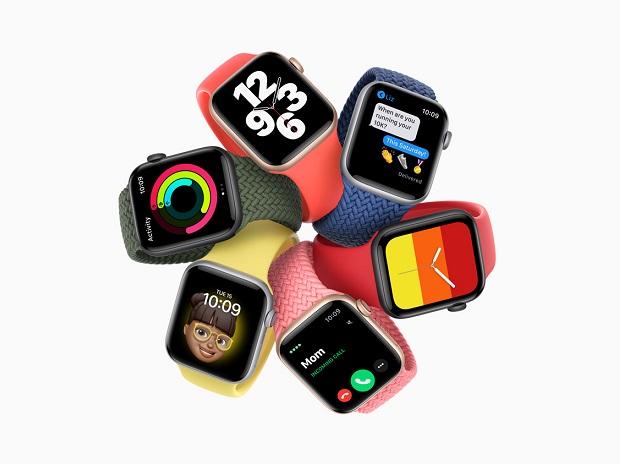
Apple logs 50% growth as global smartwatch market jumps 35% in Q1

Apple maintained its leading position and registered a healthy 50 per cent growth in the global smartwatch market in the first quarter this year, as worldwide shipments in grew 35 per cent (on-year) in Q1 2021, a new report showed on Thursday.

With a surge in demand for its Series 6 models, Apple saw its market share climb by 3 per cent from the year-ago quarter to reach 33.5 per cent in the March quarter this year, according to Counterpoint Research’s ‘Global Smartwatch Model Tracker’.

Samsung’s shipments also rose 27 per cent with the popularity of the Galaxy Watch 3 and Galaxy Watch Active series.

Huawei continued to lose share compared to a strong quarter a year ago.

Apple was able to further solidify its leadership position in the market by widening the portfolio from Watch SE to Series 6 at the right time. This may drive Samsung to launch a mid-price-tier model to boost growth,” said senior analyst Sujeong Lim.

In terms of smartwatch OS platforms, Apple’s WatchOS captured more than a third of the market with a growing attach rate to its base of billion iPhone users.

Google’s Wear OS has not yet achieved such success in smartwatches.

“This is because most of the major smartwatch brands have developed and installed their own proprietary OS (like Fitbit OS, Tizen and Garmin OS), the report showed.

Read Complete Article

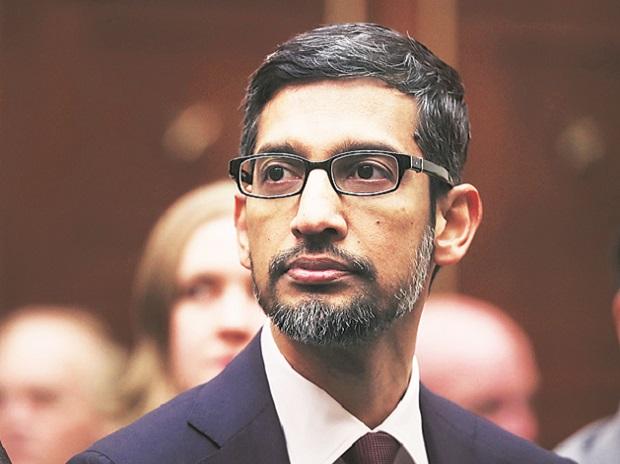
Working closely with Jio to build affordable smartphone: Google CEO Pichai

Google CEO Sundar Pichai on Thursday said the company continues to engage closely with partner Jio on the initiative of building an affordable smartphone and that work is underway on the project.

Last year, Google had picked up a 7.7 per cent stake in Jio Platforms for Rs 33,737 crore. It had also entered into a commercial agreement with Jio Platforms to jointly develop an entry-level, affordable smartphone.

“We are focused on building an affordable phone… we are committed to making progress on the project and we are working with them (Jio),” Pichai said in a virtual conference with select reporters from Asia Pacific.

He, however, did not divulge other details, including possible launch date and pricing.

Availability of affordable devices, along with cheap data rates can help bring the internet within reach for more people across the country.

Google’s investment in Jio Platforms was part of ‘Google for India Digitisation Fund’ that was announced last year. In July last year, Pichai had unveiled plans to invest Rs 75,000 crore (USD 10 billion) in India over the next five to seven years to help accelerate the adoption of digital technologies in the country.

“Google is also looking at new opportunities to deploy funds from its USD 10 billion India Digitisation Fund (IDF), and will make some announcements later this year,” Pichai said on Thursday.

Read Complete Article

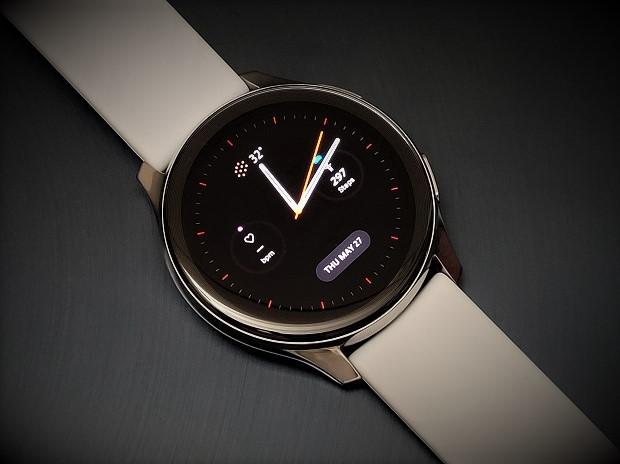
OnePlus Watch review: Solid for starters, but not without software snags

Looking to make a toehold in the market beyond smartphones, OnePlus is gradually expanding its products line-up. Fresh in the company’s portfolio is a smart wearable, the OnePlus Watch. Labelled a smartwatch, the OnePlus Watch covers a wide spectrum of features and services that one looks for in smartwatches. Among the most notable is the built-in storage for music, a speaker and mic set-up to attend calls, and a sensor to monitor blood oxygen saturation (SpO2). As a debutant, the OnePlus Watch seems to be a solid smartwatch. But how does it fare vis-à-vis peers? Let’s find out:

What’s good

Design: OnePlus has done a spectacular job in designing its first smartwatch. The Watch looks premium, especially the moonlight silver colour variant (review unit), which goes well with most outfits. It has a solid build, complemented by a circular case that makes it look more like a watch and less like a toy. The top side of the case is dominated by a screen with thin bezels around. It is a touch screen with curved glass on the top to aid the watch’s gesture-based navigation. At the bottom, the slightly raised centre accommodates sensors for monitoring heart rate and blood oxygen, and charging pins. While the case is made of stainless steel, there is a plastic covering at the bottom. This makes the watch comfortable to wear as the temperature effect on the stainless steel does not pass on to the skin. The case has two buttons – the top one for the menu and the other (customisable) for fitness modes.

Display: The OnePlus Watch design is accentuated by a bold-looking 1.39-inch AMOLED touchscreen of a 454 x 454 resolution. The screen supports sliding gestures; swipe down for quick settings, swipe up for notifications, swipe right to go back, and swipe left to access music player and information related to heart rate, stress, weather, steps count, etc. The screen is bright, vivid and has good sunlight legibility. It supports several watch faces, most with dark backgrounds that look dazzling on an AMOLED screen. The watch also supports custom faces, allowing you to turn any picture from your phone into a watch face background.

Health and fitness features: The OnePlus Watch is loaded with several health and fitness features, including the uncommon stress and air pressure monitors. Starting from health-related features, the smartwatch has a multipurpose heart rate sensor, which registers heart rhythms during active and resting hours. Through this sensor, the watch also monitors stress levels. It supports auto stress level monitoring and has a dedicated breathing exercise built in; this comes in handy in bringing down the stress level. The heart-rate sensor also doubles up as a sleep monitor to register sleep quality. Besides the heart rate sensor, there is a dedicated sensor for measuring oxygen saturation in blood. The Watch is capable of auto-tracking SpO2 during sleep, and there is a provision to manually measure it as well. As for accuracy, the sensor works fine and the deviation in reading is +/- 2 in most cases. Important to note that the watch is not a medical device, so the measurement data and results are for reference only, not a basis for diagnosis and treatment.

Read Complete Article

Cyclone Yaas LIVE tracking: Extremely heavy rain in Odisha, parts of Bengal

Cyclone Yaas LIVE updates: The landfall process of very severe cyclonic storm Yaas began at 9 am on Wednesday near the Dhamra port in Odisha’s Bhadrak district, an official said. The location of the landfall is north of Dhamra and south of Bahanaga, close to Bahanaga block, on the coast, around 50 km of Balasore, he said.

The wind speed during landfall was at 130-140 kmph, gusting to 155 kmph, as per Doppler radar data.

“The landfall process has begun and will take three- four hours to complete. The maximum impact will be in Balasore and Bhadrak districts,” Odisha’s Special Relief Commissioner PK Jena said.

 In view of the storm, the coastal states of West Bengal, Odisha and Jharkhand carried out a mass evacuation drive and over 1.2 million people have been shifted to safe shelters.

 Last week, Cyclone Tauktae slammed into the west coast.Cyclone Yaas update: Yaas to reach Jharkhand on Thursday

Cyclone Yaas is crossing Odisha border, south of Balasore. It’ll reach Jharkhand tomorrow morning. It caused heavy to extremely heavy rain in Odisha in past 24 hrs. North Odisha & coastal Odisha expected to receive heavy to extremely heavy rain today: IMD DG Mrutyunjay Mohapatra

Read Complete Article