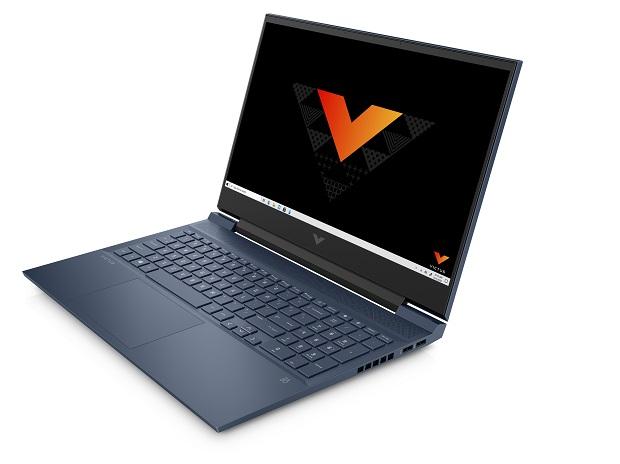
HP Victus 16 gaming laptops with AMD Ryzen, Intel Core processors launched

American information technology company Hewlett-Packard on Monday launched in India the Victus 16 range of gaming laptop. Powered by AMD Ryzen and Intel Core processors, the Victus 16 laptops boast high resolution screen of fast refresh rate, enhanced thermal control features, and HP’s proprietary OMEN Gaming Hub. The Victus by HP E series laptops, powered by AMD Ryzen processor, will be available on Amazon at a price starting at Rs 64,999. The Victus by HP D series laptops, powered by 11th Gen Intel processor, is priced Rs 74,999 onwards.

It will be available on Reliance digital store in coming weeks.

“We are on the cusp of a major gaming boom in India based on the rising popularity of gaming witnessed in the last few years. For youngsters in India, gaming is increasingly becoming a passion point like music or any other sport. In fact, HP India’s recent Gaming Landscape Report 2021 suggests that over 90 per cent respondents agree that gaming is a viable career option. Believing we have merely touched the tip of an iceberg, the Victus Line up is created for mainstream players, giving them access to an elevated, gaming experience,” Vickram Bedi, Senior Director (Personal Systems), HP India Market said.

Victus by HP E series configuration:

  • Processor: AMD Ryzen 5 5600H and Ryzen 7 5800H Mobile Processors
  • Graphics: Up to NVIDIA GeForce RTXTM 3060 Laptop GPU (6GB)
  • Memory: Up to 16GB, upgradable up to 32GB DDR4 RAM
  • Storage: 512GB PCIe
  • Colour: Mica silver

Read Complete Article

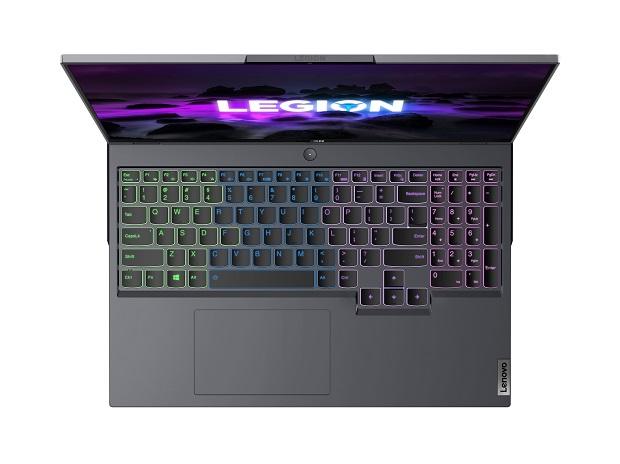
Lenovo launches Legion 5 Pro gaming laptops with Nvidia RTX 30 series GPUs

Chinese electronics maker Lenovo on Monday launched in India the Legion 5 Pro gaming laptop. Powered by AMD Ryzen 5000 H-series processors, the gaming-centric laptop boasts up to 140W NVIDIA GeForce RTX 3070 discrete graphic processing unit. Priced at Rs 1,39,990 (for NVIDIA GeForce RTX 3060, 16GB) and Rs 1,59,990 (for NVIDIA GeForce RTX 3070, 32GB), the Lenovo Legion 5 Pro is now available for pre-ordered on Amazon India and Lenovo online portal. It will be available at retail stores from August.

As for the specifications, the Lenovo Legion 5 Pro is powered by the Ryzen 7 5800H processor, which is built on AMD’s ‘Zen 3’ architecture. According to Lenovo, the gaming laptop is equipped to deliver competitive gaming and productivity performance with lightning-fast frame rates and uncompromised battery life of up to 8.1 hours.

The Legion 5 Pro comes with the NVIDIA GeForce RTX 30 Series discrete graphics processing unit. These GPUs boast Nvidia’s 2nd Generation Ray Tracing, 3rd Generation AI Tensor Cores, etc. According to Lenovo, the Legion 5 Pro is capable of peak graphics performance at up to 140W without thermal throttling. The laptop comes with Lenovo’s Coldfront 3.0 thermal management technology, which helps the machine in maintaining thermals.

ALSO READ: HP Victus 16 gaming laptops with AMD Ryzen, Intel Core processors launched

The Legion 5 Pro is touted by the company to offer a 90 per cent screen-to-body ratio. It sports a 16-inch QHD resolution IPS screen of 165Hz refresh rate and up to 3ms response time. It is a 16:10 aspect ratio screen with support for NVIDIA G-SYNC and AMD FreeSync technologies. This screen supports Dolby Vision, VESA Display, and HDR 400. Besides, it is 100 per cent sRGB rated for colour accuracy, and is touted to hit peak brightness of 500 nits.

Read Complete Article

Facebook, tech giants to target manifestos, far-right militias in database

By Elizabeth Culliford

(Reuters) – A counterterrorism organization formed by some of the biggest U.S. tech companies including Facebook and Microsoft is significantly expanding the types of extremist content shared between firms in a key database, aiming to crack down on material from white supremacists and far-right militias, the group told Reuters.

Until now, the Global Internet Forum to Counter Terrorism’s (GIFCT) database has focused on videos and images from terrorist groups on a United Nations list and so has largely consisted of content from Islamist extremist organizations such as Islamic State, al Qaeda and the Taliban.

Over the next few months, the group will add attacker manifestos – often shared by sympathizers after white supremacist violence – and other publications and links flagged by U.N. initiative Tech Against Terrorism. It will use lists from intelligence-sharing group Five Eyes, adding URLs and PDFs from more groups, including the Proud Boys, the Three Percenters and neo-Nazis.

The firms, which include Twitter and Alphabet Inc’s YouTube, share “hashes,” unique numerical representations of original pieces of content that have been removed from their services. Other platforms use these to identify the same content on their own sites in order to review or remove it.

While the project reduces the amount of extremist content on mainstream platforms, groups can still post violent images and rhetoric on many other sites and parts of the internet.

The tech group wants to combat a wider range of threats, said GIFCT’s Executive Director Nicholas Rasmussen in an interview with Reuters.

“Anyone looking at the terrorism or extremism landscape has to appreciate that there are other parts… that are demanding attention right now,” Rasmussen said, citing the threats of far-right or racially motivated violent extremism.

The tech platforms have long been criticized for failing to police violent extremist content, though they also face concerns over censorship. The issue of domestic extremism, including white supremacy and militia groups, took on renewed urgency https://www.reuters.com/world/us/biden-administration-unveils-plan-tackle-domestic-terrorism-2021-06-15 following the deadly Jan. 6 riot at the U.S. Capitol.

Read Complete Article

OPPO Reno6 Pro 5G review: Should you pay more for the camera innovations?

Chinese smartphone maker OPPO has been consistent in upgrading its Reno line of smartphones, but the changes that successive editions have brought are mostly incremental. Take for example the recently launched Reno6 Pro 5G. A successor to the Reno 5 Pro 5G (review), this smartphone brings a slightly more powerful processor (MediaTek Dimensity 1200) and OPPO’s new camera-centric innovations. Priced at Rs 39,990, the Reno6 Pro 5G is about Rs 13,000 more expensive than the Realme X7 Max (review), the only other MediaTek Dimensity 1200 system-on-chip-powered smartphone currently available in India.

So, should you pay for the Reno6 Pro 5G more than you would pay for its peers in the same league just for its camera innovations? Or is there more to it that makes it a worthy package? Let us find out:

Design

OPPO keeps experimenting with the back cover design in its Reno smartphones. There is some of that here, too. Though the smartphone looks similar to its predecessor, it has a flashy gradient matte finish (Reno Glow design) on the back cover for novelty. The smartphone is easy to hold and operate, and has a good in-hand feel. The phone has a compact form factor, lightweight build (177g), and thin chassis (7.6mm) for comfortable ergonomics.

Read Complete Article

Tokyo Olympics: Weightlifter Mirabai Chanu headed home after winning silver

Weightlifter Mirabai Chanu on Monday left for India after winning a silver medal in the Tokyo Olympics. The silver medallist is expected to arrive home later on Monday.

Mirabai Chanu had opened India’s medals tally on Saturday as she bagged a silver in the Women’s 49kg category at Tokyo International Forum.

“Heading back to home, Thank you #Tokyo2020 for memorable moments of my life,” tweeted Chanu.

Chanu lifted a total of 202 kg (87kg in snatch and 115kg in clean and jerk) during her four successful attempts across the competition.

China’s Zhihui Hou bagged gold with a total of 210kg and created a new Olympic Record while Indonesia’s Windy Cantika Aisah grabbed bronze with a total of 194kg.

With this monumental silver medal, Chanu has become the second Indian weightlifter to win an Olympic medal after Karnam Malleswari bagged bronze in the 69kg category at the 2000 Sydney Games when the weightlifting arena was opened to women for the first time.

Boxer Mary Kom on Sunday had congratulated Chanu for winning a silver medal at the ongoing Tokyo Olympics. “Congratulations @mirabai_chanu. Emotional and happy to embrace each other. A proud Manipuri and a fighter for India in one frame,” tweeted Mary Kom.

Read Complete Article

Pakistan voices ‘serious concern’ over reports about Pegasus spyware

Pakistan on Friday voiced “serious concern” over media reports about India allegedly eavesdropping on foreigners, including Prime Minister Imran Khan, using Israeli spyware Pegasus and urged the UN to thoroughly investigate the matter.

According to reports, Khan was a potential target of the Israeli-made Pegasus spyware programme by clients of the NSO Group cyberespionage firm.

The Foreign Office (FO) through a statement responded to the media queries related to India’s alleged use of the Israeli spyware.

We have noted with serious concern recent international media reports exposing Indian government’s organised spying operations against its own citizens, foreigners as well as Prime Minister Imran Khan, using an Israeli origin spyware, the FO said.

The statement also condemned what it called “India’s state-sponsored, continuing and widespread surveillance and spying operations in clear breach of global norms of responsible state behaviour.

We are closely following these revelations and will bring the Indian abuses to the attention of appropriate global platforms, said the FO.

Pakistan also called on the relevant UN bodies to thoroughly investigate the matter, “bring the facts to light, and hold the Indian perpetrators to account”.

India on Monday categorically rejected allegations linked to the Pegasus snooping row, saying attempts were being made to “malign” Indian democracy.

Information Technology Minister Ashwini Vaishnaw asserted that illegal surveillance was not possible with checks and balances in the country’s laws.

“The press reports of 18th July 2021 also appear to be an attempt to malign the Indian democracy and its well-established institutions,” Vaishnaw said in Parliament

India, the minister said, has an “established protocol when it comes to surveillance… any form of illegal surveillance is not possible with the checks and balances in our laws and our robust institutions.”

Read Complete Article

Massive chip shortage to continue for up to 2 years, says Intel CEO

Intel CEO Pat Gelsinger has said that the massive chip shortage will continue for at least two more years before the industry is able to completely catch up with the demand.

The strong demand environment continues to stress the supply chain across the world.

“While I expect the shortages to bottom out in the second half, it will take another one to two years before the industry is able to completely catch up with demand,” Gelsinger said during the Q2 earnings call on Thursday .

“IDM 2.0, which combines our internal manufacturing capacity with the use of third party foundries fast-positions us to weather these challenges and work with our ecosystem partners to build a more resilient supply chain,” he informed.

Intel laid out its IDM 2.0 strategy in March, moving the company forward toward its goal of delivering leadership products in every category in which it competes.

Intel reported a strong Q2 and raised full-year revenue guidance by $1 billion despite a highly constrained supply environment.

In the second quarter, the company generated $8.7 billion in cash from operations and paid dividends of $1.4 billion.

“Q2 revenue was $18.5 billion exceeding our guidance by $700 million. This upside was led by continued strength in our PC business and earlier-than-expected recovery in both our IoTG business and the enterprise portion of the data center segment,” said George Davis, Chief Financial Officer.

Gelsinger said that the ecosystem is back to shipping over one million PC units a day despite grappling with component shortages.

“I expect PC TAM growth will continue in 2022 and beyond, driven by three factors — PC density or PCs per household is increasing as COVID has irreversible changed the way we work, learn connect and care for each other,” he added.

Read Complete Article

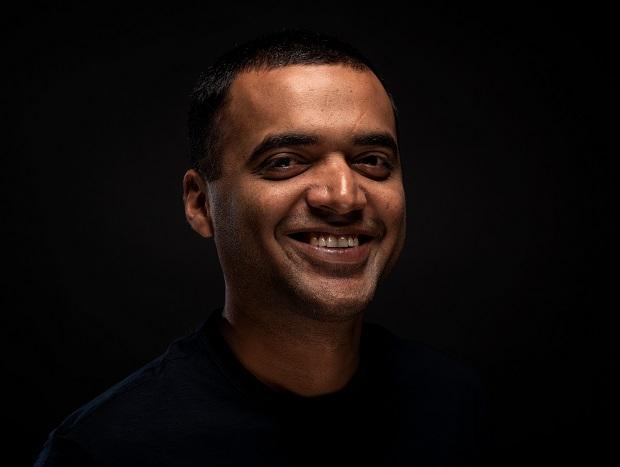
A new ‘Day Zero’, says Zomato Co-founder Deepinder Goyal on listing

“Today is a big day for us. A new Day Zero. But we couldn’t have gotten here without the incredible efforts of India’s entire internet ecosystem,” said Zomato Co-founder Deepinder Goyal ahead of the day the company got listed.

In a blog post titled “Letter from Deepi,” he praised his colleagues and investors, and said Zomato will not alter the firm’s focus for short term profits at the cost of the long term success of the company.

“India is a tough market to operate in, but if you are building to succeed in India, you are already exceptional. I say that because I believe Zomato and Swiggy are two of the best food delivery apps in the world today. We have a long way to go before we can call ourselves world class by our customers’ standards, but we are determined to get there,” Goyal said.

Food delivery in India is largely a duopoly with Zomato and Swiggy being the players. Zomato had made a foray into international markets earlier, but is now focusing on its home market. Co-founder Gaurav Gupta had told Business Standard earlier that the firm is very focused on India, and the IPO will not change how it operates as a business.

ALSO READ: Ant-backed Zomato’s roaring India debut sets pace for internet startups

In a note in May, Anand Rathi Research said that in 2019 food consumption in India was about $670 billion, mostly driven by home-cooked food. Food Services, defined as non-home-cooked food or restaurant food, now contributes only around 10 per cent to the food consumption market. This is substantially lower than in global economies such as the US and China where food services contribute respectively about 54 per cent and about 58 per cent of total food consumption.

Hence, the scope for growth is big. In his post, Goyal said several times that it takes time to build a good product and that the company would remain focused on its long-term objectives.

Read Complete Article

Shriram Housing Finance charts Rs 10,000-cr AUM growth map by FY24

Shriram Housing Finance has drawn up an aggressive growth trajectory for the next two years with a plan to close the loan book at around Rs 5,600 crore this fiscal, and end FY24 at the Rs 10,000-crore mark, a top company official has said.

The city-based affordable housing focused lender, which is one of the three credit business verticals of the Chennai-based Shriram Group, closed FY21 with a loan book of Rs 3,923 crore, which despite the pandemic washout has already crossed Rs 4,000 crore as of end-June.

This means the company plans to add more than 1.5 times of its present book over the next 30 months, managing director and chief executive Ravi Subramanian told PTI in an interview.

According to the plan, the loan book should be touching Rs 5,000 crore by December and close the year at around Rs 5,600 crore, and reach Rs 8,000 crore in FY23 and top Rs 10,000 crore by FY24, said Subramanian who is also a fiction-writer.

The overall plan is to be amongst the top three affordable housing financiers, as already over 70 per cent of its book is in the affordable category, he said, adding the demand for housing is back and the overall tailwinds are positive now.

This year’s target is based on the optimism that there is no third wave of the pandemic, as the second wave has nearly washed out the first quarter, he admitted.

The disbursals are at 80 per cent levels now averaging Rs 170 crore, which used to be Rs 200-250 crore a month. We expect the monthly run-rate to touch Rs 300 crore from September provided there is no third wave and the vaccination pace increases, Subramanian said.

The company closed FY21 with Rs 62 crore profit, which Subramanian attributed to the low scale of its operations, but added that his mandate is to increase the scale, and keeping the cost lower.

Read Complete Article

Indians more vulnerable to tech support scams, says Microsoft report

Indians are more vulnerable to technology support-related scams compared to the global average, and lost over Rs 15,000 on average in such scams, a Microsoft research has found.

According to the 2021 Global Tech Support Scam Research report, which looks at tech support scams and their impact on consumers, consumers in India experienced a relatively high scam encounter rate of 69 per cent during the past 12 months, close to the 70 per cent rate experienced in 2018. In contrast, there was an overall five-point drop in scam encounters globally with a rate of 59 per cent over the same period.

The survey was conducted in Spring 2021 and asked consumers to share their experiences with tech support scams for the year prior (January 2020 to present).

Almost half the consumers surveyed in India (48 per cent) were tricked into continuing with the scam – an eight-point increase from 2018, and three times higher than the global average of 16 per cent. One in three (31 per cent) of those surveyed continued engaging and eventually lost money–an increase of 17 points over 2018 (14 per cent).

In India, millennials, or those aged 24-37, were the most susceptible to such scams in 2021, with 58 per cent of those that continued with the scam incurring monetary loss. The research also found that 73 per cent of males in India who proceeded to interact with a scammer were likely to lose money.

Each month, Microsoft receives about 6,500 complaints globally from people who have fallen victim to a tech support scam; this is down from 13,000 reports in an average month in earlier years. To better understand how the problem with tech support scams is evolving globally and to enhance efforts to educate consumers on how to stay safe online, Microsoft commissioned YouGov for this global survey in 16 countries, including four Asia Pacific markets – India, Australia, Japan and Singapore. This is a follow-up to similar surveys that Microsoft conducted in 2018 and 2016.

Read Complete Article