Silence! Audi’s electric SUV is now in town: Check details here

When vehicles that were concept cars or showstoppers at motor shows become market-ready and roll out at dealerships in your town, you know that the brands have reached a tipping point and it’s a matter of time before the models become commonplace.

That’s the case with electric cars the world over. They are increasingly becoming more prevalent with new model launches, as brands such as Lamborghini, Lotus and more launch cars that they say will be their very last “fossil fuel” version.

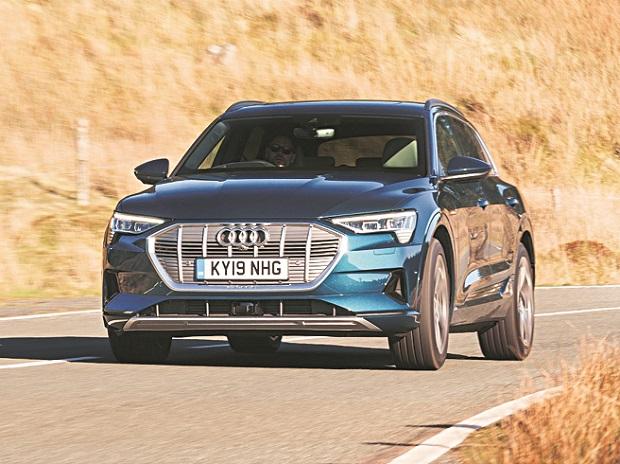
To be sure, this Audi’s latest launch is not the first electric SUV in the market. There have been others that range from the mass market Hyundai Kona to the Mercedes-Benz EQC in recent years. But what makes the e-tron SUV (Q5 equivalent) special is that from inside and out it looks and feels the same as a regular Audi SUV. Except that there’s no gear, no sound and no engine.

However, it has an auditory feature that throws up a soft but audible whirring sound like a spaceship while driving as well as a different tone on the outside to let bystanders know a car is on its way. And, of course, there are tonnes of features that will make any premium car lover sit up and take notice. Think permanent all-wheel drive, adaptive air suspension and panoramic sunroof as standard features, as well as a 16-speaker Bang & Olufsen 3D Surround Sound System and an air quality package with air ioniser.

Audi opened up sales for the e-tron with bookings available on its website for a down payment, something that is growing slowly but surely as a D2C sales channel for most industry players now in the auto world as demonstrated by an announcement made by Mercedes-Benz a few weeks ago confirming that it would allow customers to buy cars directly.
Read Complete Article

Apple and Google are winning big, but one company is about to pull ahead

Apple Inc. and Google-parent Alphabet Inc. have each managed to make copious sets of obscene amounts of money in any environment — pandemic or not. But the paths for the two technology behemoths may start to diverge later this year.

Both companies reported blowout numbers late Tuesday that far exceeded Wall Street expectations. Apple posted adjusted earnings per share of $1.30, compared with an average analyst estimate of $1.01, resulting in a quarterly profit of $21.7 billion for the three months ended in June. Likewise, Alphabet generated earnings per share of $27.26, ahead of the $19.35 consensus, while generating net income of $18.5 billion for its second quarter. Shares of Apple fell in after-hours trading, while Alphabet’s stock climbed.

There’s a logic behind the reactions. No two tech giants are the same, and it comes down to their business models.

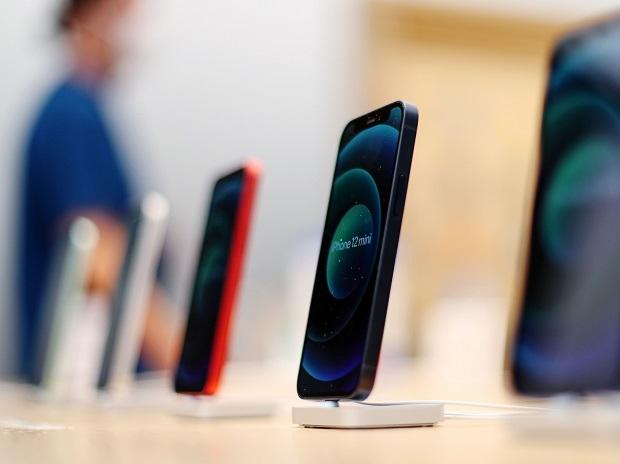
Take Apple. For all the talk about its software-and-services businesses, the company’s foundation still relies on the iPhone. Despite the strong sales results for this quarter, investors are already looking toward how its next smartphone lineup will do. The problem is, there may be little reason to upgrade. Earlier this month, Bloomberg News reported that Apple plans to launch four models in September with minor feature improvements and similar designs to last year’s. If true, it will be a big letdown compared with the current iPhone 12 lineup, which was the first from Apple with faster fifth-generation wireless capabilities.

And then there are the supply-chain complications. For the second quarter in a row, Apple executives said component shortages will hurt its results. The uncertainty around next year may already be contributing to the shares’ underperformance this year.

Read Complete Article

Record quarter by Apple, Alphabet, Microsoft gives way to growth scepticism

Three of the world’s largest companies — Apple Inc., Microsoft Corp. and Alphabet Inc. — reported about $57 billion in combined profit in a record-busting quarter, riding a resurgence in consumer and business spending.

Yet markets responded coolly. In part, investors were skeptical that these companies can continue to post double-digit growth for quarters to come.

The world’s largest tech companies have gotten larger at a torrid rate. Their market valuations have skyrocketed this year as world economies rebounded from pandemic lows — with both Apple and Microsoft topping $2 trillion in market value — adding pressure to keep up the pace. All the companies were bullish about their prospects, but investor optimism was tempered by signs that the momentum of the past year may be ebbing.

“All three of these companies — Apple, Microsoft, Google — are just performing phenomenally,” Jeremy Bryan, a portfolio manager at Gradient Investments, said in an interview with Bloomberg TV. “They just look really good. They’re executing perfectly, their customers are coming back in droves.”

Even though all the companies were bullish about their prospects, investor optimism was tempered by signs the momentum of the past year may be ebbing.

Microsoft was first out the gate Tuesday, reporting sales that topped analyst expectations for the 10th straight quarter.

Read Complete Article

India among least prepared for automation in Asia Pacific: Autodesk

India ranks fifth highest in terms of the impact from automation and ninth in terms of level preparedness, according to a recent research study conducted by Deloitte and commissioned by Autodesk Foundation.

The country faces a greater likelihood of being impacted by automation due to larger employment shares in agriculture, manufacturing and construction — all identified as high-risk industries by the report titled ‘The Future of Work is Now: Is APAC Ready?’

It explores the state of automation and future of work across 12 Asia Pacific countries including Australia, Bangladesh, India, Indonesia, Japan, South Korea, Myanmar, Pakistan, the Philippines, Singapore, Thailand and Vietnam.

The report aims to help identify the labour markets most vulnerable to technological disruption in A-Pac and propose solutions to help workforces thrive as automation becomes a reality.

The research finds India, Bangladesh and Pakistan are most at risk and least prepared for the coming wave of automation.

Covid-19 has greatly accelerated the adoption of automation across the world. According to the report, close to half of all businesses intend to increase their adoption of robotic process automation over the next year.

“Automation creates opportunities for new, more meaningful types of work as it replaces mundane or repetitive manual tasks. But the state of preparedness of countries and industries will determine whether they benefit from these advances,” said Rajeev Mittal, Regional Director for India and SAARC at Autodesk.

“Improving digital literacy, supporting disadvantaged workers, and putting in place the right infrastructure and skills will help create new roles that workers can transition into,” he said.

A-Pac is a diverse region and the challenges facing individual countries when it comes to automation are vastly different.

Read Complete Article

Apple says semiconductor shortage reaches iPhone, growth forecast slows

By Stephen Nellis

(Reuters) –Apple Inc said on Tuesday that a global chip shortage that has bit into its ability to sell Macs and iPads will start to affect iPhone production and forecasted slowing revenue growth, sending its shares lower.

Apple executives said revenue for the current fiscal fourth quarter will grow by double-digits but be below the 36.4% growth rate in the just-ended third quarter. Growth will also slow in Apple’s closely watched services business, they said.

In a conference call with investors, Apple executives also said that while the impact of the chip shortage was less severe than feared in the third quarter, it will get worse in the fourth, extending to iPhone production.

Shares of Apple, whose valuation has more than doubled in about three years to nearly $2.5 trillion, were down 1.7% to $144.24 in after-hours trading after the call.

Earlier in the day, Apple reported third-quarter sales and profits that beat analyst expectations as consumers bought premium versions of its 5G iPhones and signed up for its subscription services. China sales grew 58% to $14.76 billion in the quarter, which ended June 26.

Driven by the better-than-expected iPhone sales, total revenue hit $81.43 billion, above analyst expectations of $73.30 billion, according to IBES data from Refinitiv. Apple’s profits were $21.74 billion, or $1.30 per share, above estimates of $1.01 per share, according to Refinitiv.

During the investor call, Chief Executive Tim Cook said that chips affected by the shortages are made with older technology but are still needed as supporting parts to make the company’s flagship device, the iPhone.

“We do have some shortages,” Cook said, “where the demand has been so great and so beyond our own expectation that it’s difficult to get the entire set of parts within the lead times that we try to get those.”

Cook declined to predict whether the shortages would last into Apple’s fiscal first quarter, when it typically sees its biggest iPhone sales. Angelo Zino, an analyst with research firm CFRA, said Apple could be stockpiling chips for its next generation of phones to the detriment of current models.

“Apple will want as many chips as it can get its hands on,” Zino said. “But when you couple that with the existing supply constraints, Apple is likely going to have a more difficult time meeting demand this year.”

Read Complete Article

Microsoft sees steady cloud growth after record April-June quarter profit

By Akanksha Rana and Julia Love

(Reuters) –Microsoft Corp posted its most profitable quarter on Tuesday, beating Wall Street expectations for revenue and earnings, as PC sales declines stemming from a global chip shortage were more than made up for by a boom in cloud services.

Shares ticked up 0.7% after Microsoft projected that growth in its Azure cloud computing business will continue apace following a quarter in which sales climbed 51%.

Overall revenue rose 21% to $46.2 billion, beating analysts’ consensus by about $2 billion, according to IBES data from Refinitiv.

The pandemic-driven shift to remote work has boosted consumer appetite for cloud-based computing, helping companies including Microsoft, Amazon.com Inc’s cloud unit and Alphabet Inc’s Google Cloud.

Microsoft’s “guidance was off-the-charts strong and it shows the cloud growth story in Redmond is hitting its next gear,” said Daniel Ives of Wedbush Securities.

Revenue in Microsoft’s “Intelligent Cloud” segment rose 30% to $17.4 billion, with growth in Azure revenues handily surpassing the 43.1% jump projected by analysts, according to consensus data from Visible Alpha.

Microsoft’s market capitalization stands at nearly $2.2 trillion, after climbing nearly 30% so far this year, compared with 18% for the overall S&P 500 Index, according to Refinitiv Eikon data based on Monday’s closing price.

It has surpassed the price-to-earnings ratios of tech titans Apple Inc and Google, fueling concerns among some analysts that it may be overvalued.

“Microsoft’s stock has made a big run since the beginning of the pandemic, and is trading at rich multiples,” said Haris Anwar, senior analyst at Investing.com. “After such a powerful rally, its shares may take a breather, especially when investors are still unclear how the demand scenario will evolve in the post-pandemic environment.”

Revenue from personal computing, which includes Windows software and Xbox gaming consoles, rose 9% to $14.1 billion.

Read Complete Article

Google parent Alphabet reaches record quarterly revenue, profit in ad boom

By Sheila Dang and Nivedita Balu

(Reuters) –Google parent Alphabet Inc’s quarterly revenue and profit surged to record highs, the company reported on Tuesday, powered by a rise in advertising spending as more consumers shopped online.

Shares of Alphabet, the world’s largest provider of search and video ads, rose 3.3% in extended trading after the results, which handily beat analyst estimates. Shares of Facebook, which competes with Google in web ad sales and reports its own results on Wednesday, rose 1.3%.

Overall, it was a stellar day for the big U.S. tech companies – Apple and Microsoft also reported record earnings.

With consumers spending more time online during the coronavirus pandemic, retailers have been pushing to reach them there, whether they’re shopping for products using Google search or watching videos on YouTube. The nascent U.S. economic rebound that’s accompanied the vaccine rollout and the easing of restrictions is also helping as consumers are enjoying increased mobility and options for purchases of all kinds.

“Alphabet has benefited from the general return of ad spend to the market and especially the balance of that return, which is more focused on digital channels than pre-pandemic,” said Tom Johnson, chief digital officer at WPP Mindshare.

Alphabet said revenue from Google advertising rose nearly 70% to $50.44 billion during the second quarter ended June 30.

Retail brands were the biggest contributor to the ads business’ growth, said Philipp Schindler, Google’s chief business officer, during a call with analysts. The travel, financial services and media and entertainment sectors were also strong, he added.

Read Complete Article

Apple, Microsoft, Alphabet report combined profits of more than $50 billion

Three tech companies Apple, Microsoft and Google owner Alphabet reported combined profits of more than USD 50 billion in the April-June quarter, underscoring their unparalleled influence and success at reshaping the way we live.

Although these companies make their money in different ways, the results served as another reminder of the clout they wield and why government regulators are growing increasingly concerned about whether they have become too powerful.

The massive profits pouring into each company also illustrated why they have a combined market value of USD 6.4 trillion — more than double their collective value when the COVID-19 pandemic started 16 months ago.

APPLE

Apple’s first iPhone model capable of connecting to ultrafast 5G wireless networks continued to power major increases in quarterly revenue and profits for tech’s most valuable company.

With iPhone sales posting double-digit growth over the previous year for the third consecutive quarter, Apple’s profit and revenue for the April-June period easily exceeded analyst estimates. The Cupertino, California, company earned USD 21.7 billion, or USD 1.30 per share, nearly doubling profits earned during the same period last year. Revenue surged 36 per cent to USD 81.4 billion.

But in a Tuesday conference call with analysts, Apple CEO Tim Cook lamented that the steadily spreading delta variant of the coronavirus is casting doubt on how the rest of the year will unfold. The road to recovery will be a winding one, Cook said. That uncertainty has already led Apple to delay employees’ mass return to its offices from September to October. Most of Apple’s stores, though, are already open.

The iPhone 12, released last autumn, is shaping up to be Apple’s most popular model in several years, largely because it’s the first to work on the 5G networks that are still being built around the world. Apple’s iPhone sales totaled nearly USD 40 billion in the latest quarter, up 50 per cent from a year ago.

Read Complete Article

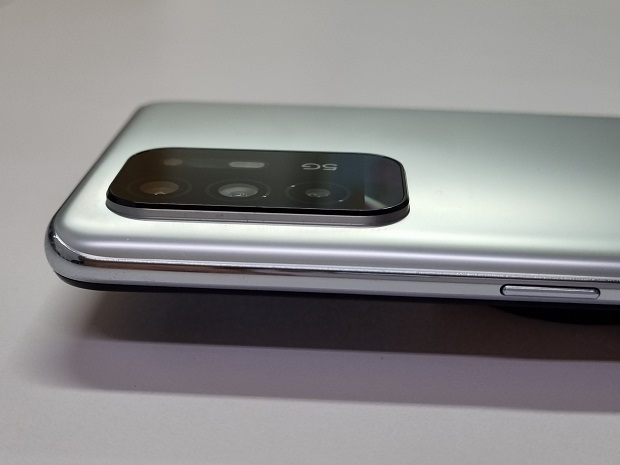
·        Smartphone maker Oppo expects online sales to contribute about 50 per cent to overall business of the company in this year with its reach expanding to smaller towns as well through e-retailers, a senior company official said on Monday.

·        Oppo India Chief Marketing Officer Damyant Singh Khanoria told PTI that as part of its omnichannel strategy the company is looking to focus on its online presence.

·        “Our intent and ambition from the e-commerce platform is to really drive about 50 per cent of overall business through ecommerce. It’s Flipkart and we are also ramping up our own presence in e-commerce,” Khanoria said when asked about the business outlook of the company for the year.

·        Oppo has been primarily focussing on retail channel partners but now it will enhance partnership with ecommerce companies.

·        According to the market research firm IDC, Oppo’s business increased around 35 per cent in the first quarter of 2021 with the company clocking 12.2 per cent market share in the smartphone segment in India.

·        “Our omnichannel strategy has not kind of embraced e-commerce as aggressively as we are doing now. We have been able to build a kind of momentum with the Reno5 launch. This launch had very deep collaboration with Flipkart which we have not done in the past. What we are doing with Flipkart is a partnership that allows us to penetrate very deeply in tier 3 and tier 4 markets,” Khanoria said.

·        He said that Reno6 smartphones recorded 178 per cent jump in growth on the first day of the sale, compared to the response that company recorded for Reno5 smartphones.

·        “When we talk about the mood of the market and consumers, we are experiencing tremendous growth and it augurs well for us as we go into the Diwali season,” Khanoria said.

Read Complete Article

Oppo eyes 50% contribution to overall revenue from online sales in 2021

·        Smartphone maker Oppo expects online sales to contribute about 50 per cent to overall business of the company in this year with its reach expanding to smaller towns as well through e-retailers, a senior company official said on Monday.

·        Oppo India Chief Marketing Officer Damyant Singh Khanoria told PTI that as part of its omnichannel strategy the company is looking to focus on its online presence.

·        “Our intent and ambition from the e-commerce platform is to really drive about 50 per cent of overall business through ecommerce. It’s Flipkart and we are also ramping up our own presence in e-commerce,” Khanoria said when asked about the business outlook of the company for the year.

·        Oppo has been primarily focussing on retail channel partners but now it will enhance partnership with ecommerce companies.

·        According to the market research firm IDC, Oppo’s business increased around 35 per cent in the first quarter of 2021 with the company clocking 12.2 per cent market share in the smartphone segment in India.

·        “Our omnichannel strategy has not kind of embraced e-commerce as aggressively as we are doing now. We have been able to build a kind of momentum with the Reno5 launch. This launch had very deep collaboration with Flipkart which we have not done in the past. What we are doing with Flipkart is a partnership that allows us to penetrate very deeply in tier 3 and tier 4 markets,” Khanoria said.

·        He said that Reno6 smartphones recorded 178 per cent jump in growth on the first day of the sale, compared to the response that company recorded for Reno5 smartphones.

·        “When we talk about the mood of the market and consumers, we are experiencing tremendous growth and it augurs well for us as we go into the Diwali season,” Khanoria said.

Read Complete Article