With AI and automation growing, 120 million workers will need retraining

More than 120 million workers globally will need retraining in the next three years due to artificial intelligence’s impact on jobs, according to an IBM survey.

That’s a top concern for many employers who say talent shortage is one of the greatest threats to their organisations today. And the training required these days is longer than it used to be — workers need 36 days of training to close a skills gap versus three days in 2014, IBM notes in the survey.

Soft Skills

Some skills take longer to develop because they are either more behavioral in nature like teamwork and communication or highly technical, such as data science capabilities.

“Reskilling for technical skills is typically driven by structured education with a defined objective with a clear start and end,” Amy Wright, IBM managing director for talent, wrote in an email. “Building behavioral skills takes more time and is more complex.”

Behavioral skills, such as the ability to work well on a team, communication, creativity, and empathy are best developed through experience rather than structured learning programs like a webinar.

When employers say they’re facing a skills shortage, the first thing that comes to mind is coding experience or another advanced technical skill set. Yet, today, employers are calling for more emphasis on soft skills like communication skills, ethics and creativity rather than technical, a switch over the last few years, the survey notes. Behavioral skills are now seen as critical from digital and technical capabilities.

Read Complete Article

Robot at your service: Bengaluru eatery gives a taste of alternate reality

Robot

Keeping with the upbeat restaurant culture in Bengaluru, the city has got its first robot-themed restaurant to give diners a taste of alternate reality

The concept

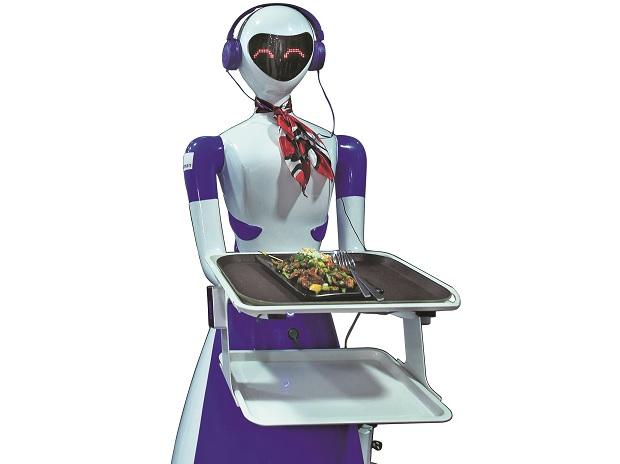
For a hi-tech dining experience, the robot-themed restaurant located in the busy 100 Feet Road in Indiranagar welcomes guests with an interactive robot receptionist who assigns tables to diners. Robots also don the hat of waiters and serve the guests. Tokyo already has a Robot Restaurant since 2017, one of the top tourist attractions of the city.

An automated world

A Bengaluru startup has launched a cooking robot called Mechanical Chef, which is capable of preparing around 100 Indian dishes

Mitra, a 5 -feet tall humanoid, meets, greets and answers queries of customers at Canara Bank’s Candi branch. ICICI Bank has deployed robots to sort currency notes

Bandicoot, a spider-shaped robot cleans sewers and manholes in Kerala, and couple of other states

GraspMan, a robot developed by researchers at IIT-Madras, can climb pipes and work in rescue operations. Read Complete Article

OPPO launches new operating system ColorOS 6 trial version for F9 mobiles

OPPO has announced the rollout of the ColorOS 6 Open Trial Version for its F9 smartphone. The new ColorOS 6 Open Trial Version offers users the latest Android Pie mobile operating system experience, and comes replete with all-new customized features.

Android Pie – a major upgrade

All models upgraded to ColorOS 6 integrate the practical new features introduced by Android Pie, including improved interactions, enhanced AI capabilities and optimization of the underlying interface.

An all-new navigation gesture in Android Pie offers a cutting-edge experience in user interactions. Android Pie is powered by Google’s AI capabilities with Google Assistant, ARcore, Google Lens and other intelligent scenario-based services. OPPO’s integration of the latest software update provides a smoother, smarter and more user-friendly experience for customers.

Read Complete Article

In a first, an AI taught itself to play a video game, and is beating humans

Since the earliest days of virtual chess and solitaire, video games have been a playing field for developing artificial intelligence (AI). Each victory of machine against human has helped make algorithms smarter and more efficient. But in order to tackle real world problems – such as automating complex tasks including driving and negotiation – these algorithms must navigate more complex environments than board games, and learn teamwork. Teaching AI how to work and interact with other players to succeed had been an insurmountable task – until now.

In a new study, researchers detailed a way to train AI algorithms to reach human levels of performance in a popular 3D multiplayer game – a modified version of Quake III Arena in Capture the Flag mode.

Even though the task of this game is straightforward – two opposing teams compete to capture each other’s flags by navigating a map – winning demands complex decision-making and an ability to predict and respond to the actions of other players.

This is the first time an AI has attained human-like skills in a first-person video game. So how did the researchers do it?

The robot learning curve

In 2019, several milestones in AI research have been reached in other multiplayer strategy games. Five “bots” – players controlled by an AI – defeated a professional e-sports team in a game of DOTA 2. Professional human players were also beaten by an AI in a game of StarCraft II. In all cases, a form of reinforcement learning was applied, whereby the algorithm learns by trial and error and by interacting with its environment.

Read Complete Article

Google’s Duplex uses AI to mimic humans, but only sometimes

On a recent afternoon at the Lao Thai Kitchen restaurant, the telephone rang and the caller ID read “Google Assistant.” Jimmy Tran, a waiter, answered the phone. The caller was a man with an Irish accent hoping to book a dinner reservation for two on the weekend. This was no ordinary booking. It came through Google Duplex, a free service that uses artificial intelligence to call restaurants and — mimicking a human voice — speak on our behalf to book a table. The feature, which had a limited release about a year ago, recently became available to a larger number of Android devices and iPhones.

The voice of the Irish man sounded eerily human. When asked whether he was a robot, the caller immediately replied, “No, I’m not a robot,” and laughed.

“It sounded very real,” Tran said in an interview after hanging up the call with Google. “It was perfectly human.”

Google later confirmed, to our disappointment, that the caller had been telling the truth: He was a person working in a call center. The company said that about 25 per cent of calls placed through Duplex started with a human, and that about 15 percent of those that began with an automated system had a human intervene at some point.

We tested Duplex for several days, calling more than a dozen restaurants, and our tests showed a heavy reliance on humans. Among our four successful bookings with Duplex, three were done by people. But when calls were actually placed by Google’s artificially intelligent assistant, the bot sounded very much like a real person and was even able to respond to nuanced questions.

In other words, Duplex, which Google first showed off last year as a technological marvel using AI, is still largely operated by humans. While AI services like Google’s are meant to help us, their part-machine, part-human approach could contribute to a mounting problem: the struggle to decipher the real from the fake, from bogus reviews and online disinformation to bots posing as people.

Read Complete Article