IFC, TCCL and EverSource to back WABAG’s hybrid annuity model project

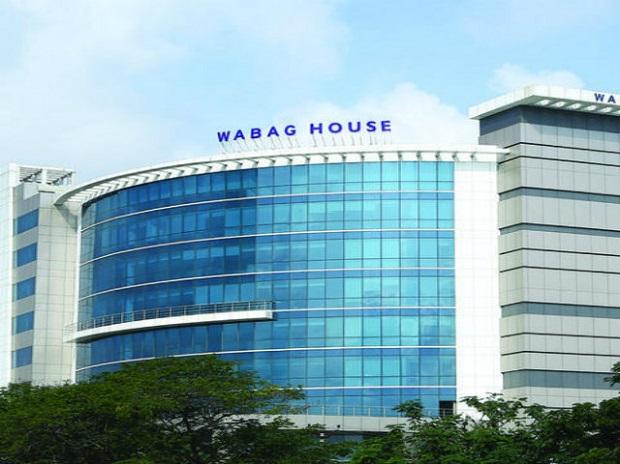
VA TECH WABAG Ltd (‘WABAG’), a leading pure play water technology company, announced financial closure for its Hybrid Annuity Model (HAM) project received from Kolkata Metropolitan Development Authority (KMDA).

The project debt requirement will be funded by a consortium of International Finance Corporation (IFC) and Tata Cleantech Capital Limited (TCCL)

WABAG had earlier signed a Rs 575 crore HAM concession agreement under the Namami Gange programme administered by the National Mission for Clean Ganga (NMCG) which included the scope of engineering, supply and construction of new sewage treatment plants, renovation and upgradation of existing sewage treatment plants, rehabilitation of pumping stations and other associated infrastructure in Kolkata.

WABAG will execute Engineering, Procurement and Construction (EPC) portion of this project over 24 months followed by O&M of 15 years. Once complete, the project with a cumulative wastewater treatment capacity of 187 MLD will contribute to reducing the discharge of untreated sewage into the Holy Ganga from the state of West Bengal by around 15 per cent.

The EPC portion of the project is to be funded by a mix of NMCG grant, equity and debt. Forty per cent of EPC cost will be funded by NMCG grant during the construction period and balance 60 per cent to be funded by a mix of debt and equity.

Prasanth Prabhakaran, joint MD & CEO, YES Securities, said, “YES Securities is glad to act as an exclusive advisor to Eversource Capital for their investment in this marque project awarded to VA Tech Wabag. This project is one of the largest HAM-based sewage treatment plant under the Namami Gange Scheme. This transaction reiterates YES Securities as the preferred transaction advisor to marquee sustainability focused PE funds and further reinforces its strong capabilities and credentials in the environmental services sector.”

Read Complete Article

Australian government to amend laws to make Google and Facebook pay

Australia’s government said on Tuesday it will amend draft laws that would make Google and Facebook pay for news to clarify that publishers would be paid in lump sums rather than per click on news article links.

The legislative changes described in a government statement as clarifications and technical amendments follow Australian ministers’ weekend discussions with Facebook CEO Mark Zuckerberg and Sundar Pichai, chief executive of Alphabet Inc. and its subsidiary Google.

The conservative government hopes to enact the so-called News Media Bargaining Code before the current session of Parliament ends on Feb. 25.

The amendment to be introduced to Parliament on Wednesday improve the workability of the code while retaining its overall effect, Treasurer Josh Frydenberg and Communications Minister Paul Fletcher said in a joint statement.

The opposition center-left Labor Party agreed at a meeting of lawmakers on Tuesday to support the bill, guaranteeing its passage through the Senate where the government does not hold a majority of seats.

But the government might have to compromise with further Senate amendments.

Read Complete Article

FM Sitharaman explains govt priorities in post-Budget address to RBI

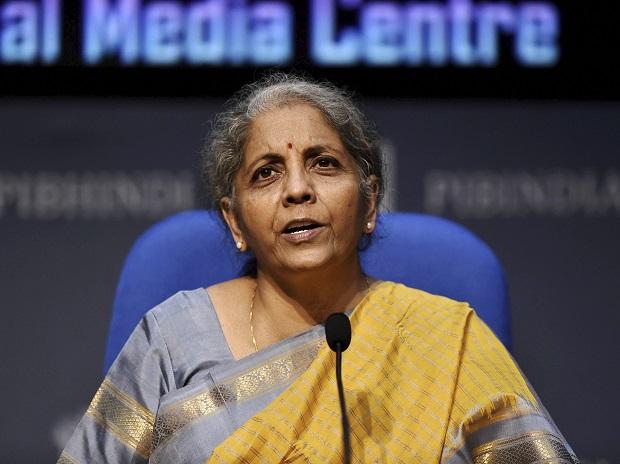
Finance Minister Nirmala Sitharaman on Tuesday explained the government’s priorities to the Reserve Bank of India’s (RBI’s) central board during their first meeting after presentation of the Union Budget 2021-22.

The finance minister addressed the 587th RBI central board meeting and informed the members about key initiatives in the Budget and the priorities of the government, RBI said in a statement.

Complimenting the finance minister on the Budget, the board members made various suggestions for consideration of the government, it added.

“The board in its meeting reviewed the current economic situation, global and domestic challenges and various areas of operations of the Reserve Bank, including ways for strengthening grievance redress mechanism in banks,” it said.

The meeting on Tuesday was chaired by RBI Governor Shaktikanta Das through video conferencing.

The government’s nominee directors on the board — Financial Services Secretary Debasish Panda and Economic Affairs Secretary Tarun Bajaj — also attended the meeting.

Finance minister holds customary meeting with the board members of the RBI and the Securities and Exchange Board of India (Sebi) after Budget presentation every year.

Read Complete Article

Reliance Entertainment partners with Ribhu Dasgupta to form Film Hangar

Reliance Entertainment has joined hands with filmmaker Ribhu Dasgupta to form Film Hangar, a joint venture company to produce clutter-breaking content.

The first film under this banner is the highly anticipated thriller, “The Girl On The Train”, an adaptation of the bestselling novel with the same name by Paula Hawkins. The film starring Parineeti Chopra is slated to release on Netflix on February 26.

Ribhu’s body of work comprises “Michael” (2011) starring Naseeruddin Shah, the TV series “Yudh” (2014) starring Amitabh Bachchan, “TE3N” (2016) starring Amitabh Bachchan, Vidya Balan and Nawazuddin Siddiqui and, very recently, the web series “Bard Of Blood” (2019), which streams on Netflix.

Speaking about the joint venture, Ribhu said: “I have always believed that content sets the ground for you as a filmmaker, and Reliance Entertainment embodies this philosophy with the stories it tells. Film Hangar will bring films that are rich in content and high on entertainment. We aim to blur the lines between ‘massy’ and ‘classy’ content because filmmaking is an art that defies boundaries, definitions and labels.”

Shibasish Sarkar, Group CEO, Reliance Entertainment, said: “Right from our ‘TE3N’ days, Ribhu has been someone who has brought a unique sensibility to every project and with Film Hangar, we wish to break the clutter with edgy and engaging content. At Reliance Entertainment, we believe that filmmakers who keep us on the edge of the seat should be in the driving seat when it comes to content, and our new joint venture is a testament of this belief.”

Read Complete Article

Twitter testing upto 140-second long voice messages in DMs in India

Twitter on Wednesday announced it is testing voice messages in direct messages (DMs) up to 140-seconds long in India.

The experiment will be rolled out in phases to the audiences, making India one of three countries to have access to the feature, alongside Brazil and Japan.

According to the company, voice messages in DMs will make it easier for people to have conversations.

“We’re excited to bring the voice messages in DMs experiment to the country and give people a new way to express themselves and help them connect through the nuances, emotion, and empathy built by hearing someone’s voice,” said Manish Maheshwari, Managing Director, Twitter India.

Each voice message can be upto 140 seconds long and can help people chat quickly – whether on the move or when there’s just too much to type.

“We are dedicated to giving people more options to express themselves in conversations on Twitter – both publicly and privately,” said Alex Ackerman-Greenberg, Product Manager for direct messages at Twitter.

This is how the new feature will work.

In a DM conversation, tap the new voice recording icon once to begin recording.

Tap the stop icon when you’re done and you’ll have the option to listen to your recording before sending or deleting it.

Read Complete Article

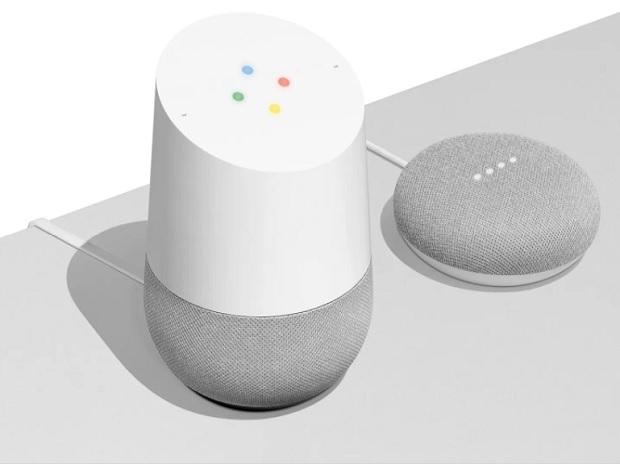
One million smart speakers worth Rs 463.4 cr shipped in India in 2020

The smart speaker shipments crossed 10 lakh for the first time in India in 2020, generating Rs 463.4 crore ($63.6 million) in sales last year, a new report said on Wednesday.

Amazon led the segment both in value and volume market shares (80 per cent market share) while Google managed 11 per cent market share by volume in 2020.

The new entrant Xiaomi was at the second spot by market value share (10 per cent) and third by volume (8 per cent share).

Apple made a good start in this category in 2020 as its Homepod and Homepod Mini smart speakers started selling in India from October.

Within just one quarter of shipments, Apple’s share was 2 per cent in overall units. Over 84 per cent of Apple smart speaker shipments were of Homepod Mini model.

“The market is unfolding in India as a result of which we will see many more players foraying into this category in next two years, leading to it peak framentation. Thereafter, consolidation will start, leaving behind the serious players alone,” said Faisal Kawoosa, Founder and Chief Analyst, techARC.

Nearly 40 per cent of smart speakers were shipped in the festive quarter (Q4) alone.

Among the best-selling top five smart speakers, Amazon Echo devices featured at No 1, 2 and 5 ranks. Google managed the third position while Xiaomi’s smart speaker also featured in the top five sellers for 2020.

Read Complete Article

Google and Facebook nearing deals to pay for news, says Australia

Australia’s government said Google and Facebook Inc. are nearing agreements to pay domestic media companies for news, in a sign a regulatory standoff may be softening.

Australian Treasurer Josh Frydenberg held talks with Facebook Chief Executive Officer Mark Zuckerberg and Google counterpart Sundar Pichai over the weekend. “We’re very close to some very significant commercial deals,” Frydenberg told the Australian Broadcasting on Monday, according to a transcript sent by his office. “We have made great progress.”

Alphabet Inc-owned Google and Facebook oppose planned Australian legislation forcing them to pay media companies for news, and Google has threatened to shut down its search engine if the law is enacted. Parliament will consider the legislation from this week, giving the internet giants an incentive to agree compensation terms for news companies before the law is passed.

Facebook declined to comment on any specific talks. “We’ve been engaging with the Australian government to outline our concerns with the legislation,” the company said in a statement. A Google spokesman declined to comment.

If Facebook and Google fail to strike the deals, Australia’s pay-for-news law risks becoming a template for regulators in other jurisdictions including Canada and the European Union that are following the quarrel.

Read Complete Article

Google, Microsoft and Qualcomm protest Nvidia’s acquisition of Arm

Some of the world’s largest technology companies are complaining to US antitrust regulators about Nvidia Corp’s acquisition of Arm because the deal will harm competition in an area of the industry that is vital to their businesses.

Alphabet Inc’s Google, Microsoft Corp. and Qualcomm Inc. are among companies worried about the $40 billion deal and are urging antitrust officials to intervene, said people familiar with the process who asked not to be identified because they weren’t authorised to speak publicly. At least one of the companies wants the deal killed. Nvidia shares fell as much as 3.1 per cent in New York trading on Friday. The acquisition would give Nvidia control over a critical supplier that licenses essential chip technology to the likes of Apple, Intel, Samsung Electronics, Amazon.com and China’s Huawei.

ALSO READ: Google and Facebook nearing deals to pay for news, says Australia

UK-based Arm is known as the Switzerland of the industry because it licenses chip designs and related software code to all comers, rather than competing against semiconductor companies. The concern is that if Nvidia owns Arm, it could limit rivals’ access to the technology or raise the cost of access.

Read Complete Article

Clubhouse may be leaking user data to Chinese govt, says Stanford report

As invite-only audio chat app Clubhouse becomes popular globally including in India, researchers at Stanford University in the US have warned that the app may be leaking users’ audio data to the Chinese government.

The Stanford Internet Observatory (SIO) has confirmed that Agora, a Shanghai-based provider of real-time engagement software, supplies back-end infrastructure to the Clubhouse app.

“The SIO has determined that a user’s unique Clubhouse ID number and chatroom ID are transmitted in plaintext, and Agora would likely have access to users’ raw audio, potentially providing access to the Chinese government,” the researchers said in a blog post.

The users’ metadata is sent over the internet in plaintext (not encrypted), meaning that any third-party with access to a user’s network traffic can access it.

“In this manner, an eavesdropper might learn whether two users are talking to each other, for instance, by detecting whether those users are joining the same channel,” the researchers warned.

In at least one instance, SIO observed room metadata being relayed to servers we believe to be hosted in the People’s Republic of China (PRC), and audio to servers managed by Chinese entities and distributed around the world via Anycast (a wireless display receiver).

Read Complete Article

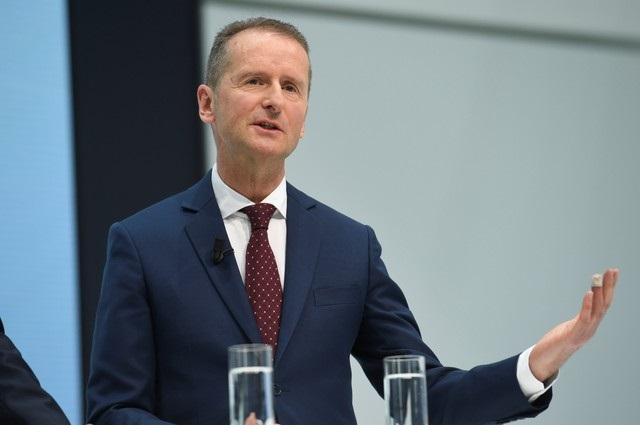
Volkswagen CEO Diess says ‘not afraid’ of an Apple electric car

FRANKFURT (Reuters) – Germany’s Volkswagen is not concerned by any Apple plans for a passenger vehicle that could include the iPhone maker’s battery technology, its chief executive Herbert Diess said.

Reuters reported in December that Apple may have progressed enough to build a vehicle for mass markets by 2024, helped by cost cuts in battery technology.

“The car industry is not a typical tech-sector that you could take over at a single stroke,” Diess was quoted as saying an interview with Frankfurter Allgemeine Sonntagszeitung.

Apple will not manage that overnight,” he added.

While Apple’s plans are not public, Diess said its intentions as such were “logical” because the company had expertise in batteries, software and design, and that it had deep pockets to build on these competencies.

“Still, we are not afraid,” he said.

Volkswagen plans to develop software needed for autonomous cars in-house to ensure it can compete against tech firms in the field of electric car data.

Read Complete Article