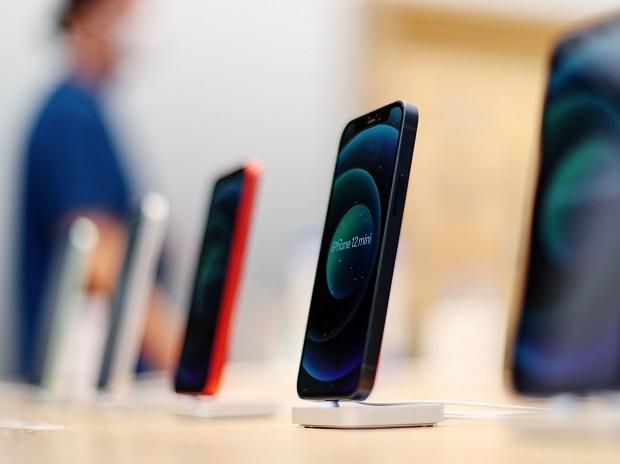
Apple plans to add satellite features to iPhones for emergencies

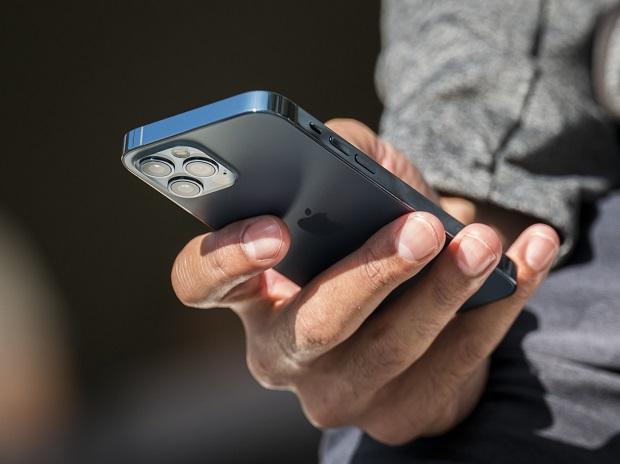
Apple Inc.’s push to bring satellite capabilities to the iPhone will be focused on emergency situations, allowing users to send texts to first responders and report crashes in areas without cellular coverage.

The company is developing at least two related emergency features that will rely on satellite networks, aiming to release them in future iPhones, according to a person with knowledge of the situation.

Apple has been working on satellite technology for years, with a team exploring the concept since at least 2017, Bloomberg has reported. Speculation that the next iPhone will have satellite capabilities ramped up this week after TF International Securities analyst Ming-Chi Kuo said the phone will probably work with spectrum owned by Globalstar Inc.

That’s led to conjecture that the iPhone will become something akin to a satellite phone, freeing users from having to rely on cell networks. But Apple’s plan is initially more limited in scope, according to the person, with the focus on helping customers handle crisis scenarios.

And though the next iPhone could have the hardware needed for satellite communications, the features are unlikely to be ready before next year, said another person, who asked not to be identified because the plans aren’t yet public. The features could also change or be scrapped before they’re released.

An Apple representative declined to comment.

The first component, dubbed Emergency Message via Satellite, will let users text emergency services and contacts over a satellite network when there’s no cell signal available. That feature will be integrated into the Messages app as a third protocol — alongside the standard SMS and iMessage — and appear with gray message bubbles instead of green or blue. The second feature will be a tool to report major emergencies, such as plane crashes and sinking ships, also using satellite networks.

The texting-via-satellite tool, codenamed Stewie inside Apple, will restrict messages to a shorter length. The texts will automatically push through to an emergency contact’s phone, even if the do-not-disturb setting is on. One planned design will let a user send the message by typing “Emergency SOS” where they would usually input a contact name. In addition to delivering texts, the service may eventually be able to handle some phone calls too.


Read Complete Article

IPL: BCCI expects Rs 5,000 cr windfall as base for new teams at Rs 2,000 cr

The Indian cricket board could soon get richer by at least Rs 5000 crore with the addition of two new franchises during the 2022 edition of Indian Premier League.

The IPL, which is currently an eight-team tournament, will become a 10-team affair from the next edition and during a recent governing council meeting, the modalities of the bidding process were chalked out.

“Any company can buy the bid document paying Rs 75 crore. Earlier top brass was thinking about keeping the base price for two new teams at Rs 1700 crore but later it was decided to keep the base price at Rs 2000 crore,” a senior BCCI source told PTI on the condition of anonymity.

The source, who has dealt with the financial side of IPL in the past, said that the BCCI stands to gain at least Rs 5000 crore if the bids go as per plan with plenty of large business conglomerates showing active interest in bidding.

“The BCCI is expecting anything in the range of 5000 crore if not more. There will be 74 IPL games next season and it’s a win-win situation for everyone.”

It is learnt that only companies with an annual turnover of Rs 3000 crore will be allowed to bid for the teams.

In a welcome news, the BCCI is planning to allow a consortium to bid for teams as it makes the bidding process more vibrant.

“I think more than three business entities won’t be allowed to form a consortium but if three business come together and wants to jointly bid for a team, they are welcome to do so,” he said.

Among the venues where the teams could be based include Amedabad, Lucknow and Pune.

The Narendra Modi Stadium in Ahmedabad and Ekana Stadium in Lucknow, with bigger capacities, could be the choice for franchises.

Some of the names that are doing the rounds include the Adani group, RPG Sanjeev Goenka group, noted pharma company Torrent and a prominent banker who has shown active interest in buying teams.

Read Complete Article

Taliban celebrate ‘complete independence’ as last US troops leave Afghan

Celebratory gunfire echoed across Kabul as Taliban fighters took control of the airport before dawn on Tuesday following the withdrawal of the last US troops, ending 20 years of war that left the Islamic militia stronger than it was in 2001.

Shaky video footage distributed by the Taliban showed fighters entering the airport after the last US troops took off a minute before midnight, marking the end of a hasty and humiliating exit for Washington and its NATO allies.

“The last US soldier has left Kabul airport and our country gained complete independence,” Taliban spokesman Qari Yusuf said, according to Al Jazeera TV.

The US Army shared an image taken with night-vision optics of the last US soldier to step aboard the final evacuation flight out of Kabul – Major General Chris Donahue, commander of the 82nd Airborne Division.

America’s longest war took the lives of nearly 2,500 US troops and an estimated 240,000 Afghans, and cost some $2 trillion.

Although it succeeded in driving the Taliban from power and stopped Afghanistan being used as a base by al Qaeda to attack the United States, it ended with the hardline Islamic militants controlling more of the country than they ever did during their previous rule from 1996 to 2001.

Those years were marked by the brutal enforcement of the Taliban’s strict interpretation of Islamic law, and the world is now watching to see whether it forms a more moderate and inclusive government in the months ahead.

Thousands of Afghans have already fled fearing Taliban reprisals. A massive but chaotic airlift by the United States and its allies over the past two weeks succeeded in evacuating more than 123,000 people from Kabul, but tens of thousands who helped Western countries during the war were left behind.

A contingent of Americans, estimated by US Secretary of State Antony Blinken as under 200 and possibly closer to 100, wanted to leave but were unable to get on the last flights.

General Frank McKenzie, commander of the US Central Command, told a Pentagon briefing that the chief US diplomat in Afghanistan, Ross Wilson, was on the last C-17 flight out.

Read Complete Article

Apple iPhone 13 to feature satellite connectivity, says report

Apple is reportedly planning to launch iPhone 13 lineup next month and now a new report has claimed that the upcoming models will feature low earth orbit (LEO) satellite communication connectivity to allow users to make calls and send messages in areas without cellular coverage,

According to the reliable Apple analyst Ming-Chi Kuo, the upcoming lineup will feature hardware that is able to connect to LEO satellites. This could allow iPhone 13 users to make calls and send messages without the need for a 4G or 5G cellular connection, reports MacRumors.

iPhone 13 is expected to use a customised version of the Qualcomm X60 baseband modem chip. This chip will support communications over satellite.

Kuo also noted that the iPhone 13 will use a customised version of the Qualcomm X60 baseband modem chip. This chip will support communications over satellite.

A recent survey has revealed that many iPhone users want the upcoming iPhone model to be named ‘iPhone 2021’ instead of ‘iPhone 13’.

According to the survey, a total of 74 per cent of respondents said they hoped “iPhone 13” will be named something else. The respondents also voted for the best potential name, with “iPhone (2021)” taking the top spot with 38 per cent of the vote.

Around 26 per cent thought that the “iPhone 13” was the best name and only 13 per cent said that they would like to see the devices called the “iPhone 12S”.

Read Complete Article

TCL C725 QLED TV review: A wholesome package on Android 11 TV platform

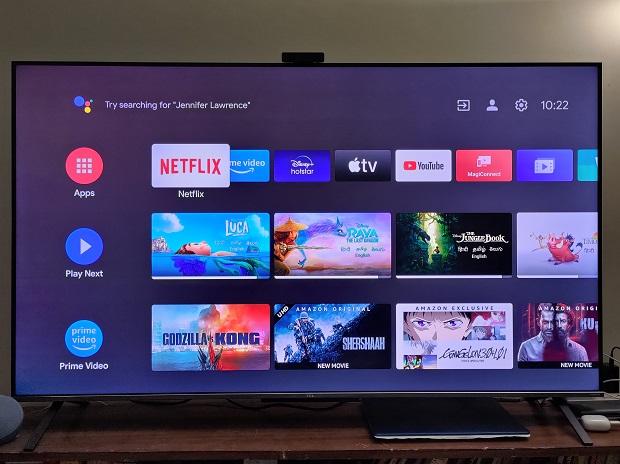
TCL might be a new name in India, but this Chinese electronics maker is well recognised globally for its feature-rich and competitively-priced smart televisions. Expanding its product portfolio in India, the company recently launched its Android 11 TV platform based smart QLED TVs. Leading the pack are the TCL C725 QLED TV models with screen size of up to 65-inch, quantum LED display tech supported by high dynamic range formats (Dolby Vision, HDR10+, HDR, HLG), Onkyo sound system powered by Dolby Atmos, and wide input and connectivity options. Besides, it is one of the few smart televisions in the market that come with USB-powered plug-and-play webcam (mics integrated) for video calls and meeting over Google Duo. On paper, the TCL C725 QLED TV seems to be a wholesome package. But is it worth spending Rs 72,990 over for a 55-inch model (review unit)? Let’s find out:

Design

The TCL C725 QLED TV boasts a bezel-less front profile for a distraction-free viewing experience. Its 55-inch screen stretches across sides for edge-to-edge coverage. The trimmed bezels result in a screen-to-body ratio better than most smart televisions in its segment. In fact, the TCL C725 QLED TV is one of the most compact and precisely built smart televisions in the segment.

The TV might not have a gigantic build, but it is heavy and protrudes too much on the back side. Like other TVs, you can either mount it on the wall or place it on a flat table. The back side bulge makes hanging it on the wall an unattractive idea. It looks better while mounted on a table. However, its legs are placed on extreme ends and they are big too. A centre-stand here would have been better, as that would have taken less space on the table.

Read Complete Article

This country is the best place in the world to become a digital native

The pandemic has seen a proliferation of digital bureaucracy, adding to the inconveniences of everyday life and travel.

Perhaps all the new apps, QR codes and endless clicking haven’t fazed the web wizards. But what of the millions of digital dinosaurs like me who don’t worship our gadgets? If even my nimble children stumbled down the rabbit hole of the British government’s online Passenger Locator Form and failed to find the right Covid PCR test providers due to badly designed IT, what chance do I have?

One answer is go to Estonia, the Baltic republic with a tiny population (just more than 1.3 million people), high-tech achievements and more vaulting international ambitions. Here you can become a naturalized digital citizen, with instant access to all the state’s services, without a geek’s expertise.

“For everybody under the age of 35, digital comes naturally. For everybody else it goes against nature,” says Kaja Kallas, Estonia’s prime minister, who I visited in Tallinn, the capital of the Baltic’s “Digital Republic,” last week.

Kallas, often compared to the unstuffy prime minister Birgitte Nyborg in the Danish TV drama Borgen, answers questions in English more fluently than Boris Johnson at the House of Commons Despatch box. Whereas the U.K. prime minister spouts Churchill-isms, she quotes from The Hitchhiker’s Guide to the Galaxy.

Although her family played a leading role in both of Estonia’s independence movements from neighboring Russia, in 1919 and 1991, Kallas has her eyes fixed firmly on the future. She’s championing a national project to overcome the great digital divides that arise from generational differences (my recently deceased mother in her nineties couldn’t operate a mobile phone) as well as socioeconomic ones. Her goal is to narrow the gap between the analogue oldies and digital youth.

Read Complete Article

PC market up by 17% in second quarter in United States: Report

The PC market in the US grew 17 per cent year on year (YoY) in the second quarter of 2021, with total shipments of desktops, notebooks, tablets and workstations reaching 36.8 million units, says a new report.

According to market research firm Canalys, notebooks were the best performers, with shipments up 27 per cent YoY, while desktops showed signs of recovery, increasing 23 per cent.

Tablets were almost stagnant, with shipments down 1 per cent, as educators move away from them and the surge of consumer shipments due to the pandemic fades.

“It is clear now that pandemic-related use cases will extend well into the future,” Brian Lynch, Research Analyst at Canalys, said in a statement.

“This points toward a significant refresh opportunity in the future — fantastic news for PC vendors and their channel and ecosystem partners,” Lynch added.

For the second quarter in a row, HP led the US PC market, with over 8 million devices shipped. HP continued to dominate the Chromebook market too, with a 42 per cent market share in the US.

Apple remained second in the market despite a 3 per cent decline. It was the only major PC vendor to post negative growth.

It had more success with notebooks, with 24 per cent year-on-year shipment growth, partly due to the success of the M1 chip. Dell saw comparatively modest growth, at 11 per cent.

Meanwhile, Lenovo and Samsung continued to outperform other vendors, posting 25 per cent and 51 percent growth respectively in PC sales-out.

Read Complete Article

Xiaomi launches Mi TV 5X series in India, sale starts from September 7

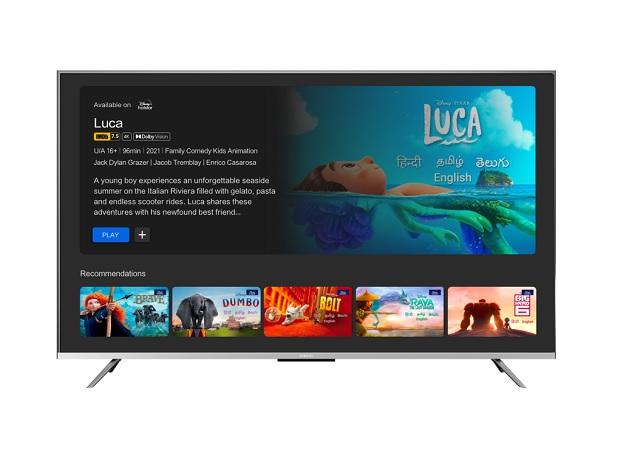
Chinese electronics maker Xiaomi on Thursday launched in India the Mi TV 5X series of smart televisions. The Mi TV 5X will be available in 43-inch, 50-inch and 55-inch screen sizes priced at Rs 31,999, Rs 41,999 and Rs 47,999, respectively. All three models will be available from September 7 online on Mi India online store and Flipkart, and offline at the Mi Home, Mi Studio and Croma. In partnership with HDFC Bank, Xiaomi is offering a cashback of up to Rs 3,000 to HDFC Bank credit cards customers. Besides, the smart televisions will be available with up to 9 months no interest equated monthly installments (no cost EMI) offer from select banks and non-banking financial companies.

The Mi TV 5X series is based on Google Android 10 TV platform with Xiaomi’s PatchWall 4 user interface. The company has integrated IMDb in the user interface to show content’s customer ratings, alongside the collections of top IMDb fan-rated titles themed around genres, actors, filmmakers and more featured on the PatchWall homepage.

The TVs are touted to have a bezel-less profile with aluminium alloy frame covering the sides.

The smart televisions support all common high dynamic range formats, including Dolby Vision and HDR10+. Xiaomi says the TVs’ screen support 94 per cent of DCI-P3 colour gamut. According to Xiaomi, the screens are powered by Vivid Picture Engine 2 with adaptive brightness controlled through embedded photo-electric sensor. Besides, there is MEMC to bring interpolate frames of on-screen content and bring them closer to natively supported frame rate, 60Hz that is.

Audio is covered by 40W stereo speakers, supported by Dolby Atmos and DTS-HD. Mi TV 5X series comes with 2GB RAM and 16GB on-board storage. Wired connectivity is covered by three HDMI 2.1 ports, two USB ports, LAN port, optical out port, 3.5mm audio jack, and an Ethernet port. Wireless connectivity includes dual-band Wi-Fi (2.4GHz/5GHz) and Bluetooth.

Read Complete Article

Xiaomi Mi Notebook 2021 series with 11th Gen Intel Core processors launched

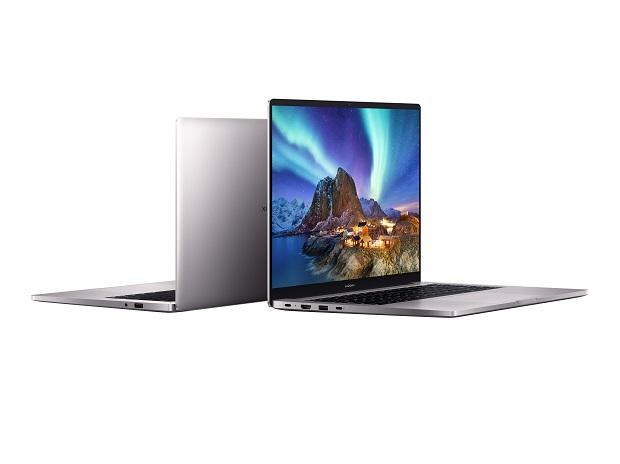
Expanding its consumer laptops line-up in India, Chinese electronics maker Xiaomi on Thursday launched the Mi Notebook 2021 series. Powered by 11th Gen Intel Core processors, the series comes with models named the Mi Notebook Ultra and Mi NoteBook Pro. Both the Ultra and the Pro models come in Intel Core i5-11300H and Intel Core i7-11370H processors variant, with options to choose from 8GB RAM and 16GB RAM with the former and 16GB RAM in the latter. Both the Mi NoteBook Ultra and Mi NoteBook Pro run-on Windows 10 Home and will be eligible for free upgrade to Windows 11 when available. They come preloaded with MS Office Home & Student Edition 2019, and Mi SmartShare. The laptops will be available online on the Mi online store, Amazon India, and offline at Mi Homes and other retail stores from August 31.

Mi NoteBook Ultra: Specifications and features

This one is a premium laptop made from a single block of series 6 aluminium. Touted as a thin-and-light laptop by the company, the laptop weighs 1.7 kg and is 17.9mm thick. The Mi NoteBook Ultra sports a 15.6-inch 3.2K resolution screen of 90Hz refresh rate stretched in 16:10 aspect ratio. It is an IPS LCD screen with 100 per cent sRGB colour gamut for natural colours rendition. Audio is covered by dual stereo speakers of 2W each, supported by DTS audio processing app.

As for the I/O ports, there is one Thunderbolt 4, one USB type-C with PD support, one HDMI 1.4, one USB 3.2 Gen 1, one USB 2.0, and a 3.5mm audio out jack. Wireless connectivity includes Wi-Fi 6 and Bluetooth 5.1. The Mi Notebook Ultra supports Windows Hello login with fingerprint sensor embedded in the power button. The laptop has a 720p HD camera with a 2D array dual-microphone. The Mi NoteBook Ultra is powered by a 70 WHr battery, supported by 65W USB Type-C charger.

Mi NoteBook Pro: Specifications and features

Like the Ultra mode, the Pro model is made of a single block of series 6 aluminium. It weighs 1.4 kg and is 17.3mm thick. The Mi NoteBook Pro sports a 14-inch 2.5K resolution screen stretched in 16:10 aspect ratio. It is an IPS LCD screen with 100 per cent sRGB colour gamut for natural colours rendition. Audio is covered by dual stereo speakers of 2W each, supported by DTS audio processing app.

Read Complete Article

Govt launches SAMRIDH scheme to help startups in their initial phase

Just over a week after the newly appointed Minister of Electronics and Information Technology (MeitY) Ashwini Vaishnaw said the government will support startups and entrepreneurs in their initial phase, where they face most challenges, he launched Startup Accelerators of MeitY for Product Innovation, Development and Growth (SAMRIDH) programme on Wednesday.

SAMRIDH will create a conducive platform for Indian software product startups to enhance their products and secure investments for scaling their business. The programme is being implemented by MeitY Startup Hub (MSH).

Government will support startups and entrepreneurs in the most challenging phase which is the initial risk phase, Vaishnaw had said earlier.

The SAMRIDH initiative will not only provide funding support to startups, but will also help in bringing skill sets together which will help them become successful, Vaishnaw said Wednesday.

“Employment in traditional as well as new age industries is a stated mission of our government and is also the vision of Prime Minister Shri Narendra Modi. Initiatives and schemes like SAMRIDH will help accelerate the implementation of that vision,” he added.

Technology can play a role in accelerating and in taking a quantum jump in reaching out to people, which would have otherwise taken many years. Using the energy of startups these areas can be reached within months, the minister said.

Speaking at the launch event, MeitY Secretary Ajay Prakash Sawhney said the SAMRIDH scheme will pick up startups that are ready for acceleration stage and will provide them with funding support, mentorship and a lot of other support that is required by startups at this stage.

The SAMRIDH programme will focus on accelerating 300 startups by providing customer connect, investor connect, and international expansion opportunities in the next three years.

Read Complete Article