India wearables market logs 23.8 million units shipment in Q3: IDC

India’s wearable market grew 93.8 per cent year-on-year (YoY) in the July-September 2021 quarter, shipping 23.8 million units, as per data from IDC India.

Despite the logistic challenges and increase in freight costs, vendors remained aggressive in their shipments and were able to manage the inventory for the upcoming month-long festival sales, IDC said.

Shipments in September surpassed 10 million, growing two-fold from the same month last year, resulting in a record quarter for wearable devices in India, it added.

Watches continued to be the fastest-growing category with 4.3 million shipments in the third quarter, while wristbands saw a seventh consecutive quarter of annual decline to 738,000 units, IDC said.

Truly Wireless (TWS or earbuds) devices reached a 39.5 per cent share of the earwear segment (18.73 million units shipment) in the quarter under review, but the market remains dominated by over-the-ear and tethered devices, it added.

While seasonality made Q321 the biggest quarter for wearables, the influx of devices at the entry-level was the key growth factor. Throughout the quarter, Indian vendors were aggressive with their launches and channel expansion,” IDC India Market Analyst (Client Devices) Anisha Dumbre said.

Aggressive intent to maintain their lead helped them to further reduce the average selling price of watches to USD 73, putting immense pressure on a struggling wrist band category, she added.

IDC said India-based brands have captured over two-thirds of the watch market with their aggressive offerings and marketing spends on digital platforms.
Read Complete Article

Reliance vs Amazon fight makes for a cranky board at Future Retail

Two of the world’s richest men, fighting over a near-bankrupt Indian retailer, have made so much noise that its board has woken up super cranky. In less than a week, the three independent directors of Future Retail Ltd. have shot off two letters to the country’s competition authority, alleging that Amazon.com had deliberately misled the regulator about the true nature of its 2019 investment in a related entity. They want the antitrust watchdog to cancel the transaction.

The 2025 dollar bonds of Future Retail rose a little Monday, though they still trade at 61 cents to the dollar. Based on what an arbitration tribunal in Singapore has had to say on the issue of alleged misrepresentation by Amazon, the maneuver looks like a long shot. But one never can predict the course of regulatory action in India. If the gambit succeeds, Asia’s wealthiest businessman, Mukesh Ambani, may be able to get his hands on Future’s retail stores after all, a deal Amazon boss Jeff Bezos has so far managed to block using judicial proceedings. A scrapping of Amazon’s investment would leave the U.S. retailer with no valid contract to stop the sale of assets to Ambani.

It’s rare for Indian boards to question the legality of agreements that they’ve been involved in. But then, the stakes are high in the Ambani vs. Bezos battle. The outcome could go some way toward determining which of the two billionaires would ultimately control India’s $800 billion retail market. This isn’t a war the directors can sit out — not with Future sinking under the weight of 190 billion rupees ($2.5 billion) of liabilities, and relentless losses that jumped 80% from a year earlier in the six months through September.

ALSO READ: Amazon never intended to invest in FCPL: Future Retail directors to CCI

The unraveling of Future, a pioneer of modern mass retailing in India with 1,500-plus stores spread across 16 million square feet, began some time ago. The $192 million Amazon paid for a 49% interest in founder Kishore Biyani’s Future Coupons Pvt. translated to indirectly owning roughly 10% of the publicly traded Future Retail, at a premium to the prevailing share price. Amazon, which gave the money expressly for Coupons to invest in the debt-laden Retail, insisted on a list of restricted parties to whom the physical stores couldn’t be sold without the e-commerce giant’s go-ahead. Ambani’s name was on the list, and that’s why Bezos initiated arbitration proceedings for breach of contract when Future brought in India’s No. 1 retail tycoon for a fresh $3.4 billion rescue after it was hit hard by last year’s pandemic.

Read Complete Article

Cairn to work with Halliburton for boosting offshore recoverable reserves

Cairn Oil and Gas, a unit of Anil Agarwal-controlled Vedanta, announced on Tuesday that it has entered into a partnership with Halliburton. A statement from Cairn Oil and Gas said that under the alliance, Cairn will work with Halliburton to pursue the target of increasing its recoverable reserves from offshore assets to 300 million barrels of oil equivalent (mmboe). This is a 10-fold increase from the present cumulative of 30 mmboe.

The offshore assets include Ravva, off the coast of Andhra Pradesh, Cambay, on the western coast, and several newly acquired Open Acreage Licensing Policy (OALP) blocks.

“This partnership for offshore assets will evolve through three distinct stages of conceptual design, conceptual detailing, and execution. This will include geological and seismic studies, well-designing and engineering, and drilling to determine recoverable reserves,” the statement said.

“This announcement follows Cairn’s commitment of doubling its capacity, contributing 50 per cent to India’s domestic crude production,” it added.

Commenting on the development, Prachur Sah, CEO at Cairn Oil and Gas, said, “To increase domestic production, India needs to encourage exploration of new fields, increase investment and technology for ageing fields, and also incentivise unconventional options like shale and gas.”

Sid Whyte, senior vice president of Middle East North Africa and Asia Pacific region for Halliburton said, “We believe our collaboration with Cairn and engineered solutions will maximize their asset value and increase overall production growth for the country.”

Read Complete Article

Krafton removes 2.5 mn accounts in a month to stem cheating on Indian PUBG

Krafton Inc, the South Korean video gaming giant, said it has removed 2.5 million accounts in just over a month to eradicate cheating on Battlegrounds Mobile India, the exclusive Indian version of PUBG.

While it permanently banned 2,519,692 accounts, it temporarily banned 706,319 accounts between September and now.

Among the steps it has taken to eradicate cheating and cheaters on BGMI are stronger cheat detection and banning mechanisms, permanent bans, manually verifying and banning any accounts that use or promote illegal programs among high-rankers, and blocking YouTube channels that promote illegal activity on BGMI.

Krafton is working with YouTube on the removing these accounts, it said in a statement.

“If you are using cheat tools, you will get banned eventually, if not immediately,” said Krafton in a statement on its website.

It also cautioned users against sharing their accounts, encouraged them to keep reporting misuse on the platform.

Last week, Krafton launched the next game in its PUBG franchise, PUBG: NEW STATE. The game has been released on iOS and Android devices in more than 200 countries following its final technical test, which took place in late October.

Developed by PUBG Studios, the same company that created the highly successful PUBG: BATTLEGROUNDS battle royale video game that has sold more than 70 million copies on PC and consoles, PUBG: NEW STATE is a free-to-play next-generation mobile game playable in 17 different languages.

Set in the year 2051, PUBG: NEW STATE brings the full, uncompromised battle royale gaming experience currently available in PUBG: BATTLEGROUNDS to iOS and Android, making it one of the most realistic and technologically advanced mobile games to date.

Read Complete Article

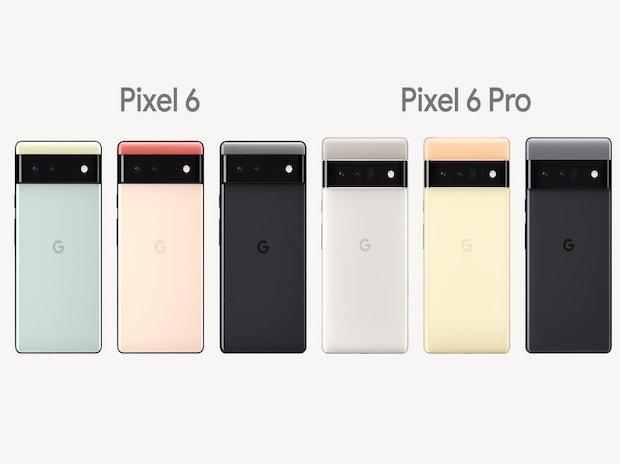
Google is bringing fix for update that erased major Pixel 6 feature

American tech-giant Google says that it is bringing a fix for the update to Google Photos removed one of the Pixel 6’s big features

As per The Verge, an update to Google Photos removed one of the Pixel 6’s big features: the Magic Eraser tool that lets you remove unwanted objects or people from your photos.

If you are also among those whose Pixel downloaded the affected version (5.67, according to Android Central), fear not: Google says it’s working on a fix.

Google spokesperson Alex Moriconi told The Verge that the company “identified an issue early in the rollout of [its] latest Photos update and are providing a fix shortly.” Google also says that the issue didn’t affect everyone.

The update seems to be no longer available, but it was one of Google’s main selling points when it launched the phone around a month ago.

Read Complete Article

Google unlikely to release a new version of Pixelbook in 2022: Report

Tech giant Google is highly unlikely to launch a new version of the Pixelbook in 2022, a media report says.

A statement at a recent Qualcomm press event in London hints that there will not be an update to the original “premium” Pixelbook until 2023 at the earliest, reports 9To5Google.

“Next year (2022) there won’t be anything coming. In future I don’t know,” said Chrys Tsolaki, Retail Manager for Chromebooks at Google, when asked about a potential 2022 Pixelbook release.

The original Pixelbook was launched in 2017 with high-end internals for a Chromebook but has since been discontinued through the Google Store.

While this is bad news, the introduction of the internally developed Google Tensor chip might provide some hope for a high-end all Google-powered Chromebook at some point down the line.

Chromebook sales have slowed after a boom in 2020 and 2021 as the pandemic forced an exponential rise in work-from-home and at-home learning.

This initial sales increase has since slowed, but a high-end Pixelbook in 2022 would have no doubt been a welcome option for those holding out with the original model.

While the Pixelbook Go includes an Intel i7 processor configuration, it includes a touchscreen but lacks the two-in-one form factor that was found on the 2017 version. The closest on the market right now is the Acer Chromebook Spin 713.

Read Complete Article

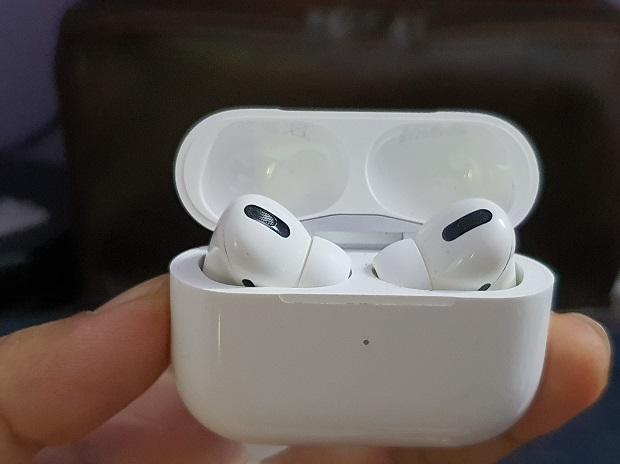
Apple is likely to launch AirPods Pro 2 in the third quarter of 2022

Tech giant Apple is likely to launch the next version of its AirPods Pro in the third quarter of 2022, media report says.

According to AppleInsider, it is already two years since AirPods Pro were launched in October 2019.

Previous rumours from the likes of analyst Ming-Chi Kuo have said the “AirPods Pro 2” will be released in early 2022. Now, though, a new report pushes that back to the third quarter of 2022 instead, the report said.

A prominent Twitter user has posted an amended timeframe with the sole detail being the change to 2022 Q3.

However, this tweet was first spotted by MacRumors and the user has reportedly told the publication that the source comes directly from the supply chain.

This claim follows a recent one which purported to show leaked images of the forthcoming earbuds, the report said.

The images, if accurate, show few design changes since the original AirPods Pro, while other previous reports have claimed that Apple will reduce the stem.

Read Complete Article

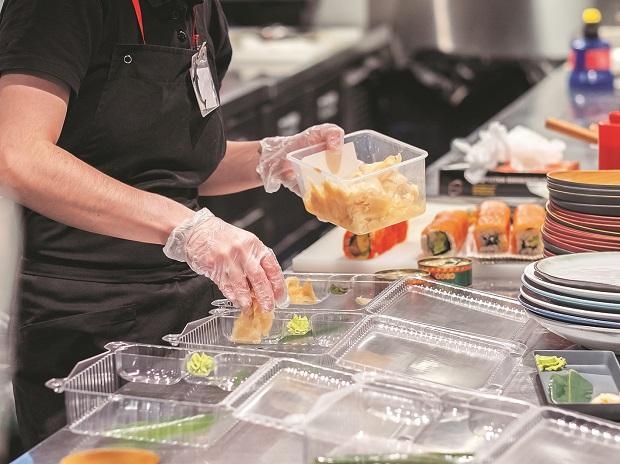
Cloud kitchens’ GMV to quintuple to $2-3 billion by 2025: RedSeer

The Indian food market, which is slowly seeing a shift from unorganised to organised, is expected to be driven by the organised segment in the near future. Demand for the organised segment (QSR, dine-in and cloud kitchen) is growing owing to increasing internet penetration, safety and hygiene standards maintained by the players, according to internet-focused consulting firm RedSeer.

Growth drivers

  • Favourable demographics (including young population and urbanisation)
  • Higher disposable income
  • More and better new restaurants (online deliveries and cloud kitchens with higher quality standards)

Customer satisfaction

  • Cloud kitchens have been able to drive customer satisfaction as well. New brands that have emerged via cloud kitchen models have secured higher customer ratings than established QSR brands
  • As a result, cloud kitchens are likely to see 5-6x growth in gross merchan- dise value (GMV) to $2-3bn by 2025

Read Complete Article

Nykaa enters top-50 most-valued firms club, stock up 109% from issue price

FSN E-Commerce Ventures (Nykaa) entered the list of top-50 most valued companies in terms of market captialisation in the country as the stock price of company more-than-doubled against its issue price. The stock hit a new high at Rs 2,349, on gaining 6 per cent on the BSE in Friday’s intra-day trade. With today’s rally, the stock has zoomed 109 per cent against its issue price of Rs 1,125 per share.

At 12:10 pm, with a market-cap of Rs 1.10 trillion, Nykaa stood at 48th position in overall market-cap ranking, the BSE data showed. Today, the company surpassed two-wheelers maker Bajaj Auto and personal products company Dabur India in market-cap ranking. Currently, Nykaa stood behind foodtech major Zomato, market-cap stood at Rs 1.17 trillion, data showed.

On Wednesday, November 10, 2021, Nykaa had made a strong stock market debut, as the shares ended at Rs 2,207, a hefty 96 per cent premium over its issue price of Rs 1,125 per share, on the BSE.

The Rs 5,300-crore initial public offering (IPO) of FSN E-Commerce Ventures, which operates Nykaa, had received strong investor response and was subscribed 82.4 times. The company plans to utilise the proceeds of the fresh issue for improving its brand visibility and awareness, debt repayment, and setting up retail stores and warehouses.

FSN E-Commerce Ventures, more commonly known as Nykaa, is a consumer technology platform, delivering a content-led, lifestyle retail experience to consumers through its diverse portfolio of beauty, personal care & fashion products including their own brand products.

Nykaa is the largest specialty beauty and personal care platform in India in terms of value of products sold in FY21 and one of the fastest growing fashion platforms in India based on growth in GMV. The company has the highest average order value (AOV) among leading online beauty and personal care platforms in India.

Read Complete Article

Toshiba announces plan to split into 3 firms, shareholder reaction in focus

Japan’s Toshiba Corp outlined plans on Friday to break up into three independent companies by spinning off two core businesses – its energy and infrastructure business as well as its device and storage business.

After spinning off the two companies, Toshiba will continue to own its 40.6% stake in memory chipmaker Kioxia as well as other assets.

The plan–borne of a five-month strategic review undertaken after a highly damaging corporate governance scandal–is partly aimed at encouraging activist shareholders to exit, sources with knowledge of the matter have said.

Toshiba said in its statement on Friday that the plan was aimed at enhancing shareholder value.

Some Toshiba investors are not convinced that a break-up would create value, shareholder sources said ahead of a formal announcement of the plan. “It makes sense to split if the valuation of a highly competitive business is hindered by other businesses,” said Fumio Matsumoto, chief strategist at Okasan Securities.

“But if there isn’t such a business, the break-up just creates three lacklustre midsize companies.” The once-storied 146-year old conglomerate has lurched from crisis to crisis since an accounting scandal in 2015. Two years later, it secured a $5.4 billion cash injection from 30-plus overseas investors that helped avoid a delisting but brought in activist shareholders including Elliott Management, Third Point and Farallon.

Tension between Toshiba management and overseas shareholders has dominated headlines since then and in June, an explosive shareholder-commissioned investigation concluded that Toshiba colluded with Japan’s trade ministry to block investors from gaining influence at last year’s shareholders meeting.

Earlier on Friday, Toshiba released a separately commissioned report that found executives including its former CEO had behaved unethically but not illegally.

It concluded that Toshiba was overly dependent on the trade ministry, adding that problems were also caused by its “excessive cautiousness towards foreign investment funds” and “its lack of willingness to develop a sound relationship with them.”

Shares in Toshiba finished 1% lower after the governance report. Details of the review were announced after the market close.

Read Complete Article