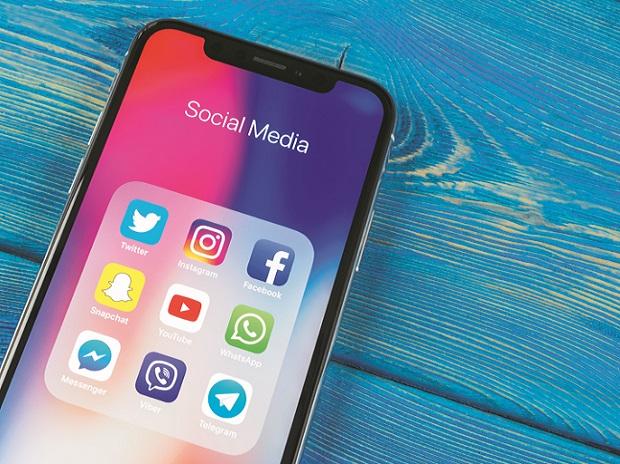
Twitter on Wednesday introduced updates to its iOS app to prevent tweets from disappearing as the users try to read them.
The iOS users faced this problem where tweets were disappearing when replies are being added to an ongoing conversation.
“We’ve made some updates on iOS to prevent Tweets from disappearing mid-read. Now when you pause your timeline scrolling to look at a Tweet, it should stay put!” Twitter said in an update.
The micro-blogging platform earlier this month issued an update to the disappearing Tweet experience for web.
The company first discussed Tweets disappearing from view mid-read in September.
“We know it’s a frustrating experience, so we’re working on changing it. Over the next two months, we’ll be rolling out updates to the way we show you Tweets so they don’t disappear,” it had said.
A Tweet would move up the timeline as replies were added to the ongoing conversation.
“Since some conversations can evolve quickly, this made it so you didn’t see the same Tweet repeated in the TL. Our changes will keep your TL fresh and keep Tweets from disappearing mid-read,” Twitter said.
Samsung Electronics said on Wednesday it has selected the city of Taylor in Texas, the US, as the site of its new $17 billion chip fabrication plant, a move to boost production amid a global chip shortage.
The decision came five months after the tech giant announced a plan to build a second, next-generation chip plant in the United States, and as the chip supply crunch caused global automobile and consumer electronics companies to slash their production.
Samsung said it had considered multiple factors, including “the local semiconductor ecosystem, infrastructure stability, local government support and community development opportunities.”
Also the proximity to its current manufacturing site in Austin, about 25 kilometers southwest of Taylor, will enable “the two locations to share the necessary infrastructure and resources,” it said, reports Yonhap news agency.
The move will help Samsung lay “the groundwork for another important chapter in our future,” said Kim Ki-nam, vice chairman and CEO of Samsung’s device solutions division.
“With greater manufacturing capacity, we will be able to better serve the needs of our customers and contribute to the stability of the global semiconductor supply chain,” he said.
The new investment will also bring “more jobs” and support “the training and talent development of local communities,” Kim said, as “Samsung celebrates 25 years of semiconductor manufacturing in the U.S”
Samsung Electronics was set to announce its new $17 billion chip fabrication plant in the city of Taylor in Texas, the US, on Tuesday (US time), as global semiconductor companies have engaged in increasingly fierce competition amid a global chip crunch.
According to a report in The Wall Street Journal citing people familiar with the matter, “an announcement could come as early as Tuesday” as Texas Governor Greg Abbott was scheduled to make an “economic announcement” on Tuesday at 5 pm (US time).
The new advanced chip-making plant, roughly 1,200 acres in size and making it larger than Samsung’s Austin plant, could create 1,800 jobs.
However, the plant isn’t expected to actually start producing chips until the end of 2024, according to previous filings.
Samsung Electronics, the world’s biggest memory chip and mobile phone maker, has been considering building a new plant near the existing one in Austin, which opened in 1996.
But a major power outage caused by a cold wave and snowstorm in the area in February caused the company millions of dollars in losses and raised concerns over a steady electricity supply.
The city of Taylor in Texas, with a population of around 18,000, is currently considered the front-runner in the race to become home to the new plant, reports Yonhap news agency.
It has offered the tech giant a set of incentives, including tax rebates, for the project that is anticipated to bring approximately 1,800 jobs and other opportunities.
According to a resolution passed by Taylor’s city council, a 6 million square feet chip fabrication factory, when built, will produce “the most advanced” type of semiconductors by the end of 2024. Construction is expected to start in early 2022.
Consumer technology brand Nothing on Tuesday said its USD 50 million funding round announced last month had seen participation from film producer Karan Johar, cricketer Yuvraj Singh and others.
In October, Nothing had announced completion of a series-A extension of USD 50 million (around Rs 376 crore) from strategic and private investors. At that time, it had not commented on the full list of investors.
Some of the strategic and private investors who have joined the Nothing journey from India, include Indian film producer, director and author Karan Johar, international cricketer, entrepreneur and philanthropist Yuvraj Singh and Indian fashion designer Sabyasachi Mukherjee, according to a statement.
Digital content creator and entrepreneur Ranveer Allabadia and Bollywood and independent music composer and singer Jasleen Royal have also come on board as backers of Nothing’s vision, it added.
“The market is overdue for a new player to bring passion back to the field of consumer tech; one that celebrates artistry and hopes to organise our digital life in one connected space.
“We are excited that our new strategic and private investors from India feel the same and believe in our vision and mission,” Nothing India Vice-President and General Manager Manu Sharma said.
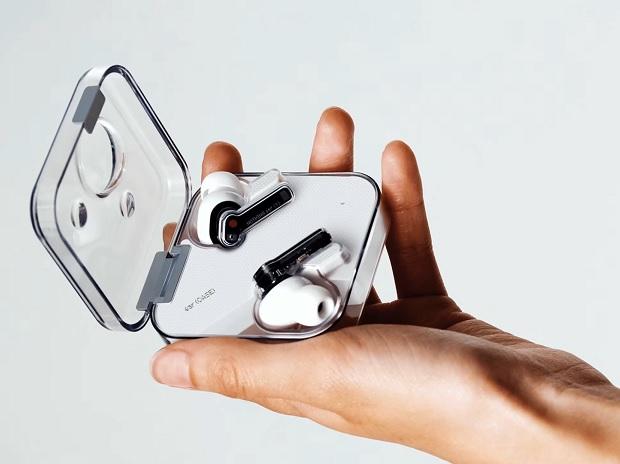
He added that in 2021, Nothing launched one of the most anticipated tech products of the year, Nothing ear (1) “and we assure you, this is just the beginning”.
The additional USD 50 million funding follows the USD 16.5 million Series-A raise that the company closed in the first quarter of 2021, and the USD 7 million seed investment secured in the last quarter of 2020. Nothing’s total funding after the fresh fund close has reached USD 74 million.
The London-based company, which is backed by Indian entrepreneur Kunal Shah, was co-founded by OnePlus co-founder Carl Pei.
According to research firm Counterpoint, Nothing broke into the top-three brands in the premium TWS (Truly Wireless Stereo) segment in its debut quarter by capturing a seven per cent share in the segment in the September 2021 quarter.
The report added that competitive pricing and differentiated design helped the brand gain good mindshare among consumers.
Apple Inc said on Tuesday it has filed a lawsuit against Israeli cyber firm NSO Group and its parent company OSY Technologies for alleged surveillance and targeting of U.S. Apple users with its Pegasus spyware.
The iPhone maker said it is also seeking to ban NSO Group from using any Apple software, services or devices to prevent further abuse.
Apple is the latest in a string of companies and governments to come after NSO, the maker of the Pegasus hacking tool that watchdog groups say targeted human rights workers and journalists. Earlier this month, U.S. officials placed the company on a trade blacklist. NSO has also faced either legal action or criticism from Microsoft Corp, Meta Platforms Inc, Alphabet Inc and Cisco Systems Inc.
NSO is allegedly involved in circumventing security for products made by these companies and selling that circumvention in the form of hacking tools to foreign governments.
In a statement, NSO, which says it sells its tools only to governments and law enforcement agencies and has safeguards in place to prevent misuse, said that “thousands of lives” have been saved through the use of its tools.
“Pedophiles and terrorists can freely operate in technological safe-havens, and we provide governments the lawful tools to fight it. NSO Group will continue to advocate for the truth,” a spokesperson said in a statement.
In its complaint filed in U.S. District Court for the Northern District of California, Apple said NSO’s tools were used in “concerted efforts in 2021 to target and attack Apple customers” and that “U.S. citizens have been surveilled by NSO’s spyware on mobile devices that can and do cross international borders.”
Apple alleged that NSO Group created more than 100 fake Apple ID user credentials to carry out its attacks. Apple said that its servers were not hacked, but that NSO misused and manipulated the servers to deliver the attacks on Apple users.
I own a smart TV which I bought in 2019. It was rich in specifications and features back then, but it now seems to have aged prematurely. Not that it has bad picture or audio quality, but it lags behind newer smart televisions in performance, connectivity, and user experience. Thankfully, there are streaming devices like the Amazon Fire TV Stick 4K Max which bring to speed these otherwise mediocre televisions with their faster internet connectivity, sleek performance, and support for tons of new and updated apps. How? Let’s find out:
The Amazon Fire TV Stick 4K Max is a streaming device with HDMI interface that turns any screen with HDMI input into a smart screen connected to the internet for online streaming of content available on supported apps like YouTube, Prime Video, Apple TV, Netflix, Disney+ Hotstar, etc. It boots Android operating system-based Amazon’s Fire OS with Amazon services like Prime Video and Amazon Music built-in, and an app store for users to download and install other supported apps, including games.
The flagship model in Amazon’s streaming devices portfolio, the Amazon Fire TV Stick 4K Max boasts sleek performance, top-notch connectivity, support for most high dynamic range (HDR) formats, Dolby Atmos audio, and Alexa voice assistant for hands-free operations and smart home set-up.
What’s inside the box?
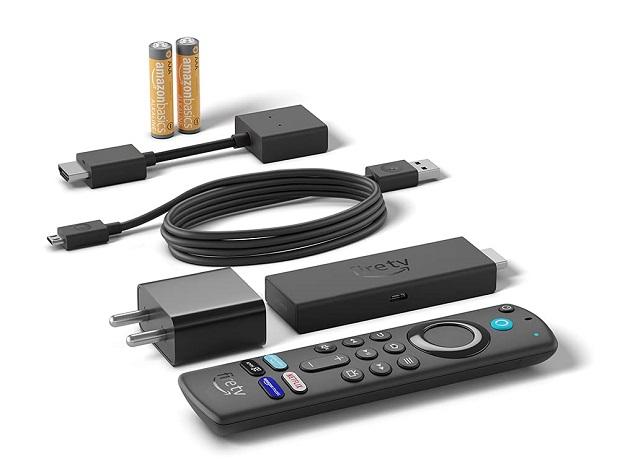
Amazon Fire TV Stick 4K Max
Remote control with dedicated Alexa button, and hotkeys for Prime Video, Netflix, and Amazon Music
HDMI Extender cable
USB-A to microUSB cable
Power adaptor
2 x AAA batteries
How to set up the Amazon Fire TV Stick 4K Max
You need Wi-Fi and an Amazon account to set up the Fire TV Stick 4K Max. Plug in the stick into the HDMI port (ARC, if available) of the compatible screen – TV, monitor, projector, etc; power it up using the supplied adaptor and cable; change the screen input to HDMI; and follow the on-screen instructions – connect the stick with the wireless internet network and input your Amazon account details. The Fire TV Stick 4K Max supports HDMI CEC. Therefore, you can use the Fire TV remote to control the TV and other supported peripherals without needing separate remote for each connected device. However, the controls are limited to basic functions, and you may still need the remote for screen and other peripherals to manage and control things like screen native display and audio settings.
Google Pixel 6a is reportedly in the works. The renders of the rumoured mid-range Pixel 6a have been revealed in leaks online.
As per GSM Arena, the design is in line with the current Pixel 6 and 6 Pro sporting a punch-hole display up front and a visor on the back for its dual-cam setup. The OLED display on the Pixel 6a is said to measure 6.2-inches.
At 152.2 x 71.8 x 8.7mm Pixel 6a would be noticeably more compact than the regular Pixel 6 which measures at 158.6 x 74.8 x 8.9mm. The rest of the spec sheet should include a 50MP Samsung ISOCELL GN1 sensor for the main cam, 6/8GB RAM and 128GB of internal storage.
The chipset is speculated to be either the Google Tensor SoC like on the Pixel 6 duo or the Snapdragon 778G.
One thing that seems to be missing is a headphone jack, which would make Pixel 6a the first A-series phone from Google without a headphone jack.
Android 12 will cover the software side and the phone will most likely come with at least three years of software support from Google.
Redmi India, a sub-brand of Xiaomi, on Monday announced that it has joined hands with Reliance Jio to conduct 5G trials for its upcoming Redmi Note 11T 5G smartphone.
To verify the capability and performance of their upcoming device, the two companies conducted a 5G standalone lab trial, and tested the device through various scenarios, thereby ensuring enhanced 5G end-user experiences.
“We are delighted to partner with Reliance Jio for the Redmi Note 11T 5G in our endeavor of democratising technology by making it easier for customers to get access to 5G smartphones that are future ready. Our latest trial with Reliance Jio is an indication of the development of the 5G ecosystem in India and the encouraging outcome highlights the true potential of the device and brings a high-quality 5G experience closer to reality,” Muralikrishnan B, COO, Xiaomi India, said in a statement.
Redmi Note 11T 5G is fully equipped to elevate the customer’s smartphone experience and will launch in India on November 30, the company claims.
The Redmi Note 11T 5G is said to come with a 6.6-inch full HD+ (1080 A- 2400p) LCD display.
Under-the-hood, it is said to feature 6nm class MediaTek Dimensity 810 6nm processor with Mali-G57 MC2 GPU, Android 11-based MIUI 12.5 OS, 4GB/6GB LPDDR4X RAM, 64GB/128GB (UFS 2.2) storage (expandable up to 1TB), andA 5,000mAh battery with a 33W fast charger.
In terms of optics, it is expected to feature a dual-camera– 50MP (f/1.8)A with 8MP (f/2.2) with LED flash on the back. On the front, it is said to house a 16MP (f/2.45) snapper.
Meta-owned Facebook Messenger and Instagram are delaying plans to encrypt users’ messages until 2023.
In a post in The Telegraph, Antigone Davis, Meta’s head of safety, attributes the delay to concerns about user safety.
“We are taking our time to get this right and we don’t plan to finish the global rollout of end-to-end encryption by default across all our messaging services until sometime in 2023,” Antigone Davis wrote in The Telegraph.
“As a company that connects billions of people around the world and has built industry-leading technology, we’re determined to protect people’s private communications and keep people safe online,” added.
With E2EE only the sender and recipient will see their conversations, the firm wants to ensure that this does not interfere with the platform’s ability to help stop criminal activity.
Facebook had first started rolling out encryption to its Messenger service back in 2016, but it only works when users use the Secret Conversation feature on the service.
Earlier this year, Meta said that default E2EE would become available on Instagram and Messenger “sometime in 2022 at the earliest.”
Facebook has taken criticism over the years for being slow to implement end-to-end encryption by default on all of its platforms.
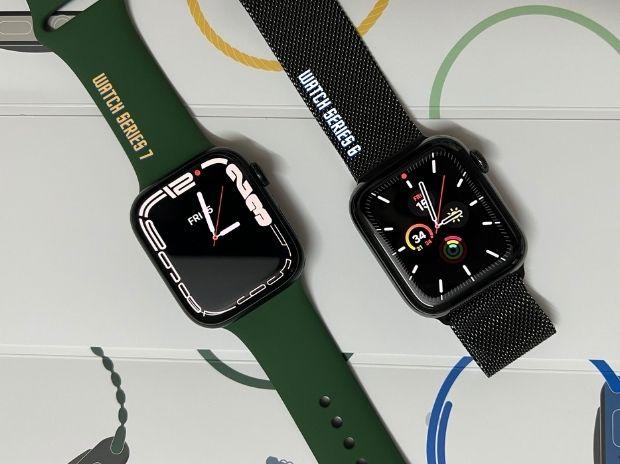
Cupertino-based tech giant Apple is reportdly recycling the old design for the Watch Series 8, with the only change involving the speaker grille.
The speaker grille has been split from being a single long piece to a duo of smaller ones, with one on top of the other, GizmoChina reported.
The watch is expected to get some major capability upgrades in the sensor department as well.
Apple’s suppliers are reportedly developing components for next-generation sensors in the Apple Watch Series 8 that will allow users to measure their blood glucose level.
Apple and its suppliers have already begun working on short-wavelength infrared sensors – a commonly-used sensor type for health devices. The new sensor will likely be installed on the back of the watch, allowing it to measure the sugar and glucose content in its wearer’s blood.
This would be a great addition to the current features in the current Apple Watch models.
Recently, Apple Watch Series 6 added a blood oxygen sensor. Compared to the first Apple Watch capable of measuring mainly daily activity, the Apple Watch is now capable of taking an ECG, detecting falls, high and low heart rates, blood oxygen levels, and more.
 Mansa
Mansa 