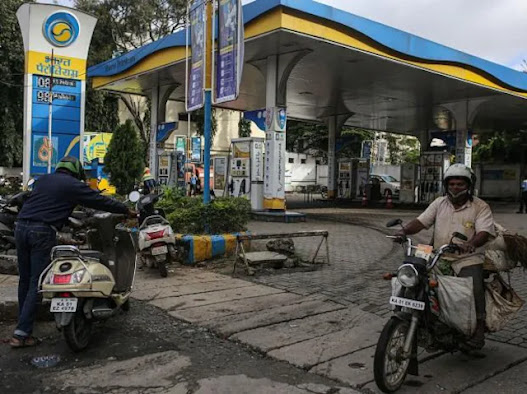
Grab some popcorn: Mukesh Ambani vs Gautam Adani rivalry is getting intense

Mukesh Ambani and Gautam Adani tiptoed around each other for years to reach the top two rungs of Asia’s wealth ladder. While one of them built an empire in telecom and retail, the other established a lock on transport and energy distribution. Increasingly, though, the two billionaires from India’s Gujarat state are starting to overlap, setting the stage for a clash that could alter the country’s business landscape. Given the duo’s proximity to politics, the shock is bound to reverberate through the corridors of power as well.

In the latest sign of their coalescing orbits, the Adani Group has discussed the idea of buying a stake in Saudi Aramco from the oil-rich kingdom’s Public Investment Fund, potentially linking the investment to a broader tie-up or asset swap deal, according to Bloomberg News. This is just months after Ambani’s Reliance Industries Ltd. and Aramco called off more than two years of talks to sell 20% of the Indian conglomerate’s oils-to-chemicals unit to the Saudi behemoth for about $20 billion to $25 billion-worth of Aramco shares. In an attempt to cement the partnership, Reliance even got Aramco chairman Yasir Al-Rumayyan to join its board as an independent director last year.

Aramco, the No. 1 crude oil producer, is still a better fit with Ambani’s Reliance, which owns the world’s largest refining complex at Jamnagar in Gujarat. Reliance is also a leading manufacturer of polymers, polyester and fiber-intermediates. But, Adani, too, has wanted to enter petrochemicals by putting up a $4 billion acrylics complex near his Mundra port in Gujarat in collaboration with BASF SE, Borealis AG, and Abu Dhabi National Oil Co., or Adnoc. Covid-19 put a dampener on the plan. This wasn’t the first retreat from his petro-ambitions: Nothing also came of a plant in Gujarat, which was looking to rope in Taiwan’s CPC Corp.

Read Complete Article

Apple restores services after outage brings down apps, internal systems

A number of Apple services were hit by a short-lived outage for some users and now according to the company’s system status page, all of the issues have been resolved after about two hours of downtime.

Services with confirmed issues, according to Apple’s system status page, included iMessage, some Apple Maps services, iCloud Mail, iCloud Keychain, the App Store, Apple Music, Apple TV Plus and Podcasts.

Apple warned users of “slow or unavailable” service in many cases, but didn’t specify what was behind the problem.

Thousands of users reported on the outage-detecting site Down Detector of issues with iMessage and iCloud on Monday afternoon.

The problems also impacted corporate employees from working from home and are keeping retail workers from completing tasks. Citing Apple staff members, the report adds that the outage has also hindered product repairs, swaps, and item pickups.

This was one of the most widespread outages to take place in a while, impacting Apple’s full range of services.

Read Complete Article

Samsung Galaxy Tab S8+ review: Best Android tablet despite imperfections

South Korean electronics major Samsung makes some of the best Android tablets, and the legacy continues with the Galaxy Tab S8+. One of the three tablets in the Galaxy Tab S8 series, the Plus model brings the best of Samsung without being on the expensive side of the price spectrum. That said, the Galaxy Tab S8+ is a balanced proposition in the premium Android tablet segment. But, what drives its utility and does it deliver on experience? Let’s find out:

Design

Made of aluminium, the Galaxy Tab S8+ is a thin-and-lightweight tablet. It is comfortable to hold and operate, and does not take much space, be it on a desk or inside a backpack. On the front, it has thin display bezels with the front camera positioned in the centre on the right bezel area (in vertical orientation). Its volume rocker keys and power button, which doubles up as a dedicated button to wake-up Bixby, are placed towards the top on the right side of the frame (in vertical orientation). On the rear, it has a dual-camera array positioned on the top left side (in vertical orientation), followed by a thin magnet strip to hold and charge the SPen. The front and rear camera placement, volume rockers, power button, and SPen placement are design elements that make it obvious that the tablet is designed for use in horizontal orientation. That said, the overall design of the Galaxy Tab S8+ is good from a portability perspective, but not conducive for comfortable use due to its tall and broad form factor.

Read Complete Article

Chinese Boeing crashes with 132 people on board, no sign of survivors

China Eastern Airlines Boeing 737-800 with 132 people on board crashed in mountains in southern China on a domestic flight on Monday and media said there was no sign of survivors.

The plane was flying from the southwestern city of Kunming, capital of Yunnan province, to Guangzhou, capital of Guangdong, bordering Hong Kong.

There was no immediate word on the cause of the crash.

“Can confirm the plane has crashed,” China Eastern Airlines said in a statement in which it also gave details of a hotline for relatives of those on board.

Media cited a rescue official as saying the plane had disintegrated and caused a fire destroying bamboo trees. The People’s Daily quoted a provincial firefighting department official as saying there was no sign of life among the scattered debris.

The aircraft, with 123 passengers and nine crew on board, lost contact over the city of Wuzhou, China’s Civil Aviation Administration of China (CAAC) and the airline said.

The flight left Kunming at 1:11 p.m. (0511 GMT), FlightRadar24 data showed, and had been due to land in Guangzhou at 3:05 p.m. (0705 GMT).

The plane, which Flightradar24 said was six years old, had been cruising at an altitude 29,100 feet at 0620 GMT. Just over two minutes and 15 seconds later, data showed it had descended to 9,075 feet.

In another 20 seconds, its last tracked altitude was 3,225 feet, indicating a vertical descent of 31,000 feet per minute, Flightradar24 said.

Online weather data showed partly cloudy conditions with good visibility in Wuzhou at the time of the crash.

Read Complete Article

Tata Motors launches Altroz DCA. Price and other details here

Tata Motors on Monday said it has launched its premium hatchback Altroz with dual-clutch automatic transmission, priced between Rs 8.09 lakh and Rs 9.89 lakh (ex-showroom).

Altroz DCA comes equipped with several segment-first features, such as a wet clutch with active cooling technology, machine learning, shift by wire technology, self-healing mechanism, and auto park lock.

The model is powered by a 1.2-litre petrol engine.

“Since the commencement of bookings for the Altroz DCA, we are witnessing an encouraging number of queries. The Altroz DCA with its segment-first features will certainly captivate the minds of prospective buyers and provide a seamless driving experience,” Tata Motors Passenger Vehicles Vice President (Sales, Marketing and Customer Care) Rajan Amba said.

With more than 1.25 lakh happy customers, Altroz has witnessed an overwhelming response from customers and set certain benchmarks in the segment, he added.

“The addition of the Altroz DCA will bolster our product portfolio, help us in expanding our market share and take our success story further to set a ‘Gold Standard’ in automatics,” Amba stated.

The model comes with various features like leatherette seats, auto headlamps, 7-inch touchscreen by Harman, rear ac vents, and iRA connected car technology, among others.

Read Complete Article

Algo Rhythm: AI-as-a-Service can lead to wider adoption of AI

Artificial intelligence (AI) could contribute 10% of India’s GDP by 2025, or by up to $500 billion. Sangeeta Gupta, Nasscom’s senior VP and chief strategy officer, says India can ensure AI for all through AIaaS (AI-as-a-Service) — easy to implement cost-effective solutions.

“India is already seen as an emerging destination for data annotation and labelling services globally. The critical building blocks are in place to propel India into one of the leading global hubs for data and AI services.”

AI to add $500bn to India’s GDP by 2025

  • AIaaS vista has about 100 players (software & service providers, network players, niche AI & analytics players)
  • Tech ecosystem is AI’s largest adopter
  • Vibrant SMEs can drive AI adoption
  • AI market is led by IT sector, followed by BFSI, retail, and manufacturing

India’s AIaaS market set to lead the world

  • Government role in AIaaS spread is key, as end-user & ecosystem enabler
  • Government-sponsored and industry-academia R&D partnerships are key to local innovation
  • IT service players have a role in collaborating with deep-tech startups
  • India’s AIaaS market comprises global systems integrators and Indian MNCs, specialised AI and analytics service providers, global hardware and networking giants

Read Complete Article

Auto Expo to be held from January 13-18 next year

The next edition of the country’s leading automobile show, the Auto Expo, will be held from January 13-18 next year, having been cancelled this year due to the COVID-19 pandemic.

The last edition of the biennial automobile show took place in February 2020 amid fears of the spread of the coronavirus across the world.

It was supposed to take place in February this year at Greater Noida but was postponed due to the worsening COVID-19 situation.

“The Motor Show (Auto Expo) is confirmed from January 13-18, 2023, at India Expo Mart Greater Noida. January 11 will be exclusively for the media ; January 12 will be the inaugural ceremony and for the media, special guests and dealers,” Society of Automobile Manufacturers (SIAM) Director General Rajesh Menon told PTI.

While the Auto Expo would be held at Greater Noida, the auto components show on the other hand would take place at the revamped Pragati Maidan complex.

In a statement issued in August last year, Menon had noted that the magnitude of the risk of spread of infection is extremely high in a business-to-consumer (B2C) show like the Auto Expo which is visited by large crowds and maintaining social distancing would be difficult.

It has therefore been decided to postpone the Auto Expo The Motor Show for now, he had stated.

Menon had noted that safety of exhibitors, visitors and all stakeholders involved and present at the Auto Expo was the top most priority for SIAM.

It is in this context that the Indian automobile industry and SIAM recognises the inherent risks in organising the Auto Expo due to the on-going COVID-19 pandemic and the apprehensions of a possible third wave, he had stated last year.

The Auto Expo 2020 saw total footfalls of over six lakh visitors.

Read Complete Article

Diesel price for bulk users hiked Rs 25/litre; pvt retailers fear closure

The price of diesel sold to bulk users has been hiked by about Rs 25 per litre in line with a near 40 per cent rise in international oil prices, but retail rates at petrol pumps remain unchanged, sources said.

Petrol pump sales have jumped by a fifth this month after bulk users like bus fleet operators and malls queued up at petrol bunks to buy fuel rather than the usual practice of ordering directly from oil companies, widening the losses of retailers.

Worst hit are private retailers like Nayara Energy, Jio-bp and Shell, who have so far refused to curtail any volume despite a surge in sales. But now closure of pumps is a more viable solution than continuing to sell more fuel at rates that have been on freeze for a record 136 days, three sources with direct knowledge of the development said.

In 2008, Reliance Industries had shut all of its 1,432 petrol pumps in the country after sales dropped to almost nil as it could not match the subsidized price offered by the public sector competition.

A similar scenario may unfold again as retailers’ losses widen from bulk users being diverted to petrol pumps, they said.

Price of diesel sold to bulk users has been hiked to Rs 122.05 per litre in Mumbai. This compares to Rs 94.14 a litre price of the same fuel sold at petrol pumps.

In Delhi, diesel costs Rs 86.67 a litre at the petrol pump, but for bulk or industrial users it is priced at about Rs 115.

PSU oil companies have not raised retail prices of petrol and diesel since November 4, 2021 despite a surge in global oil and fuel prices, a move seen as aiding the Bharatiya Janata Party (BJP) in crucial state assembly elections.

Prices were supposed to start aligning with cost after counting of votes on March 10, but the ensuing start of the second half of the Budget Session meant that the price increases didn’t happen.

Read Complete Article

Suzuki Motor powers EV rush in India with Rs 10,440-crore investment

Suzuki Motor, parent of India’s largest automaker Maruti Suzuki, announced on Sunday that it would invest Rs 10,440 crore to build a new electric car and battery factory in India. Maruti Suzuki, which sells one in every two cars on Indian roads, is expecting to roll out affordable EV models in both Japan and India as early as 2025.

The Japanese automaker intends to invest around Rs 3,000 crore for the new plant to increase production of electric vehicles in India, and Rs 7,300 crore to manufacture electric batteries. Sunday’s announcement is the first firm commitment on electrification by India’s largest carmaker, which has maintained that the Indian market isn’t ready for EV sales yet.

Maruti’s rivals, such as Hyundai and Tata Motors, have announced elaborate plans for electrification of their products. Sales of four-wheel EVs jumped in India in FY21, the impact of the pandemic notwithstanding.

The segment saw estimated 5,500-6,000 sales last financial year — a jump of 60-75 per cent over FY20 when the segment saw sales of 3,400 units.

But Suzuki through its global tie-up with Toyota has been gearing up to enter the non-IC engine vehicle business and India will be a key part of this plan. Their Indian subsidiaries are Suzuki Motor Corporation (Maruti Suzuki) and Toyota Motor Corporation (Toyota Kirloskar Motors).

People aware of the development said that both companies are working to develop a mass EV product, which besides for the Indian market, will be exported to Europe and South Asian countries.

“Investing so much money in the Indian market is not justified as there are still doubts how much the domestic market will grow for EVs. It has to be for export, too,” said a person in the know. “Suzuki’s future mission is to achieve carbon neutrality with small cars,” said Toshiri Suzuki, president of Suzuki Motor Corporation.

Read Complete Article

Macquarie Cap analyst further cuts Paytm target price, estimate at Rs 400

Paytm, the Indian digital payments startup whose stock has slumped 71% since its November market debut, had its price target reduced further by an Macquarie Capital Securities (India) Pvt. analyst who was early to predict the company’s market troubles.

Macquarie’s Suresh Ganapathy cut his price estimate to 450 rupees ($5.90) from 700 rupees, citing lower valuations for fintech companies globally. He didn’t change his earnings or revenue estimates for Paytm, which he rates underperform. The stock rose to 634.05 rupees on Wednesday.

Paytm pulled off the largest-ever initial public offering in India, but has since faced a number of challenges. Ganapathy cited fintech regulations and stricter compliance norms as potential headwinds — on Friday, the Reserve Bank of India barred the company’s Paytm Payments Bank venture from accepting new customers, adding pressure on the stock.

The average 12-month price target among nine analysts covering Paytm is 1,203 rupees, according to data compiled by Bloomberg.

The initial public offering by One 97 Communications Ltd., the parent company for Paytm, had been touted by some as a symbol of India’s growing appeal as a destination for global capital, particularly for investors looking for alternatives to China.

Ahead of the listing, Macquarie analysts including Ganapathy initiated coverage with an underperform rating and a price target of 1,200 rupees. The IPO was priced at 2,150 rupees.

Read Complete Article