Google shuts down its in-house Stadia game development division

Google has announced to shut down its in-house Stadia game development division, as it sees a great adoption of its technology by third-party developers and publishers to create world-class games.

Google said that it will not be investing further in bringing exclusive content from its internal development team SG&E, beyond any near-term planned games.

“With the increased focus on using our technology platform for industry partners, Jade Raymond has decided to leave Google to pursue other opportunities. We greatly appreciate Jade’s contribution to Stadia and wish her the best of luck in her future endeavours,” said Phil Harrison, Vice President and GM, Google Stadia.

Over the coming months, most of the SG&E team will be moving on to new roles.

“We’re committed to working with this talented team to find new roles and support them,” Harrison said in a statement on Monday.

If you’re a current or future Stadia gamer, you can continue playing all your games on Stadia and Stadia Pro.

Google said that with the recent successful launch of ‘Cyberpunk 2077’ game on Stadia, gameplay on all types of devices, including iOS, growing its slate of YouTube integrations and global expansions, it’s clear that Stadia’s technology has been proven and works at scale.

Read Complete Article

POCO M3 with 6.53-inch fullHD+ screen, 48MP triple camera launched in India

Chinese smartphone brand Poco on Tuesday launched its latest smartphone — Poco M3 — in India, which will be available on Flipkart from February 9.

The smartphone comes in two storage variants — 6GB+64GB and 6GB+128GB — and priced at Rs 10,999 and Rs 11,999, respectively. It will be available in three colours — power black, cool blue, and Poco yellow.

“In its first year, Poco has created many milestones and connected with the more connected, smarter audience. Within 10 months of becoming independent, we became the 3rd largest online smartphone player in India,” Anuj Sharma, Country Director, Poco India, said in a statement.

“The launch of Poco M3 is our effort to elevate the brand further, offering enthusiasts cutting-edge technology coupled with best-in-class looks,” Sharma added.

Poco M3 features 6.53 FullHD+ display with 19.5:9 aspect ratio. It comes with Corning Gorilla Glass 3 on the front.

The smartphone is equipped with 48MP triple camera setup, supported by a 2MP macro camera and a depth sensor. It comes with multiple creative modes such as movie frame, time-lapse, night mode, among other features. On the front, it has an 8MP selfie camera embedded with AI face unlock and AI beauty mode.

Read Complete Article

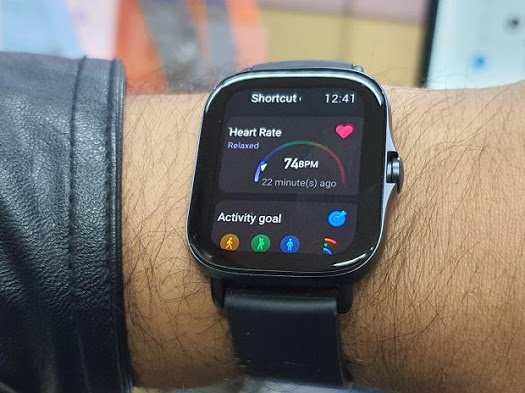
Amazfit GTS 2e review: Praise worthy health and fitness tracker on budget

I reviewed the Amazfit GTS (read review here) in November 2019 and the Apple Watch lookalike was indeed promising health and fitness smart wearable of its time, despite it being subjected to a few software glitches that marred the user experience. Then came the Amazfit GTS 2, which brought wholesome upgrades, including the blood-oxygen saturation (SpO2) monitor and BioTracker 2 PPG optical sensor for heart rate, stress levels, and PAI score. The successor to the GTS, the second-gen health and fitness tracker had everything in place, except accuracy.

Cut to 2021, Amazfit has added two new models – the Amazfit GTR 2e and GTS 2e – to expand its portfolio. Part of the GTS series, the GTS 2e is not a successor to the GTS 2 but a cheaper variant of the model priced at Rs 9,999. The GTS 2e borrows several features from the GTS 2 but does it manage to fix the accuracy issue that marred its predecessors? Let’s find out:

Design and display

Like the GTS and GTS 2, the GTS 2e takes design cue from Apple Watch yet it looks novel and intriguing. The GTS 2e has a 1.65-inch HD AMOLED display of 341 pixel-per-inch pixel density. This is amongst the finest displays you get in a health and fitness wearable and the touch response is fairly good too. The AMOLED panel makes the colours pop. Thanks to good brightness levels, the display is easy to read under direct sunlight. The GTS 2e supports custom display wallpapers and there are several built-in display faces too to complement a new look every day.

Read Complete Article

Budget 2021: Phones may get costlier as govt raises custom duty on parts

In another bid to boost domestic manufacturing, the government on Monday announced an increase in custom duty for up to 10 per cent on mobile chargers and some sub-parts of phones, a move that can make handsets costlier by 3-4 per cent from February 2.

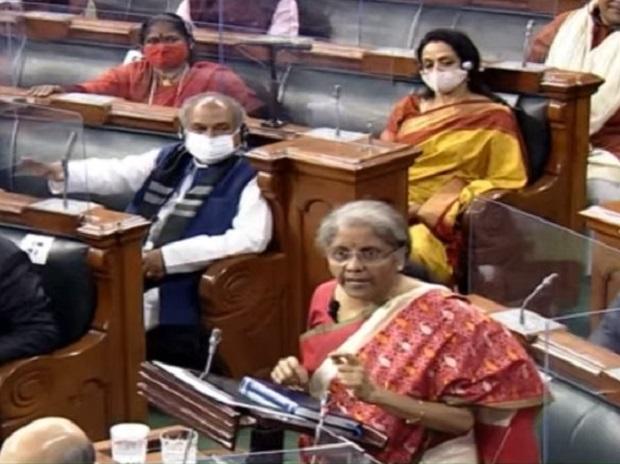
Finance Minister Nirmala Sitharaman, during her Union Budget 2021-22 speech, said that withdrawing exemptions on parts of chargers and mobile phones will boost local manufacturing of smartphones.

“Domestic electronic manufacturing has grown rapidly. We are now exporting items like mobiles and chargers,” Sitharaman said.

“For greater domestic value addition, we are withdrawing a few exemptions on parts of chargers and sub-parts of mobiles. Further, some parts of mobiles will move from ‘nil’ rate to a moderate 2.5 per cent,” she informed.

However, inputs or raw material for manufacture of specified parts like back cover, side keys etc. of cellular mobile phone has been increased from ‘nil’ to 10 per cent.

Inputs or parts of Printed Circuit Board Assembly (PCBA) of charger or adapter of cellular mobile phones are up from ‘nil’ to 10 per cent while the custom duty on inputs or parts of moulded plastic of charger or adapter of cellular mobile phones has also been increased from ‘nil’ to 10 per cent.

Read Complete Article

Budget

Budget 2021: Power discoms get second chance, Rs 3.05 trillion for reforms

The Union Budget offered a second chance to financially ailing power distribution companies (discoms) with the Finance Minister announcing a Rs 3,05,982 crore outlay for a revamped reform scheme for the discoms.

In her Budget speech, finance minister Nirmala Sithraman said a revamped, result-linked scheme for five years would be launched for the discoms.

“The viability of distribution companies is a serious concern. A revamped, reform-based, results-linked, power distribution sector scheme will be launched with an outlay of Rs 3,05,982 crore over five years. The scheme will provide assistance to discoms for infrastructure creation, inclusion of prepaid smart metering, feeder separation, upgradation of systems,” she said.

This paper had reported that the discoms will get five more years to reform their financials and operations.

The FM also noted that consumers should be provided with the choice of power supplier. “The distribution companies across the country are monopolies, either government or private. There is a need to provide choice to the consumers by promoting competition. A framework will be put in place to give consumers alternatives to choose from among more than one distribution company,” she said.

Read Complete Article

Budget

Budget 2021: Capital expenditure hiked 34.5% to Rs 5.54 trillion in FY22

To push growth via infrastructure creation, Finance Minister Nirmala Sitharaman on Monday hiked the government’s capital expenditure for FY 2021-22 by 34.5 per cent to Rs 5.5 lakh crore.

The government’s planned capital expenditure for the current fiscal has been increased to Rs 4.39 trillion, as against the Budgeted Rs 4.12 trillion.
Check Budget live updates here

“Sharp increase in capital budget in BE 2020-21. We have provided for Rs 4.12 trillion for (capital) expenditure. It was our effort that in spite of resource crunch we should spend more on capital expenditure and we are likely to end this year at around Rs 4.39 trillion which we have provided in RE (revised estimate) of 2020-21,” Sitharaman said in her 2021-22 Budget speech.

For the next fiscal, the minister proposed sharp increase in capital expenditure and provided Rs 5.54 trillion.

This is 34.5 per cent higher than Budget estimate of Rs 4.12 trillion in 2020-21.

Read Complete Article

Budget

‘Made in India’ tablet replaces ‘bahi-khata’ as Budget 2021 goes digital

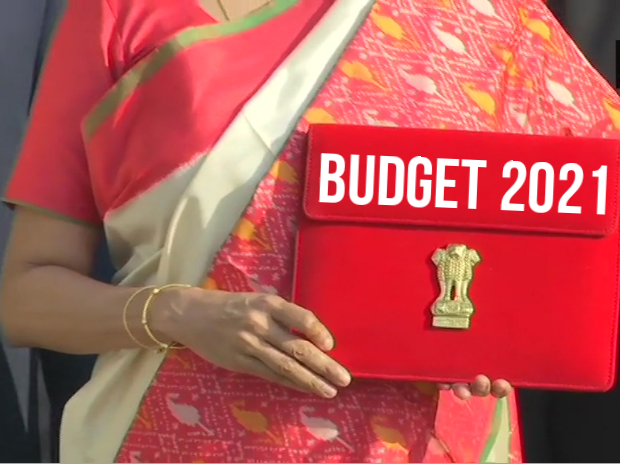
In a significant change amid digitalisation, Finance Minister Nirmala Sitharaman this year unveiled a ‘Made in India’ tablet replacing the traditional briefcase before presenting Budget 2021.

With the move aimed at a paperless Budget, now ‘bahi khata’ (a ledger wrapped in a red cloth) has been completely removed from this year — a move to reinforce Prime Minister Narendra Modi’s ambitious ‘Digital India’ mission.

In 1947, India’s first Finance Minister R. K. Shanmukham Chetty carried a leather portfolio to present the first Budget.

In January, the Central government also launched ‘Union Budget Mobile App’ on the occasion of the Halwa ceremony to enable MPs and people to access Budget documents digitally.

It was launched as no budget papers will be printed this year in the wake of the Covid-19 pandemic.

Sitharaman, who will present the Budget for the third time, is expected to lift and give an impetus to the Indian economy that has been battered due to the pandemic and subsequent lockdown.

The Budget comes at a time when India has been battling with the Covid-19 pandemic and the economy is reeling under the aftereffects of the lockdown.

Read Complete Article

Budget

Samsung Galaxy S21 Ultra review: A premium Android smartphone like no other

The Samsung Galaxy S21 Ultra is a premium smartphone that impresses on all fronts, including the hard-to-get-right areas like design, imaging and value-added features. The top-end model in the Galaxy S21-series, it shows the South Korean electronics maker’s innovation competence with regard to technology. Among many other notable upgrades, the smartphone has got a complete design makeover which looks fascinating and novel. Besides, it is the first smartphone in the Galaxy S-series to support the otherwise Galaxy Note-series-exclusive Samsung’s digital stylus (SPen – sold separately). Priced Rs 1,05,999 onwards, the Galaxy S21 Ultra is quite unique in its own right if you compare it with the other Galaxy S-series smartphones that came before it. But is it worth your money? Let’s find out:

Galaxy S21 Ultra: Design

The Samsung Galaxy S21 Ultra looks nothing like any other smartphone, and for a good reason. It’s big, heavy and bulky, but the smartphone does not look excessive; if anything, that lends it a bold outlook. It boasts a premium glass-metal construction with novel ‘phantom black’-themed frosted glass on the back and two-side curved glass on the front. Sandwiched between the front and rear glasses is a glossy metallic frame, which extends around the rear camera module. With frame engulfed around, the otherwise protruding rear camera module looks part of the overall package and not a disarrayed unit slapped on the phone. Though the redesigned frame brings uniformity to the phone’s overall design, it is the ‘phantom black’-themed glass back cover that adds novelty here, and it looks stunning from all sides. Besides, the frosted finish profile prevents fingerprints and smudges. It also aids the phone’s in-hand feel by making it less prone to accidental slips.

Read Complete Article

Budget

FM gave four-five mini-budgets in 2020, upcoming will be part of it: Modi

Prime Minister Narendra Modi on Friday said Finance Minister Nirmala Sitharaman had to give four-five mini-budgets in the form of packages in 2020 and expressed confidence that the upcoming budget would also be seen as part of that series.

In his remarks to the media before the commencement of Parliament’s Budget Session, Modi said the first session of this decade commences on Friday and emphasised that this decade is very important for the bright future of India.

Keeping in mind this decade, there should be discussions and presentation of different views this session, he said.

The prime minister expressed confidence that MPs will not shy away from contributing to make full use of Parliament for fulfilling people’s aspirations.

“Probably for the first time in India’s history, the finance minister had to give four-five mini budgets in 2020 in the form of different packages,” he said.

“Therefore, I am confident that this budget will also be seen as part of the series of the four-five mini budgets,” Modi said.

Read Complete Article

Budget

Budget 2021 to be a tougher balancing act than India’s other annual Budgets

India’s federal budget Monday will be a much tougher balancing act than New Delhi’s regular annual fiscal trapeze. For one thing, the pandemic has upset business-as-usual calculations of how much to spend, on what, and how to finance it. For another, an impatience to make up for lost time has to be weighed against a shrinking of policy space in emerging markets: A reprise of the 2013 global taper tantrum could compound the country’s considerable domestic challenges.

On the first question — how much to spend — Finance Minister Nirmala Sitharaman must simply do a lot more. Even with some loosening of the purse strings in the final months of the fiscal year that will end in March, Moody’s Investors Service affiliate ICRA Ltd. expects annual government expenditure to have been broadly unchanged from the Rs 30 trillion ($415 billion) estimated before the outbreak.

The answer to what to spend on is being dictated by the fault lines that opened after India imposed one of the world’s harshest lockdowns. Without a safety net for workers badly affected by Covid-19, ongoing economic revival from the June quarter’s 24 per cent loss in real output could peter out for lack of demand.

A combination of stepped-up social spending — including on long-neglected healthcare — and a state-led infrastructure push will make the recovery both durable and inclusive. A fifth of the 70 million-plus Indians who lost their services, manufacturing and construction jobs are either still working as farmhands or are unemployed. Discouraged, many have exited the labor force.

Read Complete Article

Budget