WhatsApp announces VoIP support for KaiOS devices

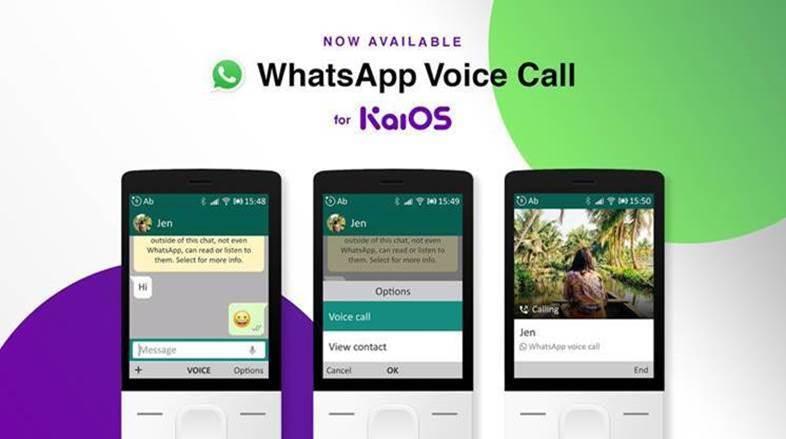
As a step towards reaching more people in emerging markets, KaiOS Technologies and WhatsApp have released an update that enables WhatsApp VoIP (Voice over Internet Protocol) for KaiOS-enabled devices worldwide.

KaiOS is a mobile operating system, based on Linux, for keypad feature phones. It is developed by KaiOS Technologies Limited, a company based in Kowloon, Hong Kong. The new feature is available to smart feature phone users with the latest version of the app on KaiOS devices worldwide equipped with 512MB RAM.

“People are relying on WhatsApp now more than ever to communicate and stay in touch with their loved ones. We want to support communities who are on lighter operating systems in many places around the world.

Bringing WhatsApp voice calls to KaiOS-enabled devices helps us connect the world privately through a service that is simple, reliable and accessible to everyone – no matter what kind of mobile device they’re using,” said Matt Idema, chief operating officer of WhatsApp.

Committed to closing the digital divide, WhatsApp and KaiOS have worked closely together to ensure that even underserved populations have access to the technology needed to communicate in a simple and cost-effective way.

Since its launch on KaiOS mid-2019, WhatsApp has been made available to millions of people in emerging markets for the first time. KaiOS users have been using WhatsApp for text messaging, voice messaging and sharing media, all secured with end-to-end encryption by default to keep private conversations private. WhatsApp is now the top KaiOS non-system app with the highest monthly active users (MAU) worldwide.

With the voice calling feature update, the app now allows voice calls over the Internet using Wi-Fi or mobile data, rather than pulling voice minutes from cellular plans.

The new feature further enhances the overall KaiOS user experience, especially now, when strong mobility restrictions make platforms like WhatsApp and features like voice calls over the Internet crucial for people to stay connected and handle basic life needs. As the only OS worldwide to provide native support for WhatsApp on affordable feature phones, KaiOS becomes an even more sustainable solution for carriers with WhatsApp VoIP, while tapping into the more than two billion 2G users to guide them toward more advanced, efficient technology.

Read Complete Article

Content creators on Facebook, Instagram can now earn extra payout

Facebook and its photo-sharing platform Instagram are working on new tools to help its creators earn more money from the platform.

The company has announced new features that will help influencers to earn an extra payout for meeting specific goals.

Starting this week, creators on Instagram are eligible to earn an extra payout when they meet certain milestones while using badges in Live, such as going Live with another account, the company said in a statement.

According to the company, Badges on Instagram Live and Stars on Facebook give creators ways to earn from their supporters.

“As we see more and more creators use these tools to engage directly with their fans, we want to reward them for the impact they’re bringing to our communities,” the company said.

“That’s why we are launching ways for creators to make extra money for hitting certain milestones with Badges and Stars,” it added.

Facebook is also launching Stars Challenges, where Creators can earn payouts from the social media giant in the form of free Stars if they meet certain milestones, such as broadcasting a certain number of hours or earning a set number of Stars within a designated time period.

For creators who want to sell their merchandise, the company is making it easier to add an existing shop or open a new shop on their Instagram profile.

They can now link their shop to their profile in addition to their business profile. This allows them to display and sell their products directly to fans.

The ability to link a shop to a personal profile is available globally.

Read Complete Article

Gmail blocks more than 100 million phishing attempts daily, says Google

Google has said that every day, Gmail blocks more than 100 million phishing attempts and Google Play Protect scans over 100 billion apps for malware and other issues, as cyber attacks by nation-states and criminals are increasingly becoming brazen and effective.

The past six months have seen some of the most widespread and alarming cyber attacks against the digital infrastructure in history — against public utilities, private sector companies, government entities and people living in democracies around the world.

“We are deeply concerned by these trends. Security is the cornerstone of our product strategy. We have dedicated teams like Project Zero who focus on finding and fixing vulnerabilities across the web to make the internet safer for all of us,” said Kent Walker, SVP of Global Affairs at Google.

Google said that in the US, the company is committed to supporting the most recent White House Cybersecurity Executive Order, which makes critical strides to improve America’s cyber defenses in key areas.

Google said that it strongly supports modernising computing systems, making security simple and scalable by default, and adopting best practices like zero trust frameworks.

“As we saw with SolarWinds and the Microsoft Exchange attacks, proprietary systems and restrictions on interoperability and data portability can amplify a network’s vulnerability, helping attackers scale up their efforts,” Walker emphasised.

“At Google, we’ve emphasised securing the software supply chain and we’ve long built technologies and advocated for standards that enhance the integrity and security of software,” he added.

Read Complete Article

Poco M3 Pro 5G with MediaTek 700 SoC, 90Hz screen launched: Price, specs

Poco on Tuesday launched in India its first 5G smartphone, the Poco M3 Pro 5G. Powered by MediaTek Dimensity 700 system-on-chip, the smartphone comes in 4GB RAM + 64GB on-board storage and 6GB RAM + 128GB on-board storage variants. Priced Rs 13,999 onwards, the Poco M3 Pro 5G will be available in yellow, cool blue, and power black colour from June 14, exclusively on home-grown e-commerce platform Flipkart.

In terms of specifications, the Poco M3 Pro 5G boasts a 6.5-inch IPS LCD screen of fullHD+ resolution and 90Hz refresh rate. The screen supports dynamic refresh rate, which automatically adjusts the screen refresh rate based on on-screen content requirement.

The smartphone is powered by octa-core MediaTek Dimensity 700 SoC, paired with up to 6GB RAM and 128GB UFS 2.2 internal storage. The smartphone boots on Android 11-based MIUI 12 user interface. It is a dual-SIM smartphone with 5G support.

Imaging is covered by a triple rear camera module, featuring a 48-megapixel primary sensor, a 2-megapixel depth sensor, and a 2-megapixel macro sensor. On the front, there is an 8-megapixel sensor for selfies and videos. Both front and rear cameras support fullHD resolution recording at 30fps.

Besides, the Poco M3 Pro 5G features a side-mounted fingerprint sensor, 3.5mm headphone jack, NFC, and Hi-Res audio.

The smartphone is powered by a 5,000mAh battery supported by 18W fast-charging support. Poco claims the battery can last for up to two days on a single charge.

Poco M3 Pro 5G: Price

The Poco M3 Pro 5G is priced at Rs 13,999 for the base 4GB RAM + 64GB variant and Rs 15,999 for the 6GB RAM + 128GB variant. The smartphone comes in Yellow, Cool Blue, and Power Black colour options.

Read Complete Article

iQOO Z3 5G with Qualcomm Snapdragon 768G debuts in India: Price, specs

iQOO on Tuesday launched India’s first smartphone powered by Qualcomm Snapdragon 768G system-on-chip. Named the iQOO Z3, the smartphone comes in 6GB RAM + 128GB storage, 8GB RAM + 128GB storage, and 8GB RAM + 256GB storage configurations. The iQoo Z3 starts at Rs 19,990 for the 6GB RAM + 128GB storage variant.

The 8GB RAM + 128GB storage variant is priced at Rs 20,990 and the 8GB RAM + 256GB storage option is priced at Rs 22,990. The 5G smartphone will be available in Ace Black and Cyber Blue colours on Amazon India and the iQOO India website from June 8. As part of the introductory offer, the phone gets Rs 1,500 instant discount, valid for ICICI Bank credit and debit cards users.

As for the specifications, the iQOO Z3 boots Android 11 operating system-based FuntouchOS 11 user interface. The smartphone features a 6.58-inch full-HD+ (1080 x 2408 pixels) display of 120Hz refresh rate and a 20:9 aspect ratio. The display supports HDR10 and boasts DCI-P3 Wide Colour Gamut. It sports a triple rear camera setup with 64-megapixel primary sensor (Samsung ISOCELL GW3 sensor), along with an 8-megapixel ultra-wide lens and a 2-megapixel sensor with an f/2.4 lens. It has a 16-megapixel selfie shooter on the front. The rear camera can recording 4K videos at 60 fps. It boasts EFB (eye, face, body) autofocus tracking, and Super Night Mode supported by several filters for low light photography.

Read Complete Article

iOS 15: Apple prepares iPhone’s OS for life in pandemic, and thereafter

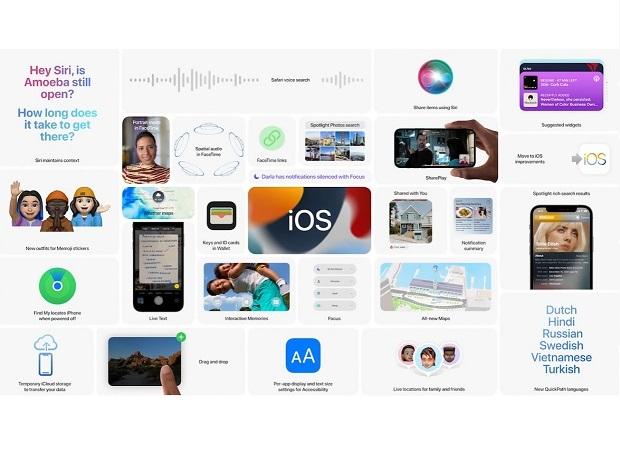
Apple kicked off its annual developer conference (WWDC 2021) on June 7 with a keynote where the American technology giant introduced new features and services that are coming to its hardware lines through software updates. For iPhone, Apple previewed major updates coming with the iOS 15 operating system. Among several notable features, there are some that seemed to have been developed specifically to enhance life in the pandemic, and thereafter. For example, the upgrades coming to Apple’s video call platform ‘FaceTime’.

With the iOS 15, Apple extends the FaceTime calls beyond Apple devices. Like any other video conferencing platform, Apple users will now be able to create a link for an event and share it with others, so anyone with access to the link can join the FaceTime call from their web browser – Android and Windows devices. The FaceTime call link can be created from iPhone, iPad and Mac, and shared with others through Messages, Calendar, Mail, or any third-party apps. Apple said the FaceTime calls on the web remain end-to-end encrypted, so privacy is not compromised.

Apple also introduced SharePlay feature to help users share experiences while connecting with friends and family on FaceTime. The feature will allow FaceTime call participants to listen to songs together with Apple Music, watch a TV show or movie in sync, or sharing their screen to view apps together. SharePlay works across iPhone, iPad, and Mac, and with shared playback controls, anyone in a SharePlay session can play, pause, or jump ahead. SharePlay will also be available on the Apple TV, so users can watch shows or movies on a big screen while connecting over FaceTime. Apple said that many over-the-top platforms’ app like Disney+, ESPN+, HBO Max, Hulu, MasterClass, Paramount+, Pluto TV, TikTok, Twitch, etc. are integrating SharePlay into their apps.

ALSO READ: Apple’s new ‘private relay’ feature will not be available in China

Apple is also introducing a new tool named ‘Focus’ with the iOS 15 to help users focus and reduce distraction. Focus is developed to filters notifications and apps based on what a user wants to focus on. That said, Apple users can set their device to help them be in the moment by creating a custom Focus or selecting a suggested Focus, which uses on-device intelligence to suggest which people and apps are allowed to notify them. Focus suggestions are based on users’ context, like during their work hours, and when Focus is set on one Apple device, it automatically applies to their other Apple devices. Users can create Home Screen pages with apps and widgets that apply to moments of focus to only display relevant apps and reduce distractions. When a user’s Focus is blocking incoming notifications, their status is automatically displayed to others in Messages, reflecting that a user is not currently reachable.

The above-mentioned features seem just the right addition to improve user experience amid the pandemic. Aside to these, there are several other features coming to iPhone with iOS 15. FaceTime is set to get Spatial Audio support, microphone modes, portrait mode, and grid view for group calls.

Read Complete Article

Apple’s new ‘private relay’ feature will not be available in China

Apple Inc on Monday said a new “private relay” feature designed to obscure a user’s web browsing behavior from internet service providers and advertisers will not be available in China for regulatory reasons.

The feature was one of a number of privacy protections Apple announced at its annual software developer conference on Monday, the latest in a years-long effort by the company to cut down on the tracking of its users by advertisers and other third parties.

Apple’s decision to withhold the feature in China is the latest in a string of compromises the company has made on privacy in a country that accounts for nearly 15% of its revenue.

In 2018, Apple moved the digital keys used to lock Chinese users’ iCloud data, allowing authorities to work through domestic courts to gain access to the information.

China’s ruling Communist Party maintains a vast surveillance system to keep a close eye on how citizens use the country’s heavily controlled internet. Under President Xi Jinping, the space for dissent in China has narrowed, while censorship has expanded.

Apple’s “private relay” feature first sends web traffic to a server maintained by Apple, where it is stripped of a piece of information called an IP address. From there, Apple sends the traffic to a second server maintained by a third-party operator who assigns the user a temporary IP address and sends the traffic onward to its destination website.

The use of an outside party in the second hop of the relay system is intentional, Apple said, to prevent even Apple from knowing both the user’s identity and what website the user is visiting.

Apple said it also will not offer “private relay” in Belarus, Colombia, Egypt, Kazakhstan, Saudi Arabia, South Africa, Turkmenistan, Uganda and the Philippines.

Apple has not yet disclosed which outside partners it will use in the system but said it plans to name them in the future. The feature likely will not become available to the public until later this year.

Read Complete Article

Half of smartphones sold globally will support 5G by 2022-end: Report

One out of every two smartphones sold globally is expected to support 5G by the end of 2022 as factors like increasing affordability, unique design and performance fuel adoption of the new technology, according to a whitepaper by Counterpoint Research and Realme.

According to the whitepaper titled ‘Making 5G Global: Accessibility for All’, the global adoption of 5G is outpacing all previous generations.

In the first quarter of 2021, within just one year after the launch of the world’s first commercial 5G network, almost one out of every three smartphones sold worldwide supported 5G, it said.

While developed markets have been driving 5G adoption, this is expected to change as more emerging markets are starting to launch commercial 5G services, it added.

The whitepaper noted that premium segments have traditionally dominated in the early adoption stage of previous generations but 5G has brought a new dynamic to the market.

“In 2020, 5G phones in the low-to-mid-range price segments accounted for nearly 40 per cent of all 5G devices sold. With average selling prices (ASP) likely to continue declining by double-digits in the foreseeable future, it is expected that one out of every two smartphones sold globally will support 5G by the end of 2022,” it added.

Read Complete Article

WWDC 2021 highlights: Everything Apple announced at annual developer event

Apple’s WWDC (Worldwide Developer Conference) 2021 is set to kickstart today, June 7. Like last year, the event will be held virtually owing to the coronavirus pandemic. For the uninitiated, the WWDC is Apple’s annual developer-focused event where the American technology giant announces development with regard to its software and services on day one, followed by sessions with developers to bring them on-board the development process. That said, Apple is likely to unveil the next iteration of its operating systems for iPhone, iPad, Watch, TV, Mac, etc.  Besides, there are chances that the company would unveil a new line-up of its MacBook Pro model at the event.

WWDC 2021: Keynote livestream timing, how to watch online in India

The WWDC 2021 will begin with keynote from Apple’s CEO Tim Cook that will stream live from Apple’s campus in California, America on June 7 at 10 am (PDT). In India, the WWDC 2021 keynote will start at 10:30 pm (IST) and it will livestream on Apple website, Apple TV app, and Apple Developer app. The event will also livestream on Google’s YouTube at Apple official channel. Alternatively, you can watch the livestream through the video embedded below.

Read Complete Article

Social media giant Facebook says it could pay more tax after G7 deal

Facebook welcomes the progress made by the Group of Seven on a minimum tax rate and accepts this could mean the social network pays more tax, and in different places, its head of global affairs Nick Clegg said on Saturday.

Facebook has long called for reform of the global tax rules and we welcome the important progress made at the G7,” Clegg said on Twitter. “Today’s agreement is a significant first step towards certainty for businesses and strengthening public confidence in the global tax system.

“We want the international tax reform process to succeed and recognize this could mean Facebook paying more tax, and in different places.”

Read Complete Article