ByteDance selling TikTok’s AI technology to firms, including those in India

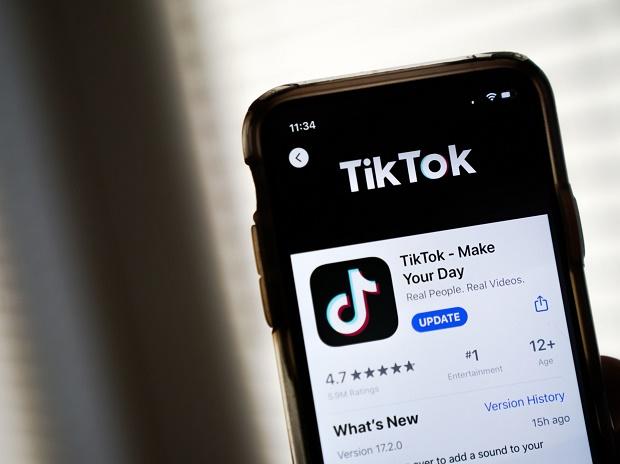
China-based ByteDance which is the parent company of TikTok, has reportedly started selling the AI technology of the short video-making app to other companies, including in India where the app is banned.

The Financial Times reports that the company has kicked off a new devision called BytePlus and is selling TikTok AI to companies like India-based social gaming platform GamesApp, US fashion app Goat, Singapore travel site WeGo, Indonesian shopping app Chilibeli, among others.

In 2020, the Indian government banned several apps developed by Chinese firms, including TikTok, over concerns that these apps were engaging in activities that threatened the national security and defence of the country.

Last month, Nikhil Gandhi, the India Head of China’s ByteDance-owned short video-sharing platform TikTok, decided to quit. TikTok roped in Gandhi in 2019 as its India head to drive the next phase of growth for the Chinese short video-sharing platform.

TikTok’s recommendation algorithm is a huge part of what has made it so popular.

According to the report that came out on Sunday, BytePlus offers customers the chance to access the TikTok recommendation algorithm, and “personalise it for their apps and customers”.

BytePlus also offers automated speech and text translation and real-time video effects as well as data analysis tools, according to its website.

Read Complete Article

Tech giant Apple to release 10.86-inch OLED iPad in 2022, says report

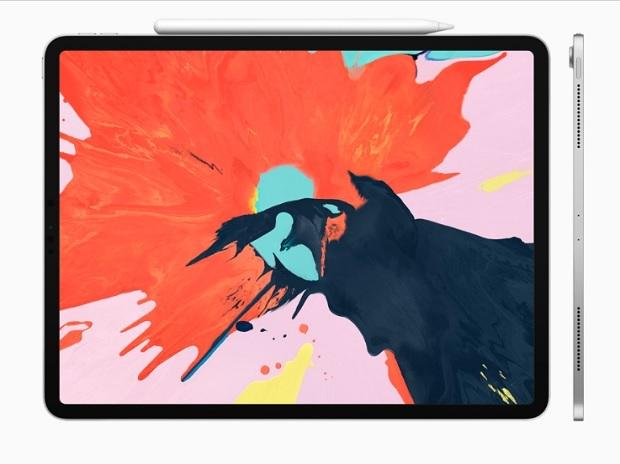
Apple is likely to release a 10.86-inch OLED iPad in 2022 and two new 120Hz OLED iPads in 2023, the media reported.

The report goes into some specifics. For example, the 2022 iPad will have a 10.86-inch screen, which is coincidentally the same size as the current iPad Air, citing The Elec, GSMArena reported.

This might mean that the report is referring to the next-generation iPad Air. Apple would use Thin-Film Encapsulation (TFE) method to protect the OLED panel from moisture and oxygen since the tech is pretty sensitive in this regard.

The 2023 iPads, on the other hand, will go for 120Hz LTPO panels coming in 12.9-inch and 11.0-inch flavours. The LTPO tech is supposed to reduce power consumption at a higher refresh rate.

A recent report said that, in India, Apple’s tablet appears to be doing even better.

Although Indian tablet shipments were down 34 per cent in the first quarter, Apple ranked as the second-largest tablet vendor with a 29 per cent share of the market.

Apple tablet shipments in India increased 144 per cent year-over-year in Q1 2021, allowing the company to overtake Samsung for second place.

When it came to individual devices, 17 per cent of Apple’s 29 per cent market share came from the iPad 8, while 9 per cent came from the 2020 iPad Air model.

Read Complete Article

Facebook Cloud gaming sees 1.5 mn users a month, expanding to more regions

Over 1.5 million people are playing cloud-streamed games on Facebook Gaming every month and the social network has announced to roll out Cloud gaming in Canada and Mexico, and will reach Western and Central Europe by early 2022.

The social network also welcomed top gaming company Ubisoft as a partner and the popular Assassin’s Creed Rebellion has arrived as a cloud-streamed game on Facebook Gaming.

Last October, Facebook announced beta programme of its cloud gaming platform to expand the library of mobile games on Facebook and started with launching a handful of cloud-streamed games on Android and web in select US regions.

“We’ve now scaled our infrastructure significantly, and we’re announcing coverage to over 98 per cent of people in the mainland United States. We’re on track to hit 100 per cent by fall of this year,” Jason Rubin, VP of Play, Facebook said in a statement late on Thursday.

“This growth is an early signal that people are having fun and we’re on the path to delivering developer value,” he added.

Facebook in October last year made its Cloud gaming service official, with launching several new games in the main app and on browser for Android and on the web but ditched Apple, saying its Cloud gaming path on the iOS devices is uncertain.

Apple restricted Facebook Gaming to arrive on iOS several times and the social network’s Chief Operating Officer Sheryl Sandberg admitted that Facebook managed to launch an iOS version of its gaming app after it was “forced to make a concession to bring it to the App Store”.

Read Complete Article

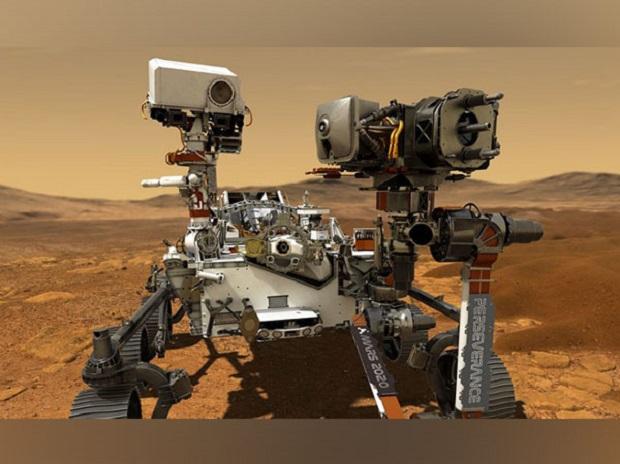
Nasa’s self-driving Perseverance Mars Rover ‘takes the wheel’ on crater

NASA’s newest six-wheeled robot on Mars, the Perseverance rover, is beginning an epic journey across a crater floor seeking signs of ancient life, the US space agency announced on Thursday.

A NASA release said the rover team is deeply engaged with planning navigation routes, drafting instructions to be beamed up, even donning special 3D glasses to help map their course.

But increasingly, the rover will take charge of the drive-by itself, using a powerful auto-navigation system. Called AutoNav, this enhanced system makes 3D maps of the terrain ahead, identifies hazards, and plans a route around any obstacles without additional direction from controllers back on Earth.

“We have a capability called ‘thinking while driving,'” said Vandi Verma, a senior engineer, rover planner, and driver at NASA’s Jet Propulsion Laboratory in Southern California. “The rover is thinking about the autonomous drive while its wheels are turning.”

That capability, combined with other improvements, might enable Perseverance to hit a top speed of 393 feet (120 meters) per hour; its predecessor, Curiosity, equipped with an earlier version of AutoNav, covers about 66 feet (20 meters) per hour as it climbs Mount Sharp to the southeast, it added.

“We sped up AutoNav by four or five times,” said Michael McHenry, the mobility domain lead and part of JPL’s team of rover planners. “We’re driving a lot farther in a lot less time than Curiosity demonstrated.”

As Perseverance begins its first science campaign on the floor of Jezero Crater, AutoNav will be a key feature in helping get the job done.

This crater once was a lake, when, billions of years ago, Mars was wetter than today, and Perseverance’s destination is a dried-out river delta at the crater’s edge. If life ever took hold on early Mars, signs of it might be found there. The rover will gather samples over some 9 miles (15 kilometers), then prep the samples for collection by a future mission that would take them back to Earth for analysis.

Read Complete Article

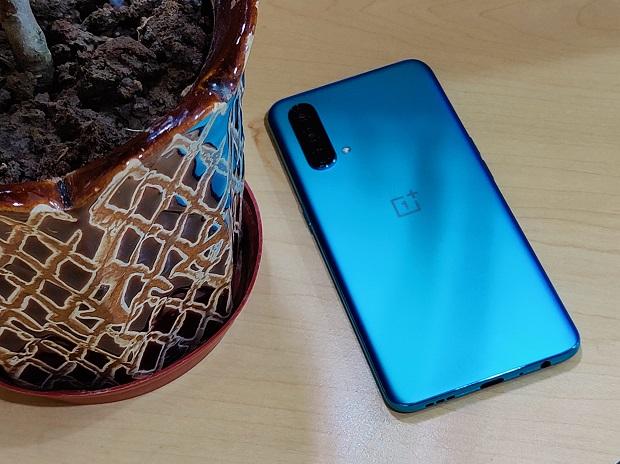
OnePlus Nord CE review: Meaningful increments but weak on core competency

In the first half of this year, smartphone makers have launched more midrange smartphones than premium and budget ones put together. So, it will not be wrong to say the midrange segment is the new battlefield for smartphone brands in India’s price-conscious mobile phone market. Fresh in the segment is the Nord CE (Core Edition) by OnePlus. In retrospect, this Chinese smartphone brand brought the midrange smartphones back in trend in 2020 with the launch of the OnePlus Nord (review). The brand enjoyed the first-mover advantage and the Nord received a healthy reception despite its shortcomings.

That was the background. Now let us dig right into the OnePlus Nord CE review to know if it fits the bill, especially when there are so many good options available now in the midrange segment:

The OnePlus Nord CE is positioned not as a successor but the core edition based on the original Nord. The smartphone seems to have cut corners on some parameters to help OnePlus price it lower than the Nord, though not significantly. It will, however, be wrong to call the Core Edition as a trimmed-down version of the Nord because it also comes with several upgrades.Design

The OnePlus Nord CE looks similar to the Nord but has a modest plastic back cover in place of the latter’s premium glass one. The plastic build is sturdy, so that’s no concern, but the design language is reminiscent of the Nord, which is a generation old now, and even some OPPO and Realme smartphones. That is a red flag. Besides, OnePlus has taken away its proprietary alert slider from the Nord CE. The alert slider is one thing that has always been part of OnePlus smartphones. The omission for the sake of sticking to the core features will have a negative impact on user experience, especially if you are an existing OnePlus user.

Read Complete Article

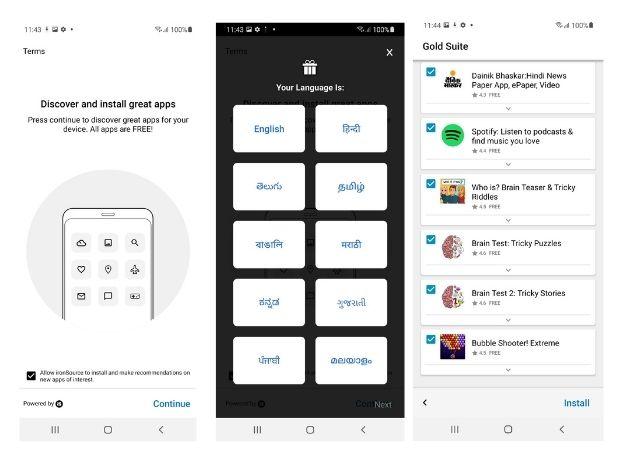
How-to stop ironSource from installing, recommending apps on Samsung phones

South Korean electronics maker Samsung uses Israel-based app monetisation platform ‘ironSource’ in its budget and midrange smartphone to install multiple third-party apps during the set-up process. This platform slips bloatware on the pretext of recommended apps, leading to apps clutter and reduction in on-board storage space. Here is how-to disable the ironSource platform from installing apps and sending apps recommendation notifications on Samsung smartphones:

Step 1: Set-up the phone normally until you reach the window that says ‘You’re all set up!’

Step 2: On the next screen you will see the ‘Experience Samsung services’ window with a disclaimer on the bottom side stating ‘By tapping agree, I agree to Samsung services (Glance on Samsung, My Galaxy, Galaxy Store, Search within popular apps and Discover) terms and conditions and privacy policy).’ The disclaimer is followed by agree button. On this window, tap on the disclaimer portion marked in bold font to get to the next window to disable permissions for individual settings.

Step 3: On this window, uncheck the Glance on Samsung to not see photos downloaded over internet on the lock screen. To disable apps recommendation notifications, uncheck the Discover. Once done, tap on apply to save permissions.

Step 4: Now, click agree to go to next window that asks for language selection. Click on preferred language and tap on next to go to the next window.

Step 5: On this window, the ironSource platform asks for user permission to install and make recommendations on new apps of interest.

Uncheck to disable the ironSource platform from installing apps or to send apps recommendation notifications. Click continue to go to the next window.

Step 6: On this window, the ironSource platform asks for details like gender and age group. You can skip this part to move to the next window.

Read Complete Article

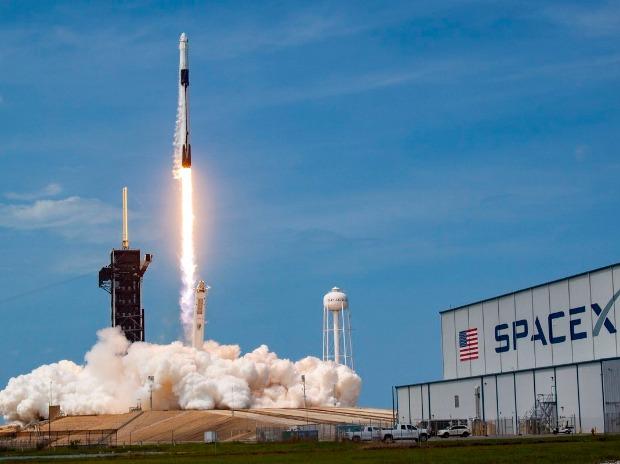
Elon Musk’s SpaceX launches 88 satellites as part of ‘ride-share’ mission

Tech billionaire Elon Musk’s space company Spacex has launched 88 satellites, as part of the firm’s second in-house “ride-share” mission from Florida, bringing the total number of orbital objects this year to nearly 900, the media reported.

The company launched the satellites on Wednesday on a reused Falcon 9 rocket for the “Transporter-2” mission, including the first five for a new Pentagon agency and dozens more for various companies, countries, and schools, the Verge reported.

On Wednesday, June 30 at 3:31 p.m. EDT, Falcon 9 launched the Transporter-2, SpaceX’s second dedicated SmallSat Rideshare Programme mission, from Space Launch Complex 40 at Cape Canaveral Space Force Station in Florida, the company said.

The mission also marked SpaceX’s second launch to a polar orbit from Florida. This marked the company’s 20th launch this year and the eighth flight for the rocket’s first stage booster. That booster returned to Earth about 10 minutes later at SpaceX’s Landing Zone 1.

On board this launch were 85 commercial and government spacecraft (including CubeSats, microsats, and orbital transfer vehicles) and three Starlink satellites.

The Transporter-1 mission, in January this year, set up a new record for most satellites — it sent up 143 satellites. The Transporter-2 mission, however, launched more mass to orbit overall,the company said.

The Transporter launches, first announced in 2019, are part of the company’s rideshare business model.

The Transporter-2 mission includes nearly 10 customers, some of whom are launch service providers who are themselves organizing customer payloads — like Spaceflight, which is launching 36 small satellites on behalf of 14 customers, as well as its electric propulsion vehicle dubbed Sherpa-LTE, the TechCrunch reported.

Read Complete Article

TCL expands its range of QLED 4K TVs, launches India’s first Mini LED 4K TV

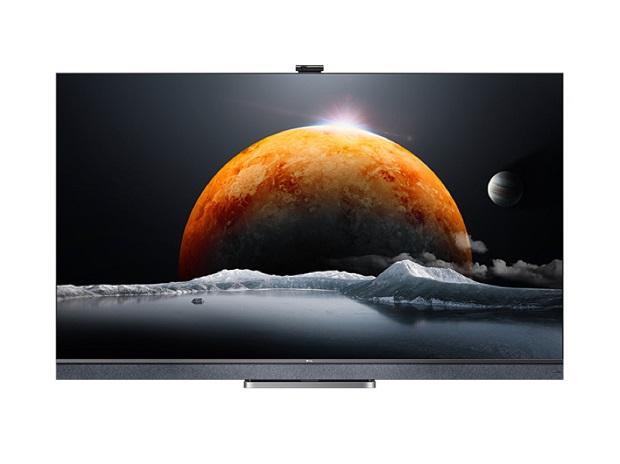
China’s consumer electronics maker TCL on Wednesday launched in India its C-series of 4K QLED smart televisions, including the country’s first Mini LED 4K QLED TV. Based on Google’s Android 11 TV platform, the C-series include Mini LED QLED 4K C825 with Magic Camera, QLED 4K C728 with Game Master, and QLED 4K C725 with video call camera. The models boasts 120Hz MEMC, Dolby Vision, Dolby Vision IQ, Dolby Atmos, IMAX Enhanced, Game Master, Hands-free voice control 2.0, and TCL Smart user interface. The TCL C-series smart 4K QLED TVs will be available exclusive at TCL Store India.TCL Mini LED QLED 4K Android 11 TV C825: Price and features

The TCL Mini LED QLED 4K TV C825 will be available in 55-inch and 65-inch screen variants priced at Rs 114,990 and Rs 149,990, respectively. The Mini LED QLED 4K C825 boasts full array local dimming technology for enhanced contrast and colour accuracy. The TV supports Dolby Vision high dynamic range (HDR) and Dolby Vision IQ. The TV’s screen panel supports 120Hz MEMC powered by TCL’s proprietary software algorithm. For gamers, the TV has HDMI 2.1 port compatible with latest generation gaming consoles like the Sony PS5 and Microsoft Xbox Series X. The TV supports a magnetic magic camera (1080p) for video calls powered by Google Duo and Zoom Meet. As for the audio, the TV features IMAX Enhanced certified 2.1 channel ONKYO Soundbar with Dolby Atmos.TCL QLED 4K Android 11 TV C725: Price and features

The TCL QLED 4K C725 will be available in 50-inch, 55-inch and 65-inch screen variants priced at Rs 64,990, Rs 72,990, Rs 99,999, respectively. The TCL QLED 4K C725 supports video call camera for video calling through Google Duo. Like the Mini LED QLED 4K, the TCL QLED 4K C725 supports Dolby Vision and HDR10+. It also supports MEMC and has HDMI 2.1 port. The TCL QLED 4K C725 has an integrated ONKYO-certified soundbar with Dolby Atmos.TCL QLED 4K Android 11 TV C728: Price and features

The TCL QLED 4K TV C728 will be available in 55-inch, 65-inch and 75-inch screens priced at Rs 79,990, Rs 102,990 and Rs 159,990, respectively. Aimed at gamers, the TCL QLED 4K TV C728 is backed by TCL’s Game Master supported by HDMI 2.1. Besides, the TV boasts Variable Refresh Rate (VRR), Auto Low Latency Mode (ALLM), HDMI eARC, and the company’s proprietary software algorithm for improved gaming experience. The TCL QLED 4K TV C728 supports Dolby Vision, Dolby Vision IQ, Dolby Atmos, 120Hz MEMC and hands-free voice control.

Read Complete Article

Asus Zenbook Duo 14 UX482 review: Superb for creators, not so for writers

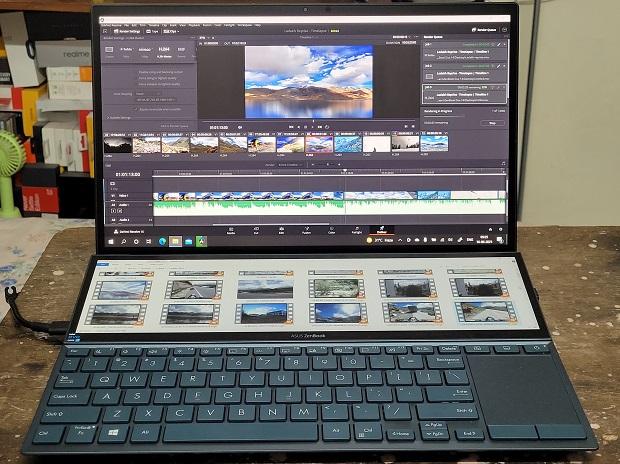
Asus has a wide portfolio of consumer laptops, some with a radical form factor and unique design language. Take for example the recently launched Asus Zenbook Duo 14 UX482. Aimed at content creators, the laptop is a one-of-its-kind device with two screens – a full-fledged 14-inch fullHD resolution LED backlit touchscreen and a 12.65-inch IPS-level touchscreen of 1080 x 515 pixel resolution. The Asus Zenbook Duo 14 UX482 might not be the only laptop featuring a dual-screen but the implementation of a secondary screen here is practical and useful in more ways than one.

The second screen is connected to the primary screen through Windows Project. It means this one is no gimmick and can be used like any other second screen – you can duplicate the primary screen content on the secondary screen or use both together for an extended view. Besides, it is not necessary to always use both screens as each can be switched off independently. So, the basics are covered right.

As for utility, the second screen adds extra space which comes in handy to fit additional content that would otherwise be hidden behind the primary window or rest minimised on the taskbar. For example, you can open a Microsoft Word file on the second screen and a web browser on the primary one. Asus has done a thorough job to make the second screen as good as the primary one. The second screen supports split-view, just like the primary screen. Therefore, you can fit at least four windows (two on primary and two on secondary) and multitask without using the Alt+Tab key combination frequently.

Complementing the dual-screen set-up is the Asus ScreenXpert software, which gives the second screen some extra power. This software is available in the form of dock, which is like a taskbar but a powerful one. It can be placed on the left, right or bottom side of the second screen, and can auto-hide when not in use. Through this dock, you can adjust the brightness of the second screen, navigate open applications on both screens, enable/disable the physical keyboard, and manage other settings applicable to the second screen.

Through this software, the second screen can be used as a trackpad and for handwriting content.

The best use for the ScreenXpert software, however, is for content creators through its Control Panel. It turns the ScreenPad Plus into a customisable control deck, giving you sliders, wheels and buttons for commonly used tasks in the Adobe application suite – Photoshop, Premiere, After Effects and Lightroom. This feature scales the utility of the second screen for content creators all the way north.

Read Complete Article

Google restores YouTube, Gmail services after multiple users face outage

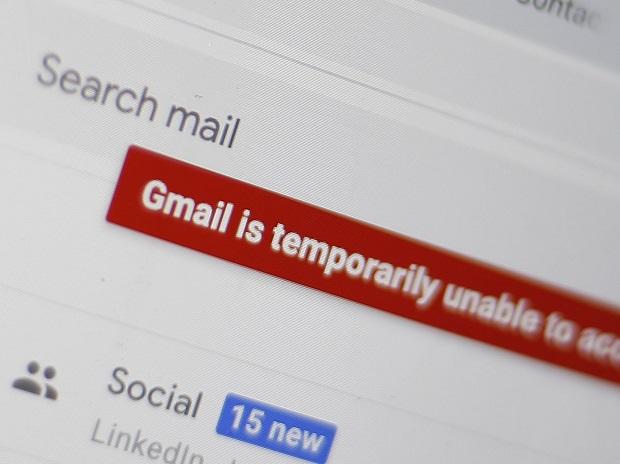
(Reuters) -Multiple users complained about an outage affecting Alphabet Inc’s search engine Google as well as its streaming and email services late Monday before services were restored, according to outage monitoring website Downdetector.

Platforms including Google, YouTube, and Gmail were down, with users citing issues with login and accessing the website in parts of North America, according to Downdetector.

More than a thousand users were having difficulties with the search engine at one point, the outage monitoring website showed, and users were also facing issues with YouTube TV and Google Drive.

Reports of Google outage on Downdetector have dropped significantly to single digits early Tuesday.

The issue affecting the platforms was not immediately clear.

Google did not immediately respond to a Reuters’ request for comment after business hours.

Downdetector tracks outages by collating status reports from a series of sources, including user-submitted errors on its platform.

(Reporting by Aakriti Bhalla in Bengaluru; Additional reporting by Radhika Anilkumar; Editing by Amy Caren Daniel and Sherry Jacob-Phillips)

Read Complete Article