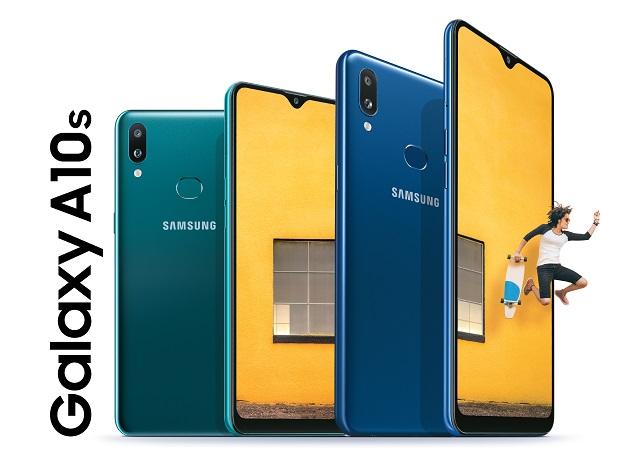
Samsung Galaxy A10s : South Korean tech giant Samsung on Tuesday launched new smartphone Galaxy A10s, the latest addition to Galaxy A line of smartphones, priced between Rs 9,499 and Rs 10,499.
It comes in two — 2GB RAM + 32GB and 3GB RAM + 32GB — variants and three colours — green, blue and black and is set to go on sale on August 28 across retail stores, e-Shop, Samsung Opera House and all major leading online channels.
“Galaxy A10s has been developed for Indian millennials who are looking for a great display, superior camera, long-lasting battery and fingerprint scanner. Galaxy A10s is a complete package of great looks and top performance,” said Aditya Babbar, Director, Mobile Business, Samsung India. Read Complete Article
Maharashtra SSC Result: The wait for the Maharashtra 10th supplementary result 2019 is finally over. According to media reports, the Maharashtra State Board of Secondary and Higher Secondary Education (MSBSHSE) is likely to declare Maharashtra 10th result or Maharashtra SSC result 2019 on mahresult.nic.in. Apart from the official website, students can also visit result websites like examresults.net, indiaresults.com and results.gov.in to check their result. Maharashtra SSC Supplementary Exams were conducted from July 17 to July 30.
Students are advised to keep their admit cards or hall tickets handy as they will need details such as registration number and roll number to download the Maharashtra SSC result.
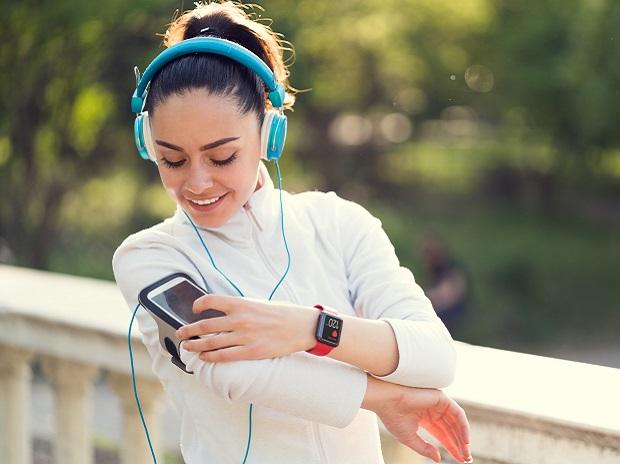
Fitness Tracker: Humans, once in constant motion as hunters and gatherers, are moving less than ever. At first, this trend seemed like progress: Transferring our heavy and dangerous work to animals, then machines, enabled more people to live longer. As recently as the 1950s, doctors considered exercise dangerous for people over age 40; for heart disease, which was then killing a record number of Americans, they prescribed bed rest. This was partly based on their concept of what “exercise” was: Early physiologists conducted studies on their (typically young, male) graduate students or on military servicemen — and in order to become more fit than they already were, these subjects needed to work out hard. “The mantra was, you have to go to a gym, you have to do high-intensity physical activity,” says Abby C King, a professor of health research and policy and medicine at Stanford University: “this sort of ‘no pain, no gain’ phenomenon.”
That notion began to change with the 1968 publication of “Aerobics,” by Kenneth Cooper, an Air Force physician, who argued that anyone could take measures to prevent heart disease with regular “aerobic” exercise, like swimming or jogging, that increases heart rate and oxygen uptake, “improving the overall condition of the body” and thereby “building a bulwark against many forms of illness and disease.” But it was hard to tease apart whether physical activity made people healthier or whether healthier people were more likely to be active. In a landmark study published in 1989, Cooper and colleagues tried to address this problem by considering subjects’ physical fitness, a metric determined by assessing performance on a treadmill test. Theirs is believed to be the first long-term study of men and women to show that the higher a person’s fitness level, the lower their risk of mortality, especially from cardiovascular disease and cancer. But physical fitness, they noted, is not the same as physical activity, the amount of movement a person gets in the course of their daily life. The only way researchers could learn about the latter was by asking people to describe their behaviour — a much less precise method than measuring their cardiovascular capacity in a lab.
Microplastics contained in drinking water pose a “low” risk to human health at current levels, but more research is needed to reassure consumers, the World Health Organization (WHO) has said.
Studies over the past year on plastic particles detected in tap and bottled water have sparked public concerns but the limited data appears reassuring, the UN agency said its first report on potential health risks associated with ingestion.
Microplastics enter drinking water sources mainly through run-off and wastewater effluent, the WHO said. Evidence shows that microplastics found in some bottled water seem to be at least partly due to the bottling process and/or packaging such as plastic caps, it said.
“The headline message is to reassure drinking water consumers around the world, that based on this assessment, our assessment of the risk is that it is low,” Bruce Gordon of the WHO’s department of public health, environmental and social determinants of health, told a briefing. Read Complete Article
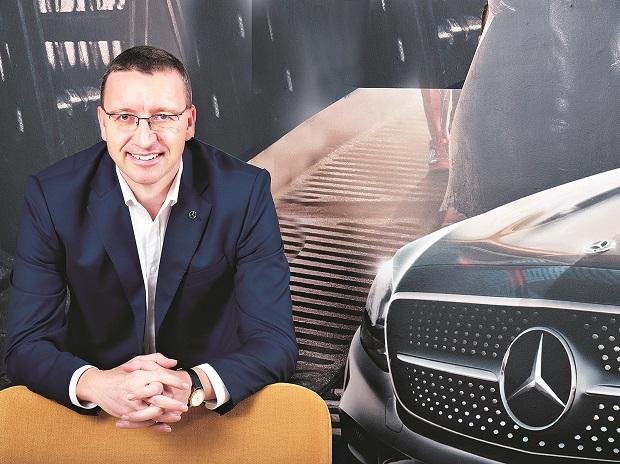
The country’s largest luxury car maker Mercedes-Benz India hopes the measures announced by the government will bring about a pick-up in sales in the second half of calendar 2019.
“The (Friday) announcement of the Finance minister will definitely help change the mood a little bit. It will improve financial liquidity in the market. It will also create some confidence of the customers and that goes across the industry,” said Martin Schwenk, managing director and chief executive officer, Mercedes-Benz India.
“I think it isn’t the car industry only, (but) also the construction industry which needs some amount of positive momentum. I am personally thinking that now in the second half (of the year) you will see some of it. How fast and how quick we will see the growth coming back we don’t know. I am quite confident that the second half of the year, which is a festive season, could see the business picking up,” Schwenk added. Read Complete Article
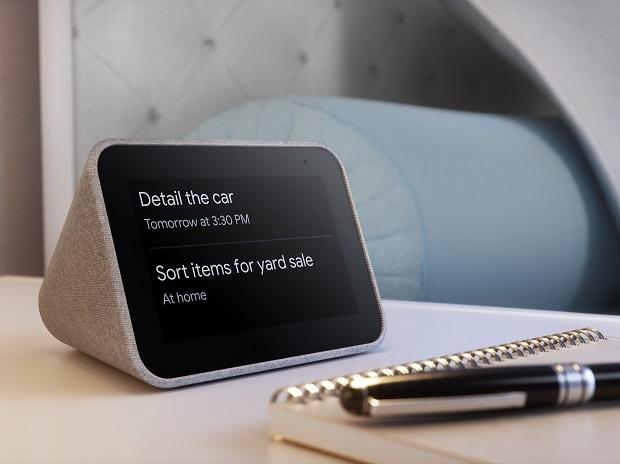
Lenovo today launched Google Assistant-enabled Smart Clock and Lenovo Smart Display, marking its debut in smart home product portfolio in India. The Smart Clock starts from Rs 5,999 while Smart Display starts at Rs 14,999. Both the devices will go on sale from early September 2019.
The announcement came after Google’s Nest Hub smart display speaker was launched in India for Rs 9,999. Lenovo Smart Clock comes with the 4-inch IPS touch screen and can be used to control the smart home and listen to music. The Smart Display can be also be used for video calling using Google Duo among other features.
Lenovo Smart Clock
Precied at Rs 5, 999, Lenovo’s Smart Clock comes with voice and touch control on a 4 inch IPS screen, and can be used to set alarms, set calendar entries, dim the lights, weather information, music, audiobooks, podcasts and radio. The smart clock also works with Google Chromecast. Read Complete Article
Hyundai Motor Group has developed a new prototype electric scooter, which might make inroads in the Indian market.
The group, which mostly has interests in passenger and commercial vehicles, doesn’t have two-wheelers in its global portfolio.
Though there is no official communication on this, company sources say that India is an important market and this vehicle will suit Indian roads. The e-scooter will be geared for last-mile connectivity.
The latest concept features in future Hyundai Motor Group plans to enable first- and last-mile mobility through integrating the scooter with future Hyundai and Kia vehicles, said the company. The initial concept was presented at CES 2017.
The scooter is charged automatically using electricity produced while driving.
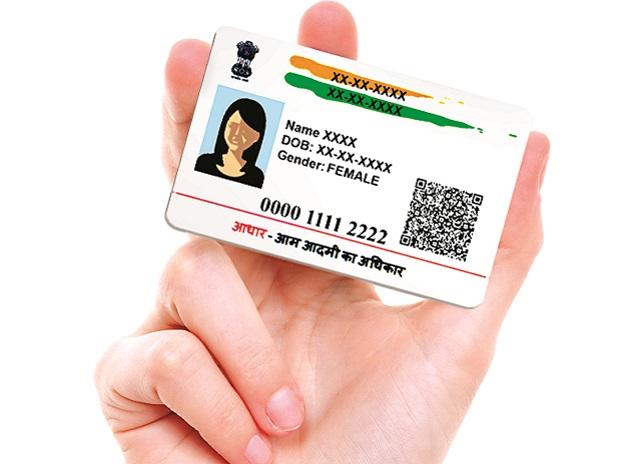
Should Aadhaar be used as KYC for social media accounts? We have recently seen a debate on this question with even the courts hearing arguments in favour and against such a move. The case began in Madras High Court and later Facebook moved the SC seeking transfer of the petition to the Apex court. The original petition was filed in July, 2018 and sought linking of Aadhaar numbers with user accounts to further traceability of messages. Before we try and answer this question, we need to first understand the differences between the different types of data on social media and messaging platforms. If a crime happens on an end to end cryptographically secure channel like WhatsApp the police may request the following from the provider to help solve the case:
1.Identity data: Phone numbers of the accused. Names and addresses of the accused.
2.Metadata: Sender, receiver(s), time, size of message, flag identifying a forwarded messages, delivery status, read status, etc.
3.Payload Data: Actual content of the text and multimedia messages. Readmore
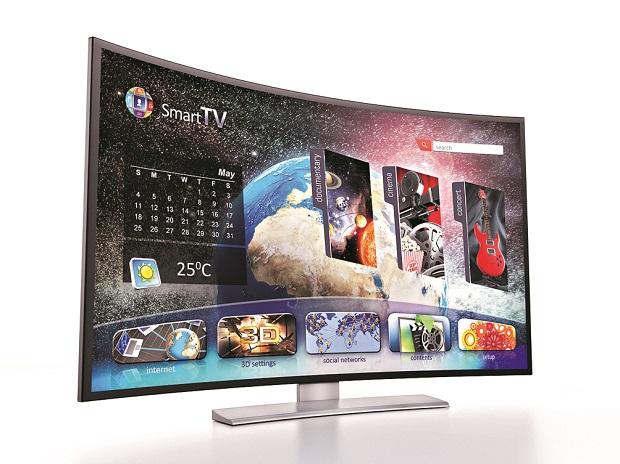
Leading smartphone brands such as Xiaomi, Micromax, Redmi (a sub-brand Xiaomi) and OnePlus are set to disrupt the smart television space, which has so far been dominated by electronics giants Sony, LG, Samsung and Panasonic. Internet-enabled smart TVs, which are a relatively new segment in India, are expected to see a major boost on the back of lower data tariffs, which have resulted in a massive uptick in online video consumption.
While Xiaomi is already present in this space, its sub-brand Redmi, whose smartphones are quite popular in India, is expected to launch smart TVs soon. Given the value it offers for its price point in the smartphone space, Mi TVs are also likely to be available at competitive prices.
This week, OnePlus, the maker of the hugely popular OnePlus 6 and OnePlus 6T handsets, too announced that it would come out with smart TVs in September. The Chinese phone-maker is expected to woo consumers with smart TVs that are as aggressively priced as its feature-rich phones. Read Complete Article
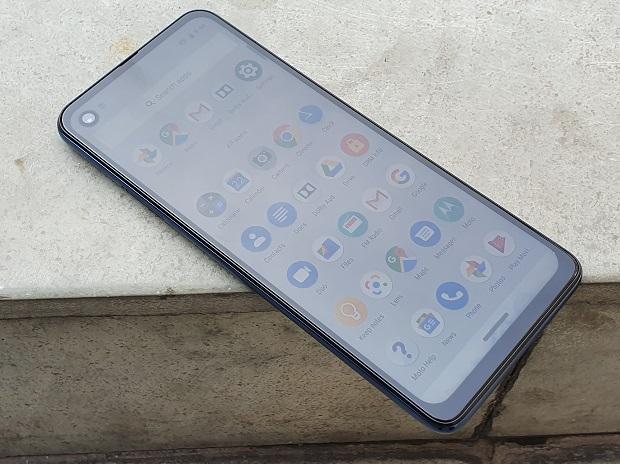
Once a dominant smartphone brand, Motorola lost its market share as other Chinese brands saw a sudden surge and challenged its monopoly in the budget and midrange smartphone segment in India. But now, with back-to-back launches, the company seems to have somewhat got its mojo back. After earlier launching the photography-centric Motorola One Vision (review), Motorola, now owned by Chinese electronics major Lenovo, on August 23 launched the videography-centric Motorola One Action (Rs 13,999) in India.
The Motorola One Vision and Motorola One Action are similar in design, features and specifications, but they have different sets of optics for different audiences. As the name suggests, the Motorola One Action aims to replace your action cameras by providing a dedicated ultra-wide sensor for videography. We reviewed this phone to see if it can really replace action cameras like GoPro, and how it fares in comparison with the Motorola One Vision, especially in imaging performance:
Camera
The Motorola One Action packs a triple-camera set-up on the back, featuring a 12-megapixel primary sensor of an f/1.8 aperture with phase detection autofocus (PDAF), a 16MP ultra-wide angle sensor stacked in 90 degrees, and a 5MP depth sensor. By comparison, the Motorola One Vision has a dual-camera set-up on the back — a 48MP primary sensor of an f/1.7 aperture with PDAF and optical image stabilisation (OIS), and a 5MP depth sensor.
Speaking of the Motorola One Action’s ultra-wide angle sensor, claimed to be an action camera, its 90-degree stacking helps capture an ultra-wide field of view (FoV) in the portrait orientation. Unlike other smartphones with ultra-wide angle cameras to record videos in the landscape mode, the one in the Motorola One Action allows video recording in portrait, without the need to tilt the phone to landscape. Thought the sensor lacks OIS, it supports electronic image stabilisation (EIS), which reduces motion shakes and allowed stable video recordings — but this is at the expense of a cropped field of view.
In the action camera mode, the phone supports video recording in up to fullHD (1920 x 1080) resolution at 60 frames per second in a 16:9 aspect ratio. There is also an option to record videos in the 21:9 aspect ratio, but it is limited to 30fps only.


 Mansa
Mansa 