India becomes favourite destination for cyber criminals amid Covid-19

With pandemic disrupting businesses and with remote working becoming reality, cyber criminals have been busy exploiting vulnerabilities. Year 2020 saw one of the largest numbers of data breaches and the numbers seem to be only rising.

According to Kaspersky’s telemetry, when the world went into lockdown in March 2020, the total number of bruteforce attacks against remote desktop protocol (RDP) jumped from 93.1 million worldwide in February 2020 to 277.4 million 2020 in March—a 197 per cent increase. The numbers in India went from 1.3 million in February 2020 to 3.3 million in March 2020. From April 2020 onward, monthly attacks never dipped below 300 million, and they reached a new high of 409 million attacks worldwide in November 2020. In July 2020, India recorded its highest number of attacks at 4.5 million.

In February 2021—nearly one year from the start of the pandemic—there were 377.5 million brute-force attacks—a far cry from the 93.1 million witnessed at the beginning of 2020. India alone witnessed 9.04 million attacks in February 2021. The total number of attacks recorded in India during Jan & Feb 2021 was around 15 million.

A data breach, irrespective of the modus operandi, has grown many folds in India. However, the disturbing trend in India has been firms’ failure to acknowledge that a breach has happened, which then makes individual users wonder if their data is safe at all.

Take the instance of the recent data breach at the payment firm Mobikwik. It was reported that the data breach incident has affected 3.5 million users, exposing know-your-customer documents such as addresses, phone numbers, Aadhaar card, PAN cards and so on. The company, till now, has maintained that there was no such data breach. It was only after the regulator Reserve Bank of India (RBI) asked Mobikwik to get the forensic audit conducted immediately by a CERT-IN empanelled auditor and submit the report, that the company is working with requisite authorities.

Rajshekhar Rajaharia, cybersecurity researcher who first tweeted about the MobiKwik issue, and many such breaches in India said: “Most companies, small or big, accept that they have been breached, especially when evidence of a data breach comes forward. In my experience, this makes their customers trust them even more. In the case of MobiKwik, it is surprising why they are not admitting to having been breached. They have threatened legal action against cybersecurity researchers and the fact that the leaked data has now been taken off the dark net is possibly giving them a false sense of security.”

Read Complete Article

Oppo F19 with 5,000 mAh battery set for India launch today: Check details

Oppo F19 will make its India debut on Tuesday. Oppo had recently launched the higher-end versions of the F19 series in India with Oppo F19 Pro and Oppo F19 Pro+. Oppo F19 will mark the launch of the third version of the F19 series in India. Oppo claims F19 is the thinnest smartphone powered by a 5,000 mAh battery. The smartphone will also make its debut in Sri Lanka soon.

Oppo F19 specifications

The Chinese smartphone-maker has said that the Indian version of the F19 will have a powerful battery of 5,000 mAh. It will come with a full HD+ AMOLED display along with an in-display fingerprint scanner. It will support 33W Flash Charge fast charging technology which will help in charging the smartphone completely in 72 minutes. The company claims that the phone can give 5.5 hours of voice calling or approximately 2 hours use of YouTube with just 5 minutes of charging.

OPPO has been a leader in the industry when it comes to flash charging solutions and the latest offering, OPPO F19 is no different. It will redefine the fast charging solutions in its price segment, said the company in a statement.

According to reports, the Oppo F19 will have a triple camera setup at the back with a 48 MP primary sensor. The setup will be paired with LED flash.

In Sri Lanka, the company has already listed the specifications of the F19. However, it is possible that Indian model will have different features.

Read Complete Article

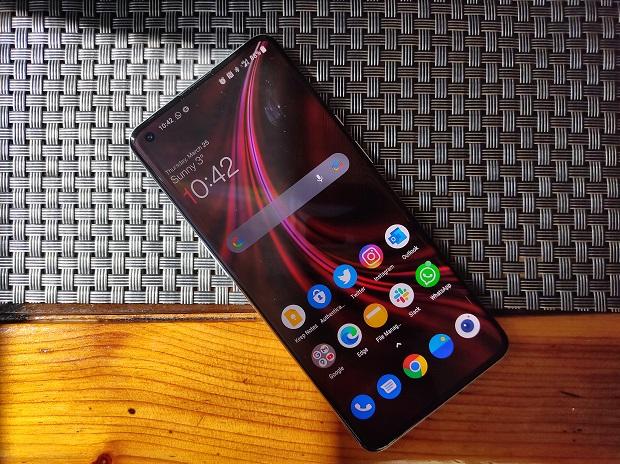
OnePlus 9 Pro review: Distinct but modestly priced, all-round premium phone

The OnePlus 9 Pro seems to have placed Chinese smartphone brand OnePlus, known for its midrange flagships, in the league of best premium smartphone makers alongside those like Samsung and Apple. The previous-generation OnePlus premium smartphones (the OnePlus 7 ProOnePlus 7T Pro and OnePlus 8 Pro) were also good, but they lacked the imaging competence, design superiority, innovation and novelty offered by the best premium smartphone brands.

A distinct product with something exclusive to offer is what OnePlus needed to make a meaningful stride in the premium smartphone market. After struggling to get that right for some time, it may to have cracked that with the OnePlus 9 Pro. From its Hasselblad partnership for the camera system to a QHD+ resolution screen of 120Hz refresh rate, ingress protection rating and fast wireless charging support, the OnePlus 9 Pro has a lot to show for itself. It does seem to justify its price tag of Rs 69,999? Read on to know how:OnePlus 9 Pro: Design

The OnePlus 9 Pro does not look like any of its predecessor; it looks better. Made of glass and metal, the smartphone has fine ergonomics for comfortable use and good in-hand feel. The glass on the front and back has a two-side curved profile with smooth corners and edges that make the phone easy to handle and operate. That said, even as the phone is fun to use, its glossy glass back (morning mist colour – review unit) is prone to fingerprint marks and smudges. It also makes the phone susceptible to accidental drops if you are not careful in handling the phone. Therefore, the phone needs constant care with regard to cleaning and handling. On the positive side, the OnePlus 9 Pro handles everyday abuses without taking any dent or scratches. Moreover, the phone is IP68-rated for water and dust resistance. Therefore, the phone has a shot at surviving in the face of water and dust but it is strongly advised not to intentionally put its ingress protection capability to test by doing so.

Read Complete Article

Fossil Gen 5E smartwatch review: Blend of pleasing looks, some performance

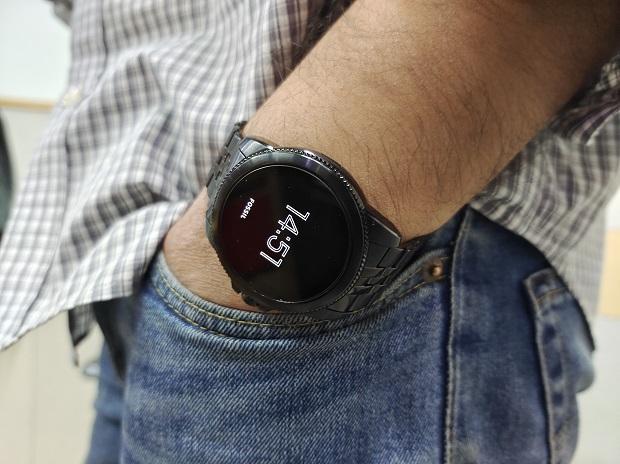
Fossil recently launched the new smartwatch Gen 5E, a stripped-down version of the Fossil Gen 5 launched in India in November 2019. The latest smartwatch features a set of sensors to measure key health metrics, a bright screen, stunning looks, and more. Besides, it allows you to receive calls and the option to shuffle among various battery modes.

Despite a fresh look and several improvements over predecessor, the Gen 5E is priced competitively to suit those looking for a premium lifestyle smartwatch. We reviewed this smartwatch to see if it balances looks and performance in everyday use. Let’s see what we found:

Looks and design

The Fossil Gen 5E has good looks with a metal strap holding the 1.19-inch AMOLED circular touchscreen with slim bezels on a 44mm stainless steel case, and a crown on the right to wake the watch up. All this in a black finish gives this smartwatch a premium appearance. The body is not too bulky, either, and the sensors sit at the bottom.

The display, with a 390×390 pixel resolution, and a pixel density of 328ppi make it crisp and colorful. In fact, it has good sunlight legibility as well. The crown, however, is not a rotating one, unlike in the Fossil Gen 5.

Read Complete Article

Samsung to launch 2 Galaxy F Series smartphones in India next week

Samsung is all set to launch two F-series smartphones in India next week. Galaxy F12 is likely to be priced between Rs 10,000-Rs 15,000 while Galaxy F02s will be priced below Rs 10,000.

According to industry sources, Galaxy F12 is tipped to come with True 48MP camera, 90Hz refresh rate and a 6000mAh battery. It will be powered by 8nm Exynos processor, making the Galaxy F12 extremely power efficient, the sources told IANS on Thursday.

Galaxy F02s is likely to sport a 6.5-inch HD+ display and a 5000mAh battery with 15W fast charging.

Both Galaxy F12 and Galaxy F02s will feature premium haze and matt finish.

Samsung had earlier launched Galaxy F62 for Rs 23,999. The smartphone has the flagship Exynos 9825 under the hood, the same chip that powered Galaxy Note 10 and Galaxy Note 10+.

Galaxy F is Samsung’s India-specific smartphone series for which the company has tied up with Flipkart. Galaxy F smartphones also sell on Samsung Online Store and leading retail stores.

Riding on its successful Galaxy ‘M’ series amid surge in online shopping, Samsung in October last year globally debut Galaxy ‘F’ series during the Big Billion Days sale in India.

The company launched the fully-loaded Galaxy F41 as the first smartphone in the new series.

Read Complete Article

OPPO F19 with 5000mAh battery, fullHD+ AMOLED screen launching on April 6

After successfully launching two smartphones under the OPPO F19 Pro series, the Chinese smartphone maker on Thursday announced that it is all set to launch OPPO F19 on April 6.

The OPPO F19 will feature a massive 5000mAh battery paired with 33W Flash Charge, and a brilliant AMOLED Full HD+ punch-hole display.

The company claims that with 33W Flash Charge, which runs on a 11V3A solution, OPPO F19 fully charges in only 72 minutes.

OPPO F19 is crafted for the youth who looks for trendy and stylish smartphones that not only complements, but also augments their lifestyle, the company said in a statement.

OPPO has been a leader in the industry when it comes to flash charging solutions and the latest offering, OPPO F19 is no different. It will redefine the fast charging solutions in its price segment, it added.

The company recently launched — F19 Pro+ 5G and F19 Pro — with quad rear cameras and feature Super AMOLED displays in the Indian market.

OPPO F19 Pro+ price starts at Rs 25,990 for the sole 8GB RAM + 128GB storage variant. The OPPO F19 Pro, on the other hand, has 8GB RAM + 128GB storage option at a price tag of Rs 21,490 and 8GB RAM + 256GB storage model at Rs 23,490.

Read Complete Article

Microsoft to end support for Cortana on Android and iOS devices

Microsoft has announced to end support for its visual assistant Cortana on both Android and iOS devices.

Microsoft has also removed the Cortana app from both the App Store and Google’s Play Store, beginning March 31.

“As we announced in July, we will soon be ending support for the Cortana app on Android and iOS, as Cortana continues its evolution as a productivity assistant,” Microsoft said in an update.

The company first launched Cortana for iOS and Android in December 2015.

The app was designed to connect Windows 10 PCs and mobile phones but failed to gain momentum as Alexa, Google Assistant and Siri won the race.

According to Microsoft, the Cortana content people created — such as reminders and lists — will no longer function in the Cortana mobile app, but can still be accessed through Cortana in Windows.

Also, Cortana reminders, lists, and tasks are automatically synced to the Microsoft To Do app, which people can download on their phones for free.

“After March 31, 2021, the Cortana mobile app on your phone will no longer be supported,” said Microsoft.

In 2019, the company first withdrew the Cortana for iOS app from a number of regions.

Last year, Microsoft said it will make productivity the focus of the digital assistant and as part of the shift, its digital assistant Cortana will lose some of its more consumer-facing features, such as the ability to play music and control smart home devices.

Read Complete Article

FCEV: New breed of hydrogen-powered electric vehicles India plans to test

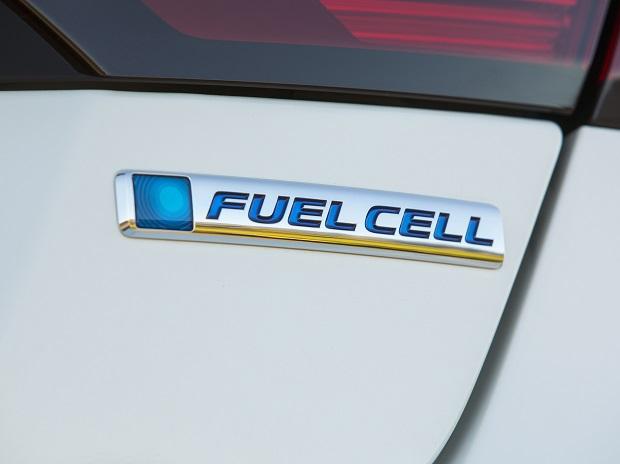
India is preparing to test a new breed of electric vehicles powered by hydrogen fuel cells, to reduce its carbon footprint on the environment. The country’s largest power generator, National Thermal Power Corporation (NTPC), is planning to procure such vehicles for pilot projects, according to a news report in Livemint. International automobile maker Toyota and Hyundai Motor, and India’s Tata Motors, Ashok Leyland and KPIT Technologies have shown interest in the initiative, the report added. Let’s understand how the fuel cell-based electric vehicles (FCEVs) work, and take a look at the cars based on this zero-emission technology:How FCEVs work

The FCEVs are electric vehicles that derive energy from a fuel cell powered by hydrogen, instead of drawing it from only a battery. Unlike conventional electric vehicles, where the battery is the primary source of vehicle traction, FCEVs use electricity generated by hydrogen-powered fuel cells and need the battery for auxiliary functions such as starting the vehicle or storing energy generated from regenerative braking. Therefore, the FCEVs do not require plug-in capability to charge the battery but need hydrogen as a fuel to operate.Hydrogen-powered FCEV: Toyota Mirai

Launched in 2015, this coupe-inspired hydrogen-powered fuel cell-based electric car from the stable of Japanese automotive maker has been refreshed recently to become one of the most competitive FCEVs in its category. The Mirai boasts a standard 8-inch digital combination meter, digital rearview mirror, 12.3-inch high-resolution TFT touchscreen, and a 14-speaker JBL sound system. The car is sold only in select locations, including California in the US, Europe, Japan and United Arab Emirates.

Read Complete Article

Apple to fix battery, performance issues in iPhone 11 via iOS 14.5 update

Apple has announced to fix battery drain and other performance issues with iPhone 11 series devices via an upcoming iOS update.

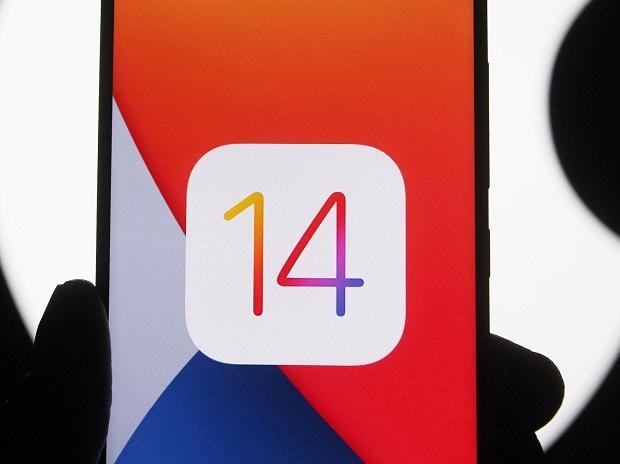
According to an Apple support document, the recalibration process will happen when you update an iPhone 11, 11 Pro, or 11 Pro Max to the upcoming iOS 14.5 update.

“Recalibration for maximum capacity and peak performance capability will happen over time with regular charge cycles. If the process is successful, the recalibration message will be removed and your maximum capacity percentage will be updated,” the iPhone maker said on its support page.

The process is currently being tested in the latest release of the developer beta.

If you see this message on your iPhone 11, it means the battery health reporting system on your iPhone is recalibrating.

“Your battery health reporting system is recalibrating Maximum Capacity and Peak Performance Capability. This process may take a few weeks,” the message will read.

If you see the message below, it means recalibration of the battery health reporting system was not successful.

If the recalibration of the battery health reporting system is not successful, an Apple Authorised Service Provider can replace the battery free of charge to restore full performance and capacity.

“This message does not indicate a safety issue. Your battery can still be used. However, you might be experiencing more noticeable battery and performance issues. An Apple Authorised Service Provider can replace the battery free of charge to restore full performance and capacity,” Apple said.

Read Complete Article

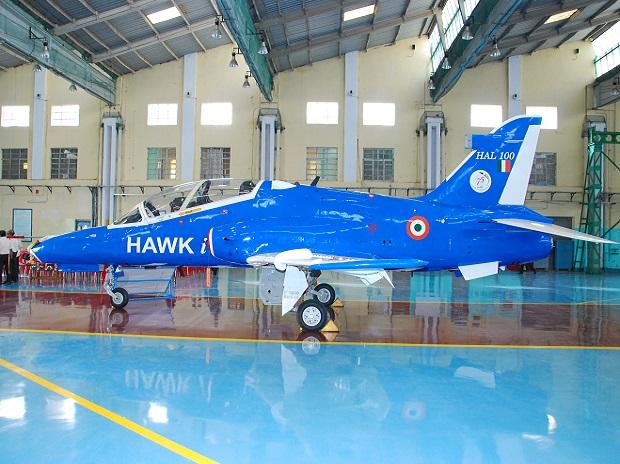
Hindustan Aeronautics logs record Rs 22,700 cr in top line on IAF dues

Hindustan Aeronautics (HAL) has registered its all-time high revenue of over Rs 22,700 crore for FY21, even as operations were hit by production shut-downs and supply chain disruptions after the outbreak.

“The firm has posted (this revenue growth) thanks to improved productivity after suspending operations for one month in the beginning of the year,” said a statement.

“The record revenue was achieved thanks to production of 41 helicopters/aircraft, 102 new engines, and overhaul of 198 aircraft/helicopters and of 506 engines,” said R Madhavan, HAL’s chief. With several large orders having been placed with HAL for FY21, the order book is healthier than any of the preceding years.

“FY21 was significant in terms of securing the largest-ever defence contract of 83 LCA Mark-IA by an Indian entity. This helped the firm surpass the order book position in excess of Rs 80,000 crore,” said Madhavan.

Until last year, the IAF’s failure to pay HAL for aircraft already delivered to it had forced the company to turn to bank borrowings to pay employees’ salaries.

“The firm has ended the year with a positive cash balance of Rs 6,700 crore, against borrowings of Rs 5,775 crore as of March 31, 2020. Cash flow has improved significantly with higher budget allocation from defence customers, in excess of Rs 34,000 crore including advance payment of close to Rs 5,400 crore for 83 [Tejas] Light Combat Aircraft. This has helped HAL liquidate all its borrowings,” said HAL.

Read Complete Article